Analyst(s): Olivier Blanchard
Publication Date: October 20, 2026
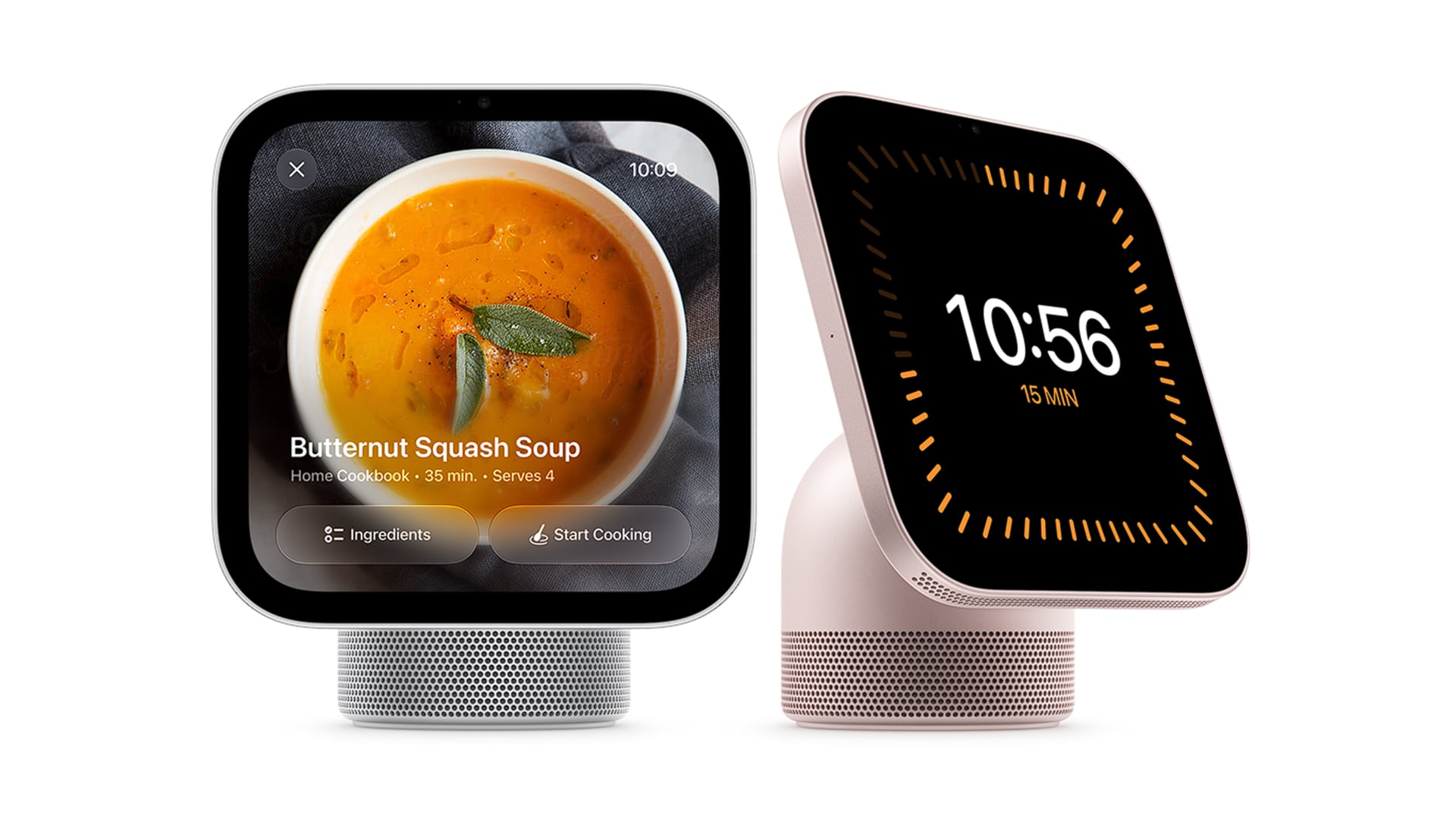
Apple introduced HomeView, a $299 smart display that combines personalized Siri AI interactions, entertainment, communication, and home controls. Its integration with individual users’ devices gives Apple a distinct proposition for existing customers, while companion-device requirements, accessory costs, and real-world reliability will shape adoption.
What Is Covered in This Article:
- HomeView’s pricing, availability, and shared household experience.
- Personal context, privacy controls, and competition with Amazon and Google.
- Apple Home Collection and the broader HomePod mini 2 and Apple TV 4K rollout.
- Installation costs, software dependencies, and priorities for evaluating adoption.
The News: Apple introduced Apple HomeView on October 13, 2026, with tabletop and wall-mounted models priced at $299 and availability beginning November 13. Both feature a 7-inch display, Siri AI, facial recognition for up to six users, and access to entertainment, communication, and compatible smart-home controls. Personalized Siri responses draw on a paired Apple Intelligence-enabled iPhone or iPad.
The launch accompanies the $149 HomePod mini 2, available October 30 with Siri AI arriving through a later software update, and a new $299 Apple TV 4K, available November 13. Apple also developed cameras, thermostats, and a lock with LG Electronics and Schneider Electric under Apple Home Collection, with availability starting in December and selected accessories following in early 2027. HomeView will initially reach eight countries, excluding the European Union, where Siri AI is unavailable in iOS.
How Apple Could Break Amazon and Google’s Hold On The Smart Home Segment
Analyst Take: Having long bemoaned Apple’s seemingly half-hearted interest in the Smart Home segment, my reaction when I first learned of the company’s upcoming smart home announcements was a perhaps overly dramatic “finally!” For all the solid work that both Amazon and Google especially have put into turning smart home tech into a mainstream category (cameras, smart speakers, smart TVs, smart thermostats, and so on) Apple’s seeming reluctance to apply its product design, UX and ecosystem integration genius to the segment always felt like not only a strategic miss but a wasted opportunity to drive much needed competition in that space. And again, as much as I love my Amazon and Google smart home devices, the category hasn’t exactly done a great job of inspiring consumers to invest in new devices in recent years, beyond natural refresh cycles.
To be fair, the U.S. consumer smart home market has roughly doubled since 2021, climbing from about just under $30 billion to roughly $55 billion this year. This translates into steady double-digit and/or high single-digit annual growth as adoption has vastly shifted from early adopters to mainstream households, and that isn’t nothing. Also, on a positive note, the category as a whole has continued to grow fairly steadily in the last 24 months, but cracks have begun to appear just below the surface, and understanding them in the context of Apple’s refocus on the segment is worth a quick sidebar.
- Crack #1: Consumers are investing in fewer “experimental” devices, suggesting that consumers have begun to adopt a more conservative, intentional approach to their smart home technology purchases. Essentially, they are more likely to replace an aging device with a newer, better version of it than to adopt a new category of device.
- Crack #2: Niche product burnout. Consumers have pulled back on high-price-point, non-vacuum robotic appliances and specialized gadgets that fail to offer distinct, long-term utility.
- Crack #3: Macro environment headwinds like inflation, higher product prices, high interest rates, and a challenging housing market have cooled consumer spending on certain categories of smart home products. More broadly, these forces have also led to fewer new construction installations, pushing the market towards retrofit and remodeling rather than net new installs.
Speaking purely from a personal standpoint, I have also felt disappointed and uninspired by the recent application of agentic and assistant AI in smart home products in the last couple of years. This isn’t to say that the latest Alexa and Gemini UX improvements haven’t been impressive. They are. But even as a technologist, I haven’t seen a massive uptick in the frequency of my interactions with home-based agentic solutions and assistants, let alone in the utility that I derive from them. Adding clearer, sharper, prettier screens to my kitchen counter, and better voice functionality to my smart speakers and smart TVs hasn’t meaningfully enhanced my experience. All of those improvements have been nice, but… not in a way that sufficiently impresses me to be worth even bringing it up to anyone. And that’s a fundamentally bad sign for technology that, at its core, should feel remarkable, delightful, and indispensable. It’s all pretty solid, but could I live without it if it all stopped working tomorrow? Yes. And it is precisely this gap between potential and reality that worries me about the future of the category: Does smart home technology still operate as a set of solutions to problems for home dwellers, or is it still operating mostly as a series of solutions looking for a problem?
Since Amazon and Google haven’t quite answered that question, I wonder whether Apple will, and that is part of what makes the iPhone maker’s refocus on the segment worth paying attention to.
Why Apple Could Break Amazon and Google’s Hold On The Smart Home Segment
It also bears noting that the smart home segment has always been a natural fit for Apple for a number of reasons:
- The Apple Lifestyle Aesthetic: For starters, as a lifestyle company, Apple could far more easily and organically insert itself into its users’ homes. The Macs, iPhones, iPads, and other Apple devices already live there. Adding additional speakers, screens, and cameras is a natural stylistic extension of the broader Apple user lifestyle and experience.
- Apple’s Privacy Story Advantage: Despite a general distrust of tech companies, Apple still enjoys one of the more credible trust and privacy stories in the tech sector, and certainly a stronger privacy story than Google and Amazon, let alone less well-known foreign-based brands. Whether those reputations are deserved or not isn’t really relevant. What is it that perception is reality, and if given the choice, the majority of consumers today are more likely to welcome Apple devices into their homes than Amazon’s or Google’s?
- Apple’s Premium Feel Advantage: While I love my Alexa and Google devices, Apple knows how to make gorgeous, premium-looking, premium-feeling devices, and also isn’t afraid to charge slightly more for them than its competitors. This translates into a perception of higher value in consumers, and if the elevated styling of Apple devices also helps enhance the perceived value of their home environments, consumers could be more likely to consider Apple smart home devices than Amazon’s or Google’s.
- Apple’s Natural System Integration: Android users may prefer Google and Amazon devices in their homes, but for the 1.5 billion iPhone users in the world, the promise of frictionless integration between their iPhone and smart home devices is a compelling selling point.
Apple HomeView is only the first shot across the bow of its main competitors
Apple HomeView gives Apple a stronger connected-home proposition by combining personal information, shared controls, and entertainment in a device designed for multiple household members. Its strongest competitive advantage comes from connecting the devices and services existing Apple customers already use, supported by a coordinated accessory lineup.
The broader launch also gives Apple more control over how customers configure and interact with their homes, from the central display to cameras, thermostats, and door locks. That opportunity depends on Siri reliably completing everyday tasks and on the combined experience justifying the cost of additional hardware. Apple should make dependable operation and straightforward setup the priorities for this expansion, because those qualities determine whether a household continues using the system after the initial purchase.
Apple HomeView Makes Personal Context a Competitive Advantage
Apple HomeView gives existing Apple households a concrete reason to consider its display alongside Amazon Echo Show and Google Nest Hub: Siri can use personal messages, calendar information, and media preferences within a shared interface that recognizes up to six people. The demonstration combining an airport arrival question with a follow-up about the traveler’s journey home illustrates how this context can support more involved requests than isolated commands for music or lighting. Handoff extends that proposition by transferring music, FaceTime calls, and Safari sessions from iPhone, while individual Home Screens give each enrolled household member access to their own apps and widgets.
Access to personal information nevertheless requires a compatible paired device on the same Wi-Fi network that has been recently unlocked, making device ownership and availability integral to the experience. Apple’s clearest competitive advantage, therefore, sits within its existing customer base, where HomeView can bring familiar information and activities into a shared household setting with less movement between services.
Privacy and Reliability Will Determine Everyday Use
Apple has designed HomeView to return to a shared household mode within seconds after a recognized user leaves the camera’s view, addressing the risk that personal messages or appointments remain visible to someone else. Guest permissions distinguish routine actions from sensitive controls, allowing access to lights and thermostats while restricting smart locks and recorded security-camera history. Secure Exclaves isolate sensitive camera and microphone processing, while the absence of a physical privacy switch makes clear software controls especially important for users who want to disable those inputs.
Hands-on accounts describe successful contextual Siri interactions alongside occasional repeated requests, leaving accurate recognition, predictable permissions, and consistent task completion as essential tests beyond Apple’s demonstration environment. Apple should treat these behaviors as core product requirements, because unreliable access or repeated command failures would directly weaken the convenience that justifies a dedicated household display.
A Coordinated Accessory Lineup Raises the Stakes for Setup and Cost
Apple Home Collection gives the company a coordinated path from selling a central display to supplying the devices it controls, with an iPhone setup that requires no additional apps or separate accounts. Initial distribution through Apple’s own stores brings the display and accessories into one sales channel before availability expands to other retailers, while compatibility with other Works with Apple Home and Matter accessories preserves additional purchasing options. The financial commitment can nevertheless grow quickly, with an indoor camera or thermostat priced at $199.95, a smart lock at $349.95, and a floodlight camera at $399.95.
Installation creates another distinction between the two HomeView models: the wall-mounted device and the lowest-priced listed mount total at least $358.95 before additional power accessories or installation, while the tabletop model includes its power adapter and cable and adds the speaker base’s woofer. Apple should organize the purchase experience around clearly priced household configurations, because a simpler setup becomes a stronger selling point when buyers can see the complete cost of achieving it.
The Broader Experience Depends on Software and Delivery
Apple HomeView’s curated software model puts responsibility on Apple to cover the household’s recurring needs, since the device has no dedicated App Store and relies on built-in experiences and compatible third-party media integrations. CarPlay-compatible audio and video software offers a route for additional services, but buyers need explicit compatibility information before assuming their preferred apps will work. The surrounding hardware refresh also asks customers to assess specific benefits against higher prices, with Apple TV 4K increasing to $299 from $199 and HomePod mini rising to $149 from $129, while four-speaker surround sound requires the new television box and compatible matching speaker pairs.
Delivery remains spread across HomeView’s November launch, Apple Home Collection’s December and early-2027 availability, and a later Siri AI update for HomePod mini 2, with English-only initial Siri support and HomeView’s EU exclusion further limiting the complete experience. Apple should make current capabilities, compatibility requirements, and delivery milestones explicit so customers can assemble a useful system at purchase and understand what remains dependent on future updates.
What to Watch:
- Independent testing should establish whether Siri consistently completes contextual and multistep requests in occupied homes, including environments with background noise, several household members, and multiple connected accessories.
- Household recognition and access controls need to work predictably when users leave the camera’s view, their paired devices are unavailable, or guests attempt to operate sensitive accessories.
- Purchases of cameras, thermostats, locks, and speakers alongside HomeView will help establish whether the display encourages broader adoption of Apple’s home portfolio.
- The timing of Siri AI on HomePod mini 2 and Apple Home Collection shipments will determine when customers can assemble the complete experience presented at launch.
- Confirmed third-party media compatibility will define the practical reach of HomeView’s software offering, particularly because the supplied accounts differ on confirmed Spotify support.
- Canadian French support, any EU launch pathway, and future fees for expanded access to certain server-side AI features will shape geographic availability and ongoing ownership costs.
See the complete announcement introducing Apple HomeView on the Apple website.
Declaration of generative AI and AI-assisted technologies in the writing process: This content has been generated with the support of artificial intelligence technologies. Due to the fast pace of content creation and the continuous evolution of data and information, The Futurum Group and its analysts strive to ensure the accuracy and factual integrity of the information presented. However, the opinions and interpretations expressed in this content reflect those of the individual author/analyst. The Futurum Group makes no guarantees regarding the completeness, accuracy, or reliability of any information contained herein. Readers are encouraged to verify facts independently and consult relevant sources for further clarification.
Disclosure: Futurum is a research and advisory firm that engages or has engaged in research, analysis, and advisory services with many technology companies, including those mentioned in this article. The author does not hold any equity positions with any company mentioned in this article.
Analysis and opinions expressed herein are specific to the analyst individually and data and other information that might have been provided for validation, not those of Futurum as a whole.
Read the full Futurum Group Disclosure.
Other Insights From Futurum:
Meta’s New VR Glasses Challenge Apple Designers To A Spatial Computing Adoption Race
Will Apple’s New Siri AI Deliver on the Promise of Apple Intelligence?
Could Apple’s New $599 MacBook Neo Decimate The Mid-Range Windows Laptop Market?
Featured Image: Apple
Author Information

Olivier Blanchard is Research Director, Intelligent Devices. He covers edge semiconductors and intelligent AI-capable devices for Futurum. In addition to having co-authored several books about digital transformation and AI with Futurum Group CEO Daniel Newman, Blanchard brings considerable experience demystifying new and emerging technologies, advising clients on how best to future-proof their organizations, and helping maximize the positive impacts of technology disruption while mitigating their potentially negative effects. Follow his extended analysis on X and LinkedIn.