Analyst(s): Brendan Burke
Publication Date: September 14, 2026
SpaceXAI will use NVIDIA Vera CPUs and the Vera Rubin platform to expand its agentic AI infrastructure for Grok. The terrestrial deployment provides the near-term test of NVIDIA’s system architecture, while Starmind extends that strategy into a more demanding orbital environment.
What Is Covered in This Article:
- NVIDIA’s expansion into the CPU layer of agentic AI
- Vera Rubin’s system-level economics at SpaceXAI scale
- How orbital computing changes infrastructure design priorities
- The strategic relevance of Starmind’s 2027 launch target
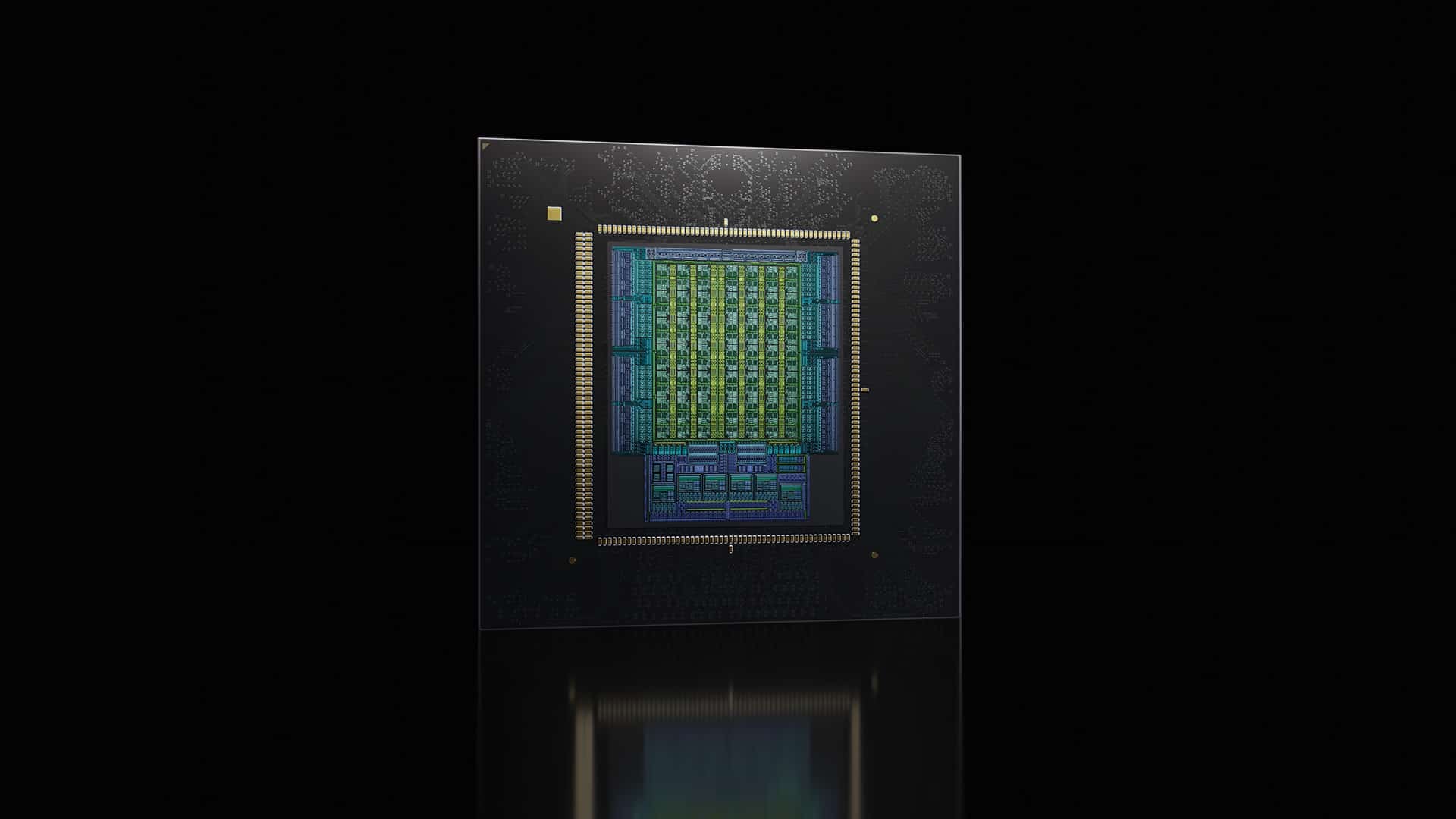
The News: NVIDIA announced that SpaceXAI will deploy Vera CPUs for the orchestration, code execution, data processing, and simulations surrounding its agentic AI workloads. Vera includes 88 NVIDIA-designed Olympus cores and 1.2TB/s of LPDDR5X memory bandwidth, with NVIDIA claiming up to 1.8 times faster task completion than x86 CPUs across agentic AI, reinforcement learning, and data-processing workloads.
SpaceXAI will also expand Grok infrastructure using the integrated Vera Rubin compute, networking, and software platform as it targets 2GW of capacity by the end of 2026 and 10GW by the end of 2027. Its first-generation Starmind AI satellite will use an optimized Vera Rubin NVL72 architecture, with Elon Musk targeting an initial launch in Q4 2027 and “significant scale” in 2028.
NVIDIA and SpaceXAI Link Grok Expansion With Orbital Computing
Analyst Take: NVIDIA is executing a major strategic shift from standalone GPU sales toward full-stack platform innovation, positioning Grok and Starmind as dual pillars of this strategy. Integrated agentic architecture powered by the Vera CPU tightly coordinates CPUs, GPUs, networking, and software for the entire agent execution loop. While Grok serves as the immediate terrestrial proving ground to validate workload economics at scale, Starmind extends this platform vision into the ultra-demanding frontier of orbital AI.
Vera Extends NVIDIA Beyond the GPU
For SpaceXAI, the strategic value of Vera lies in eliminating the CPU execution bottleneck that threatens accelerator efficiency across massive agentic AI deployments. As Grok scales toward gigawatts of compute, its agentic loops endlessly cycle between GPU inference, CPU code execution, data processing, tool orchestration, and simulation. If host CPUs lag during non-GPU tasks, high-cost GPU clusters spend valuable cycles idling. Vera’s 88 Olympus cores and 1.2TB/s memory bandwidth directly solve this by delivering up to 1.8 times faster task completion than standard x86 architectures. By tightly integrating Vera CPUs with GPUs, NVLink networking, and software, SpaceXAI secures higher GPU utilization, faster overall agent iteration times, and maximized compute density per watt—an architectural advantage that becomes essential as infrastructure scales terrestrially and eventually extends into power-constrained orbital environments.
SpaceXAI Tests System Economics at Scale
Scaling to 2GW by the end of 2026 and 10GW by the end of 2027 makes SpaceXAI the ultimate stress test for Vera Rubin. At the gigawatt scale, fractional improvements in GPU idle time and task completion translate directly into massive efficiency and financial gains. An end-to-end stack leaves NVIDIA responsible for the entire architecture, making co-design vital and system bottlenecks glaringly visible. Grok gives NVIDIA the platform to prove its full-stack approach slashes cost per token while maximizing work per watt under sustained agentic workloads. This ground-level deployment offers the most immediate and measurable evidence of full-stack value.
Orbital Computing Changes the Optimization Target
Lifting an NVL72 rack into orbit is not a copy-paste operation. Space completely flips the optimization target for an NVL72 rack. On Earth, infrastructure prioritizes raw compute density. In orbit, performance is strictly constrained by solar power generation, thermal dissipation, radiation tolerance, mass, and downlink throughput. With AI1’s projected 250kW peak and 175kW average compute loads, energy limits are absolute operational ceilings rather than utility facility options. Touting a 25x H100 performance capability for Space-1 is meaningless unless the system can sustain that compute load and transmit useful results. Ultimate success in orbit won’t be defined by benchmark flexing, but by reliable, completed compute per watt and per transmitted bit.
Starmind Is Strategic Optionality, Not Near-Term Scale
While the Q4 2027 launch target creates urgency, Starmind is a high-stakes demonstration milestone, not an immediate orbital cloud network. Before mass deployment can happen, SpaceX must synchronize its Gigasat Factory, Starship launch cadence, satellite integration, optical crosslinks, and complex FCC approvals. A regulatory ceiling of one million satellites and ambitions for “significant scale” in 2028 mean nothing without flight-proven thermal control, workload reliability, and efficient data downlinks. Starmind should be treated as high-upside strategic optionality, while keeping primary analytical focus on Grok’s terrestrial deployment as NVIDIA’s near-term execution test.
What to Watch:
- Production workloads should establish whether Vera delivers NVIDIA’s claimed 1.8 times improvement while increasing GPU utilization and shortening complete agent tasks.
- Grok’s expansion will test whether Vera Rubin improves cost per token and work per watt as SpaceXAI scales toward 2GW by the end of 2026 and 10GW by the end of 2027.
- Starmind’s thermal vacuum testing should demonstrate that the system can sustain useful computing performance within its orbital power and cooling limits.
- Optical links and Starlink must provide enough effective bandwidth to move input data and return processed results without undermining the value of orbital compute.
- SpaceX’s ability to accommodate modules from multiple manufacturers means NVIDIA must earn a continuing role through operating performance rather than initial design selection.
See the complete announcement on SpaceXAI’s adoption of NVIDIA’s Vera CPU.
Declaration of generative AI and AI-assisted technologies in the writing process: This content has been generated with the support of artificial intelligence technologies. Due to the fast pace of content creation and the continuous evolution of data and information, The Futurum Group and its analysts strive to ensure the accuracy and factual integrity of the information presented. However, the opinions and interpretations expressed in this content reflect those of the individual author/analyst. The Futurum Group makes no guarantees regarding the completeness, accuracy, or reliability of any information contained herein. Readers are encouraged to verify facts independently and consult relevant sources for further clarification.
Disclosure: Futurum is a research and advisory firm that engages or has engaged in research, analysis, and advisory services with many technology companies, including those mentioned in this article. The author does not hold any equity positions with any company mentioned in this article.
Analysis and opinions expressed herein are specific to the analyst individually and data and other information that might have been provided for validation, not those of Futurum as a whole.
Read the full Futurum Group Disclosure.
Other Insights From Futurum:
NVIDIA Nears $12.9B Deal for Hugging Face, Escalating AI Ecosystem Strategy
SpaceX S-1: Is Elon Musk Building the Ultimate AI Foundation?
NVIDIA’s Credit Support Buys Exclusivity at OpenAI’s Ohio Data Center
Featured Image: NVIDIA
Author Information

Brendan is Research Director, Semiconductors, Supply Chain, and Emerging Tech. He advises clients on strategic initiatives and leads the Futurum Semiconductors Practice. He is an experienced tech industry analyst who has guided tech leaders in identifying market opportunities spanning edge processors, generative AI applications, and hyperscale data centers.
Before joining Futurum, Brendan consulted with global AI leaders and served as a Senior Analyst in Emerging Technology Research at PitchBook. At PitchBook, he developed market intelligence tools for AI, highlighted by one of the industry’s most comprehensive AI semiconductor market landscapes encompassing both public and private companies. He has advised Fortune 100 tech giants, growth-stage innovators, global investors, and leading market research firms. Before PitchBook, he led research teams in tech investment banking and market research.
Brendan is based in Seattle, Washington. He has a Bachelor of Arts Degree from Amherst College.