Analyst(s): Alex Smith
Publication Date: March 11, 2026
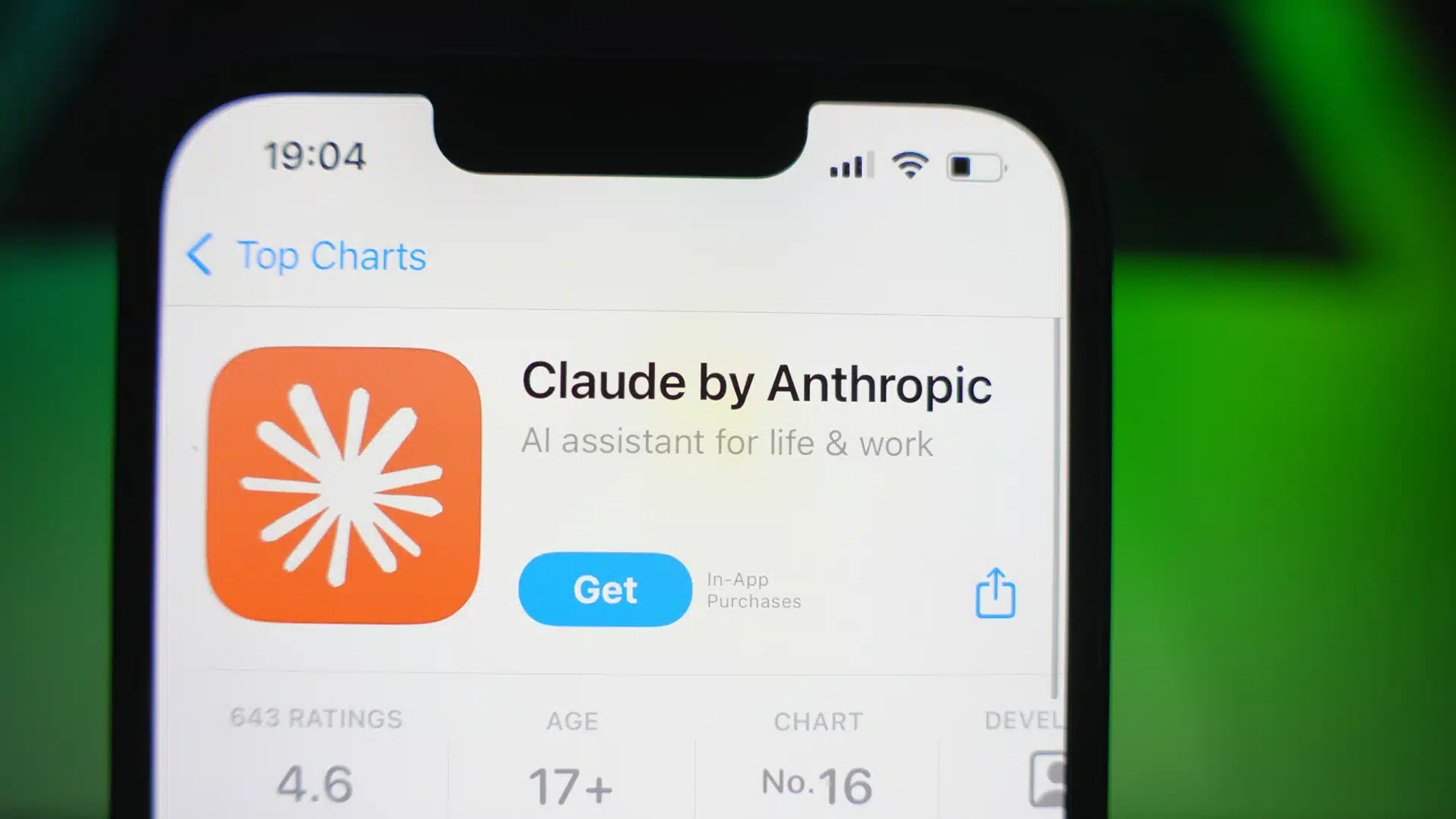
Anthropic has introduced Claude Marketplace, an offering that enables enterprises to purchase third-party applications powered by Claude and have that spend count against a portion of their existing Anthropic commitment. The move matters because it positions Anthropic as a procurement and distribution layer for Claude-powered enterprise software, not only a model and API provider.
What is Covered in This Article:
- Anthropic’s Claude Marketplace launch
- Commitment-based procurement consolidation mechanics
- Partner apps as “product layer”
- Native Claude tools versus embedded workflows
- Adoption friction inside enterprise governance
The News: Anthropic announced Claude Marketplace, a new offering that lets enterprises with an existing Anthropic spend commitment apply part of that commitment toward tools and applications powered by Anthropic’s Claude models and offered by external partners. The initial set of partners cited includes GitLab, Harvey, Lovable, Replit, Rogo, and Snowflake, and Anthropic describes the Marketplace as in limited preview, with onboarding handled by an Anthropic account team.
Anthropic positions the program as a way to simplify procurement and consolidate artificial intelligence (AI) spend by allowing purchases to count against a portion of an existing commitment. Anthropic also indicates it will manage invoicing for partner spend, allowing customers to procure Claude-powered partner solutions without separately handling partner invoicing. In commentary included alongside coverage, Anthropic’s positioning emphasizes that Claude is intended as an “intelligence layer,” while partners provide domain-specific product layers, workflow integrations, and enterprise requirements such as compliance infrastructure. The Marketplace is framed as an investment in partner ecosystems rather than an attempt to replace partner products with Anthropic-native applications.
Claude Marketplace Tests Whether Anthropic Can Win the Procurement Heart
Analyst Take: Claude Marketplace signals that Anthropic believes it can play an increasing role in AI adoption, using spend commitments and consolidated invoicing to pull third-party procurement into the Claude commercial perimeter. Anthropic is taking a page from the hyperscaler playbook by allowing committed spend to go toward marketplace products. This will be a key driver of activity and may, in turn, encourage more spending on Anthropic itself if customers know the benefit can extend beyond the core Claude offerings. Marketplaces are becoming more strategic pillars for technology companies as enterprises want fewer vendor motions, even when the underlying software comes from multiple providers. The announcement also implicitly pushes back on a narrative that Claude-native building experiences will broadly displace established software-as-a-service (SaaS) workflows, instead elevating “Claude inside existing tools” as a first-class path. That creates a clearer split between organizations that prefer to assemble bespoke workflows directly on the model versus those that prefer purpose-built product layers. The near-term question is whether a procurement-led value proposition can translate into sustained end-user adoption inside daily workflows.
Procurement-Led Distribution Becomes a Product Strategy
Claude Marketplace reframes part of the enterprise AI conversation from capabilities to commercial plumbing, using commitments as a mechanism to reduce incremental purchase friction. This matters because AI adoption in large organizations often slows at contracting, security review, and vendor onboarding rather than at model evaluation. By consolidating invoicing and tying purchases to an existing commitment, Anthropic is effectively bundling distribution with its core platform relationship. That approach can increase partner attach rates without forcing enterprises into separate spend approvals for each tool. It also positions Anthropic closer to an enterprise software marketplace archetype, even while it remains centered on a model family. The implication is that model vendors can compete by compressing procurement cycles, native integrations, and ease of solution deployment, not only by improving model quality.
Partners Become the “Product Layer” Narrative Shield
Anthropic’s framing distinguishes Claude as a general reasoning and coding layer while asserting that partners deliver domain workflows, integrations, and institutional fit that a model alone does not replicate. That messaging aims to legitimize third-party software value at a time when model-native tooling has fueled perceptions of SaaS displacement. By spotlighting partners such as legal and finance platforms alongside broader horizontal vendors, Anthropic underscores that specialized products can be more than prompts wrapped around a model. This positioning also gives Anthropic a way to align with, rather than threaten, software ecosystems that already monetize workflow ownership. The Marketplace then becomes a channel to promote that “product layer” differentiation and make it purchasable under a single commercial umbrella. The takeaway is that ecosystem reassurance is part of the Marketplace’s strategic function, not just catalog expansion.
Native Versus Embedded Claude Is an Adoption Fork
The launch crystallizes an adoption choice for enterprises: engage Claude directly through Anthropic’s products and application programming interfaces (APIs) or consume Claude through embedded third-party applications tuned to specific workflows. Embedded tools can reduce internal build burden and provide prepackaged governance and integration patterns, but they can also fragment how users experience Claude across tasks. Conversely, direct platform use can centralize orchestration but demands more internal design and context integration work to reach the same workflow specificity. The Marketplace implicitly suggests that many enterprises will prefer the “buy then integrate” for repeatable workflows, reserving “build” for differentiating processes. This split will shape how enterprises measure value, because outcomes may be attributed to partner applications rather than to Claude directly. The implication is that Anthropic’s success will be tied to proving Claude’s value both as a direct platform and as an embedded capability across partner surfaces.
Marketplaces Win on Governance, Then Must Prove Usage
Marketplace models often appeal to enterprise stakeholders because they can standardize app approval pathways and reduce the perceived risk of uncontrolled tool sprawl. In this case, the potential for “pre-approved” apps to bypass long internal approval cycles makes governance a central part of the pitch. However, governance acceptance does not automatically translate into habitual use, especially when similar capabilities can be assembled through existing integrations, protocols, or internally built agents. The partners named at launch also already have enterprise distribution paths, which means the Claude Marketplace must demonstrate that it adds more than a different billing route. The decisive factor becomes whether users choose Marketplace-delivered tools within Claude-centric workflows rather than continuing with existing procurement and integration patterns. The takeaway is that Claude Marketplace’s adoption challenge is less about catalog credibility and more about proving workflow pull-through beyond procurement convenience.
What to Watch:
- How quickly limited preview expand beyond select enterprises
- Whether commitment-based purchasing changes tool selection behavior
- Partner catalog breadth versus depth across industries
- Evidence that consolidated invoicing increases usage, not just trials
- Whether “pre-approval” narratives reduce the internal approval cycle time
- Signals that native Claude tooling and partner apps converge or compete
Declaration of generative AI and AI-assisted technologies in the writing process: This content has been generated with the support of artificial intelligence technologies. Due to the fast pace of content creation and the continuous evolution of data and information, The Futurum Group and its analysts strive to ensure the accuracy and factual integrity of the information presented. However, the opinions and interpretations expressed in this content reflect those of the individual author/analyst. The Futurum Group makes no guarantees regarding the completeness, accuracy, or reliability of any information contained herein. Readers are encouraged to verify facts independently and consult relevant sources for further clarification.
Disclosure: Futurum is a research and advisory firm that engages or has engaged in research, analysis, and advisory services with many technology companies, including those mentioned in this article. The author does not hold any equity positions with any company mentioned in this article.
Analysis and opinions expressed herein are specific to the analyst individually and data and other information that might have been provided for validation, not those of Futurum as a whole.
Other Insights from Futurum:
IBM vs. Anthropic: A Tale of the COBOL Modernization Tape
AI Capex 2026: The $690B Infrastructure Sprint
Can Writer’s Partner Program Model Scale Enterprise AI Through Ecosystem Rigor?
Author Information

Alex is Vice President & Practice Lead, Ecosystems, Channels, & Marketplaces at the Futurum Group. He is responsible for establishing and maintaining the Channels Research program as part of the overall Futurum GTM and Channels Practice. This includes overseeing the channel data rollout in the Futurum Intelligence Platform, primary research activities such as research boards and surveys, delivering thought-leading research reports, and advising clients on their indirect go-to-market strategies. Alex also supports the overall operations of the Futurum Research Business Unit, including P&L segmentation, sales and marketing alignment, and budget planning.
Prior to joining Futurum, Alex was VP of Channels & Enterprise Research at Canalys where he led a multi-million dollar research organization with more than 20 analysts. He played an integral role in helping the Canalys research organization migrate into Omdia after having been acquired in 2023. He is an accomplished research leader, as well as an expert in indirect go-to-market strategies. He has delivered numerous keynotes at partner-facing conferences.
Alex is based in Portland, Oregon, but has lived in numerous places, including California, Canada, Saudi Arabia, Thailand, and the UK. He has a Bachelor in Commerce and Finance Major from Dalhousie University, Halifax Canada.