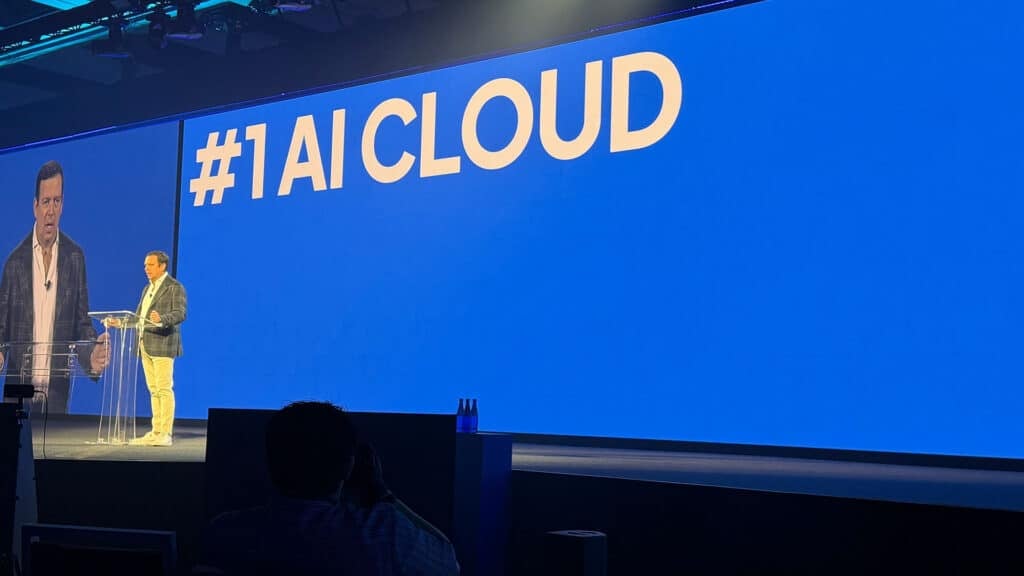
In a week packed with key developments for IT leaders, the latest CIO Pulse Report with Dion Hinchcliffe dives deep into transformative advancements across the tech industry. From the game-changing expansion of the Dell and Nutanix partnership to the projected rise in IT budgets driven by AI investments, this episode explores the critical decisions and strategies shaping the future of enterprise technology. Additionally, the news report sheds further light on the transformative impact of AI on IT jobs, the rise of what is known as Large Action Models (LAMs), and the ongoing debate between Kubernetes and AWS ECS, making it a must-watch for anyone navigating the rapidly evolving IT landscape.
What Are Covered in This Episode:
- Dell and Nutanix Partnership
- IT Budget Increase and AI Investments
- AI’s Impact on IT Jobs
- The Emergence of Large Action Models (LAMs)
- Container Orchestration Debate
The August 12th 2024 episode explores how these companies and their leaders address the challenges and opportunities in AI, cloud computing, cybersecurity, and container orchestration. Key highlights include Dell’s expanded partnership with Nutanix, the rise of Large Action Models (LAMs), and the ongoing debate between Kubernetes and AWS ECS. The episode also features insightful interviews with Tony Scott on proactive cybersecurity strategies and Walt Carter on the business case for AI. Below are the key takeaways from the discussions.
Access the video link of The CIO Pulse Report for August 12th here.
Dell and Nutanix Partnership Expansion
The CIO Pulse Report highlighted a significant development in the partnership between Dell Technologies and Nutanix, a collaboration that continues to evolve in response to shifting market dynamics. Initially announced in June 2024, this partnership integrated Nutanix’s software into Dell’s APEX platform, a hyper-converged infrastructure (HCI) solution. HCI is a software-defined IT infrastructure that virtualizes all of the elements of conventional “hardware-defined” systems. With HCI, data center components—storage, computing, networking, and management—are tightly integrated to offer simplified management and scalability.
The latest development in this partnership goes a step further. Dell has announced it will offer servers directly powered by Nutanix’s software. This strategic decision marks a notable shift in Dell’s product lineup. It positions the company as a more direct competitor to VMware, particularly as the industry grapples with uncertainties related to Broadcom’s acquisition of VMware. The deal has raised concerns across the sector about potential price increases and service limitations, as Broadcom is known for its aggressive pricing strategies. As a result, many enterprises are reevaluating their VMware contracts, with some estimates suggesting that licensing costs could increase by 15% to 25% under Broadcom’s ownership.
For CIOs, this new offering from Dell and Nutanix provides a compelling alternative to VMware’s solutions. By integrating Nutanix’s software directly into their servers, Dell offers a more streamlined and potentially cost-effective solution for managing multi-cloud environments. This is particularly crucial for enterprises looking to maintain flexibility and control over their IT infrastructure while mitigating the risks associated with vendor lock-in, especially as VMware’s future under Broadcom remains uncertain. The expanded partnership underscores Dell’s commitment to providing CIOs with the tools they need to navigate the rapidly evolving cloud IT landscape and safeguard their investments.
This move also highlights a broader industry trend: Flexibility and cost-efficiency are becoming increasingly critical for organizations as they face mounting pressures from market changes and technological advancements. As the cloud landscape evolves, partnerships like Dell and Nutanix will play a crucial role in shaping how enterprises manage their IT infrastructure and remain competitive in the face of uncertainty.
IT Budget Increase and AI Investments
The CIO Pulse Report also revealed that IT budgets are projected to rise by 5.5% in 2024, a significant increase reflecting technology’s growing importance in driving business success. This budget growth is primarily fueled by investments in artificial intelligence (AI) infrastructure as companies race to integrate advanced AI capabilities into their operations. AI has moved beyond experimental technology to become a critical component of business strategy, with organizations recognizing its potential to enhance productivity, streamline operations, and gain a competitive edge.
Much of the increased budget allocation is directed toward building the necessary infrastructure to support AI at scale. This includes investments in data processing power, cloud services, and other foundational technologies essential for deploying AI effectively. Companies mainly focus on integrating generative AI (GenAI) and other advanced cloud technologies into their operations, as these tools promise to revolutionize how businesses operate. GenAI, for instance, is being used to automate complex tasks, generate insights from vast datasets, and even assist in decision-making processes.
However, the rush to invest in AI comes with significant challenges. More than simply increasing budget allocations is required; CIOs must adopt a clear and strategic approach to ensure that these investments deliver tangible business value. With a well-defined strategy, organizations can avoid overspending on technology that may align with their broader business goals, leading to increased technical debt and wasted resources. Moreover, as cloud costs continue to rise yearly, CIOs are pressured to optimize their spending and ensure their cloud investments are cost-effective and scalable.
Another critical consideration is the immaturity of AI stacks, which still need to be fully developed to support large-scale investments confidently. This presents a dilemma for CIOs, who must balance the need to invest in AI with the risk of overcommitting to technology that may not be ready for widespread deployment. Additionally, the growing focus on AI amplifies the issue of technical debt, as companies that need to modernize their legacy systems may need help to fully capitalize on new AI technologies.
Despite these challenges, the increase in IT budgets signals a solid commitment to innovation and recognition of AI’s transformative potential. However, to achieve sustainable growth, CIOs must ensure that their AI infrastructure investments are aligned with long-term business objectives, cloud costs are kept under control, and efforts are made to address technical debt. Strategic planning will be crucial to getting the most out of these increased budgets and driving long-term value for the organization.
AI’s Impact on IT Jobs
The CIO Pulse Report also delved into the transformative impact of AI on IT jobs, highlighting a sobering statistic from the AI-enabled ICT Workforce Consortium: 92% of IT jobs are expected to be transformed by AI in the coming years. This transformation is not just about automation; it is about redefining the entire IT landscape as AI takes over routine tasks and frees IT professionals to focus on more strategic, high-value initiatives.
For years, IT professionals have spent significant time on system monitoring, incident management, and routine maintenance tasks. These tasks, while essential, are often repetitive and time-consuming, leaving little room for innovation or strategic thinking. As AI takes over these functions, IT professionals will be liberated to focus on activities that drive growth and innovation within their organizations.
Technology giants like IBM and Microsoft are at the forefront of this transformation. Both companies heavily invest in AI-driven tools designed to enhance operational efficiency and reduce costs by as much as 20%. These tools are not just automating tasks; they provide deeper insights and enable more proactive service delivery. For example, ServiceNow, a leader in IT service management, has integrated AI into its platform to revolutionize how IT services are managed, from incident management to workflow automation and predictive analytics.
The podcast also emphasized that the shift in the IT landscape will only happen with significant changes in workforce skills. As AI takes over routine tasks, IT professionals must develop new skills such as AI governance, data science, and robotics. The good news is that many organizations are already investing in AI training programs, with 40% of IT organizations focusing on upskilling their workforce to prepare for the changes ahead.
Despite some concerns about job displacement, the report found that three-quarters of IT professionals see AI as a tool that will enhance their jobs rather than threaten them. This optimistic outlook is based on the belief that AI will allow IT professionals to unleash their creativity and problem-solving skills, making them more effective in their roles and better equipped to tackle the scale of IT growth expected in the coming years.
In conclusion, while AI is set to transform the IT landscape dramatically, it also allows IT professionals to elevate their roles and contribute to their organization’s success in new and meaningful ways. Adapting to these changes will be crucial for organizations and individuals as the industry evolves.
The Emergence of Large Action Models (LAMs)
In a particularly forward-looking segment of the CIO Pulse Report, Dion Hinchcliffe introduced the concept of Large Action Models (LAMs), a new breed of AI models poised to revolutionize how businesses operate. Unlike Large Language Models (LLMs), which are primarily designed to generate content or respond to queries, LAMs are engineered to take direct action on behalf of users. This capability allows them to automate complex workflows, interact with IT systems autonomously, and execute tasks without human intervention.
Salesforce, a leader in enterprise technology, has already launched its xLAM family of models. These models are designed to autonomously execute tasks, making them critical tools for businesses looking to streamline operations and reduce manual workloads. For example, a LAM could identify customers with expiring contracts in a CRM system, draft personalized retention emails, and automatically send them using the company’s bulk email system—all without human input.
The rise of LAMs represents a significant leap forward in AI’s evolution. However, it also presents new challenges for CIOs and IT leaders. As these models gain the ability to interact with and manipulate critical IT systems, ensuring their actions are secure, compliant, and aligned with business policies will become a top priority. Unlike traditional AI models that generate content, LAMs have the potential to make changes to systems and execute transactions without direct human oversight. This capability introduces new risks, including unintended actions that could have far-reaching consequences.
To mitigate these risks, CIOs must develop robust governance frameworks that include advanced security protocols and continuous monitoring of AI-driven actions. Setting clear boundaries for what LAMs can and cannot do will be essential to maintaining control over these powerful tools. Additionally, ensuring that AI actions are transparent, explainable, and reversible will be critical to building trust in LAM-driven automation.
The emergence of LAMs marks a new chapter in the AI revolution, promising to transform businesses by offering unprecedented levels of automation and efficiency. However, realizing LAMs’ full potential will require careful planning, strong leadership, and a deep commitment to security and governance. As LAMs become more prevalent, they blur the lines between human and machine-driven actions, creating opportunities and challenges for the digital enterprise.
Container Orchestration Debate: Kubernetes vs. AWS ECS
The CIO Pulse Report also explored the ongoing debate over container orchestration, focusing on the pros and cons of Kubernetes versus more straightforward services like AWS’s Elastic Container Service (ECS). Container orchestration is critical to modern cloud computing, allowing organizations to manage and scale applications across multiple environments efficiently. However, choosing the right orchestration tool can be challenging, as each option has advantages and trade-offs.
As the CIO landscape continues to evolve at breakneck speed, staying ahead of the curve has never been more critical. This week’s CIO Pulse Report underscores the importance of strategic foresight, adaptability, and innovation in rapidly developing emerging technologies and shifting market dynamics. As IT leaders move forward, the insights and decisions discussed here will shape the future of enterprise IT, making it essential for CIOs to remain vigilant and proactive in navigating the changes in cloud and AI. Stay tuned to the CIO Pulse Report for more critical updates and expert analysis each week.
For the full episode, please click on this link. Don’t forget to follow Dion Hinchcliffe in the CIO Pulse Report for the latest insights from top industry experts.
Disclosure: The Futurum Group is a research and advisory firm that engages or has engaged in research, analysis, and advisory services with many technology companies, including those mentioned in this article. The author does not hold any equity positions with any company mentioned in this article.
Analysis and opinions expressed herein are specific to the analyst individually and data and other information that might have been provided for validation, not those of The Futurum Group as a whole.
Other insights from The Futurum Group:
How Will CISOs Be Impacted by the Proliferation of AI in Cybersecurity
Market Insight Report: Application Development and Modernization Q2
Author Information

Dion Hinchcliffe is a distinguished thought leader, IT expert, and enterprise architect, celebrated for his strategic advisory with Fortune 500 and Global 2000 companies. With over 25 years of experience, Dion works with the leadership teams of top enterprises, as well as leading tech companies, in bridging the gap between business and technology, focusing on enterprise AI, IT management, cloud computing, and digital business. He is a sought-after keynote speaker, industry analyst, and author, known for his insightful and in-depth contributions to digital strategy, IT topics, and digital transformation. Dion’s influence is particularly notable in the CIO community, where he engages actively with CIO roundtables and has been ranked numerous times as one of the top global influencers of Chief Information Officers. He also serves as an executive fellow at the SDA Bocconi Center for Digital Strategies.