Analyst(s): Brendan Burke
Publication Date: April 22, 2026
Cerebras Systems filed its S-1 registration statement on April 17, 2026, seeking a Nasdaq listing at a ~$23 billion valuation backed by a transformative $20 billion Master Relationship Agreement with OpenAI for 750 MW of inference compute capacity. The filing reveals explosive 76% year-over-year revenue growth to $510 million in 2025, but also exposes an 86% revenue concentration in two UAE-based entities and a widening non-GAAP net loss of $75.7 million, raising fundamental questions about whether wafer-scale silicon can survive the transition from sovereign hardware supplier to hyperscale cloud operator.
What is Covered in This Article:
- Wafer-Scale Integration technology and the WSE-3’s 21 petabytes-per-second memory bandwidth advantage over Nvidia’s Blackwell architecture
- The unprecedented $20 billion OpenAI Master Relationship Agreement, its 750 MW base commitment, $1 billion working capital loan, and warrant structure
- OpenAI’s Codex Spark is the bull case accelerant for inference demand, and why agentic coding may validate the entire contracted capacity commitment
- The AWS disaggregated inference partnership combining Trainium3 prefill with Cerebras CS-3 decode, and its implications for cost-per-token economics
- Cerebras Systems’ S-1 financial architecture, including the $237.8 million GAAP profit driven entirely by a non-cash G42 liability restructuring rather than operational performance
- NVIDIA’s defensive $20 billion Groq acquisition and the Vera Rubin heterogeneous rack architecture
The News: Cerebras Systems Inc. filed its Form S-1 registration statement with the SEC on April 17, 2026, targeting a public listing on the Nasdaq Global Select Market under the ticker “CBRS” at an approximate valuation of $23 billion. The filing, underwritten by Morgan Stanley, Citigroup, Barclays, and UBS Investment Bank, follows the company’s $1 billion Series H financing round closed in February 2026 led by Tiger Global with strategic participation from AMD, Benchmark, Coatue, and Fidelity. The S-1 discloses total 2025 revenue of $510 million (76% YoY growth), a $20 billion-plus Master Relationship Agreement with OpenAI for 750 MW of AI inference capacity expandable to 2 GW, and a binding term sheet with AWS to integrate Cerebras CS-3 hardware into the Amazon Bedrock managed inference service.
Cerebras S-1: Is the $23B Wafer-Scale Bet the End of GPU Homogeneity?
Analyst Take: The Cerebras S-1 declares that the monolithic GPU era has reached its structural breaking point. For the past decade, homogeneous clusters of NVIDIA GPUs served as the universal substrate for AI workloads. GPUs excel at the dense matrix multiplications required for training large language models, and their parallel architecture scaled predictably with investment. But as the industry violently pivots from a training-centric paradigm to an inference-dominated era, where generating output tokens in real-time dictates unit economics, user experience, and the commercial viability of agentic AI, the structural limitations of this monolithic approach have become acute.
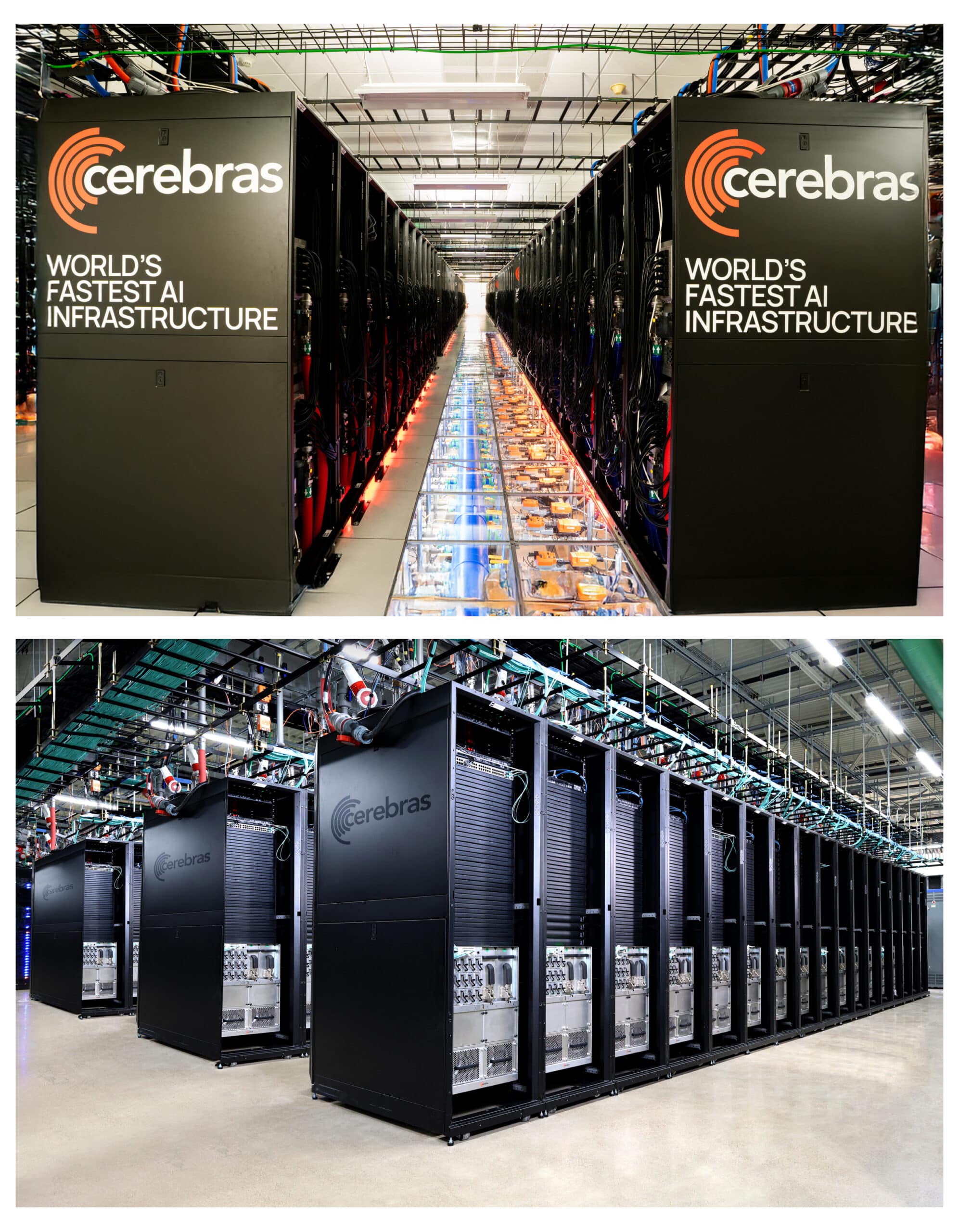
Futurum Research’s Data Center Semiconductors market analysis projects the GPU sub-market alone will grow from $174.7 billion in CY25 to $385.3 billion by CY29, with NVIDIA commanding a staggering 94.4% GPU market share as of Q1 CY25. The total data center semiconductors market is growing at over 50% YoY in CY25 under the base case scenario. This is the market Cerebras is attempting to disrupt, and the scale of the opportunity explains why investors are willing to assign a $23 billion valuation to a company generating $510 million in trailing revenue. Yet, the Cerebras S-1 reveals a company that is simultaneously the most architecturally innovative and the most operationally fragile entrant in the AI semiconductor market. Investors need to understand both dimensions before placing their bets.
Speed as Market Category Rather Than Feature Differentiator
The central thesis emerging from the Cerebras IPO is that fast inference is not a premium tier within the existing GPU market but a distinct market category demanding fundamentally different hardware. At an NVIDIA GTC side event, Cerebras CEO Andrew Feldman framed this argument by drawing a parallel to search, asking, “How big is the market for slow search?” and suggesting that fast inference will follow the same trajectory as instant information retrieval, expanding from a perceived niche to the overwhelming majority of demand. Feldman claimed that his company’s chips can process decode tasks up to 25 times faster than competitors’ GPUs, and that this speed advantage “had persuaded OpenAI to become a customer,” in a Wall Street Journal interview, adding that NVIDIA “didn’t want to lose the fast inference business at OpenAI, and we took that from them.”
Cerebras’s co-founder and chief technology officer, Sean Lie, reinforced this point, explaining that the coding use case has “completely transformed the importance of speed” because agentic workflows involve iterative, multi-turn generation, where latency compounds with every agent interaction, making raw token throughput the binding constraint on productivity. The implication is that as agentic AI applications proliferate and reasoning models consume orders of magnitude more tokens per query, the economic penalty of deploying general-purpose GPUs for memory-bound decode workloads becomes increasingly untenable.
Sovereign Risk from UAE Revenue Concentration
The most glaring risk factor in the S-1 is that in 2025, 86% of Cerebras’s total revenue was derived from two related entities in the United Arab Emirates: the Mohamed bin Zayed University of Artificial Intelligence (MBZUAI) at 62.0% and Group 42 (G42) at 24.0%. MBZUAI alone represented 77.9% of outstanding accounts receivable at year-end. This is not yet a diversified enterprise infrastructure provider approaching the public markets. This is functionally a captive hardware supplier to a specific sovereign AI initiative. Revenue from US-billed customers actually shrank 34% year-over-year, dropping from $282.7 million to $187.6 million. Any geopolitical friction, export control restrictions from the Bureau of Industry and Security (BIS), or sudden change in UAE capital allocation could decimate the revenue base overnight.
A cursory reading of the consolidated financial statements suggests a profitable enterprise: $237.8 million in GAAP net income for 2025, a dramatic swing from the $481.6 million loss in 2024. The reality is far less flattering. The apparent profitability is an accounting artifact, entirely manufactured by a one-time, non-cash $363.3 million gain from extinguishing a forward contract liability related to G42. When stripping away this paper gain and adjusting for $49.8 million in stock-based compensation, the company posted a non-GAAP net loss of $75.7 million, a 247% deterioration from the $21.8 million non-GAAP loss in 2024.
The OpenAI Lifeline: 750 Megawatts of Committed Inference Compute
To offset this existential concentration risk, Cerebras executed what may be the most consequential commercial agreement in AI semiconductor startup history: a Master Relationship Agreement (MRA) with OpenAI valued at over $20 billion. Under the MRA, OpenAI is contractually obligated to purchase 750 MW of AI inference compute capacity, with an option to expand to 2 GW by 2030.
Financial engineering is sophisticated. OpenAI advanced a $1.0 billion Working Capital Loan at 6% interest, with accrued interest waived if repaid through capacity delivery. Cerebras issued warrants for up to 33.4 million shares of non-voting Class N stock, vesting on milestones including market capitalization exceeding $40 billion and delivery of the full 2 GW capacity. If fully vested, OpenAI would own approximately 10% of Cerebras.
The most powerful argument for why the OpenAI MRA may actually be undersized rather than aspirational comes not from the S-1 itself but from the demand trajectory OpenAI is building on the other side of the contract. OpenAI’s Codex Spark, the company’s autonomous agentic coding platform, represents the single most inference-hungry product category in the generative AI ecosystem. If Codex Spark follows ChatGPT’s adoption trajectory, sustained inference demand could consume the full 750 MW base commitment within 18 to 24 months, rather than the three-to-four-year timeline the S-1 contemplates. The 2 GW expansion option stops looking like an aspirational ceiling and becomes a floor. For Cerebras, this scenario transforms the OpenAI MRA from a diversification lever into the core revenue engine. It is the single strongest argument for the $23 billion valuation.
But here is the risk investors must evaluate: if Cerebras fails to deliver capacity on time, or if the hardware underperforms SLA requirements, OpenAI can seize control of the loan funds and demand immediate repayment. The company has never operated data center infrastructure at anything approaching this scale. This is a complete business model transformation from a hardware shipping company to a global hyperscale cloud operator.
Disaggregated Inference: The AWS Partnership and the End of GPU Homogeneity
The most strategically significant development in the S-1 is not the OpenAI deal but the binding term sheet with AWS to create a heterogeneous inference ecosystem within Amazon Bedrock. Futurum’s AI Accelerators Signal report confirms that AWS’s Trainium3, “delivers substantial gains in memory bandwidth and energy efficiency” with the NeuronSwitch-v1 fabric providing “extreme compute density and inter-chip bandwidth required for complex architectures like Mixture-of-Experts.”
The AWS-Cerebras integration pairs this compute-optimized silicon with the WSE-3’s memory bandwidth advantage to disaggregate inference phases:
- AWS Trainium3 handles the Prefill phase: ingesting user prompts and generating the KV Cache with extreme compute efficiency
- Cerebras CS-3 handles the Decode phase: generating output tokens at 15x the speed of homogeneous GPU solutions
Futurum’s decision-maker survey data shows 63.9% of enterprises deploy AI through managed cloud services like AWS Bedrock, and 26.4% of organizations already cite AWS Trainium as a preferred accelerator vendor. Cerebras itself registers at 11.9% in accelerator vendor preference, which is meaningful for a pre-IPO company competing against NVIDIA’s 85.1% dominance.
The agentic AI trend makes this disaggregated approach essential. Futurum survey data shows that 56.6% of enterprises are already piloting, deploying, or orchestrating agentic AI systems. Agents generate thousands of intermediate tokens autonomously through chain-of-thought reasoning, creating precisely the sustained, memory-bound inference demand that the Cerebras WSE-3 is engineered to serve.
NVIDIA’s Counter-Offensive: The $20 Billion Groq Acquisition
The incumbent is not standing still. NVIDIA’s $20 billion quasi-acquisition and technology licensing deal with Groq relies on low-latency decode, similar in concept to Cerebras’s approach, though not at wafer scale. NVIDIA’s upcoming Vera Rubin architecture is designed explicitly as a heterogeneous disaggregated system at the rack level, natively combining Vera CPUs, Rubin GPUs for prefill, and Groq LPUs for decode.
Cerebras maintains a distinct architectural advantage over the Groq approach: Groq’s individual chips are physically small, requiring networking 2,000 LPUs together to run a 2-trillion-parameter model and reintroducing the very scheduling penalties that disaggregation is meant to solve. The WSE-3 divides a 2T model across 23 wafers, reducing inter-chip latency. However, the Futurum Signal assessment reveals that Cerebras faces challenges in “aligning its hardware innovation with its existing software ecosystem” and must “develop its software framework further to provide a functional alternative to existing hardware and software solutions.” AWS and Cerebras may need to collaborate on workload disaggregation software to gain competitive utilization with heterogeneous systems.
The Valuation Question: 45x Trailing Revenue for a System Unproven at Hyperscale
At $23 billion on $510 million in revenue, investors are paying approximately 45x trailing revenue for a company with widening losses, 86% customer concentration, and zero track record as a hyperscale infrastructure operator. By comparison, NVIDIA—profitable, dominant, growing at 50%+ annually, with $34.2 billion in quarterly GPU revenue—trades at roughly ~20-25x trailing revenue. The $24.6 billion backlog provides comfort, but backlogs are not revenue. They are promises contingent on flawless operational execution across megawatt-scale data center deployments that Cerebras has never attempted.
This IPO can solidify a new entrant to the AI merchant silicon market at the scale of AMD and, potentially, in the long run, NVIDIA. The Futurum Signal assessment confirms Cerebras’s WSE-3 “effectively renders the traditional ‘memory wall’ obsolete” and “allows the system to serve massive frontier models with efficiency that distributed systems struggle to match.” The AWS partnership and OpenAI MRA provide genuine commercial validation. But the valuation prices in the near-flawless execution of a transformation the company has never attempted. The gap between engineering brilliance and operational reliability at hyperscale is where promising semiconductor companies go to die. Cerebras must prove it can be both simultaneously.
Read the full Cerebras Systems S-1 filing on the SEC website.
What to Watch:
- Codex Spark adoption velocity and token consumption growth. If OpenAI’s agentic coding platform achieves enterprise-wide deployment at the pace ChatGPT did, sustained inference demand could accelerate Cerebras revenue recognition far beyond current projections.
- OpenAI capacity delivery milestones: The first 750 MW tranches beginning in 2026 will determine whether Cerebras can operationalize its silicon at hyperscale. Any delay could trigger loan-clawback provisions that could destabilize the company’s balance sheet.
- UAE revenue diversification velocity: With 86% concentration in two related entities, the pace at which the OpenAI and AWS contracts produce recognized revenue—not just backlog—will determine whether Cerebras can credibly claim diversification before geopolitical risks materialize.
- NVIDIA Vera Rubin competitive response: NVIDIA’s integrated heterogeneous rack architecture with Groq LPUs ships in 2026. If Vera Rubin delivers comparable disaggregated performance within NVIDIA’s entrenched CUDA ecosystem, the addressable market for standalone Cerebras decode hardware narrows significantly.
- TSMC risk: Cerebras’s entire production depends on a single foundry using a single 5nm process node. TSMC is actively converting 5nm capacity to 3nm to support NVIDIA, creating competition and a need to progress to a more advanced node in subsequent product launches. Additional wafer capacity will be needed to deliver on roadmap expansion.
See the full press release on Cerebras Systems’ IPO filing announcement on the company website.
Disclosure: Futurum is a research and advisory firm that engages or has engaged in research, analysis, and advisory services with many technology companies, including those mentioned in this article. The author does not hold any equity positions with any company mentioned in this article.
Analysis and opinions expressed herein are specific to the analyst individually and data and other information that might have been provided for validation, not those of Futurum as a whole.
Other Insights from Futurum:
AWS Rises to the Agentic AI Moment With Cerebras Integration for Fast Inference
NVIDIA GTC 2026 Day 1 – Can NVIDIA’s Ecosystem Accelerate the Inference Inflection?
AI Accelerators – Futurum Signal
Author Information

Brendan is Research Director, Semiconductors, Supply Chain, and Emerging Tech. He advises clients on strategic initiatives and leads the Futurum Semiconductors Practice. He is an experienced tech industry analyst who has guided tech leaders in identifying market opportunities spanning edge processors, generative AI applications, and hyperscale data centers.
Before joining Futurum, Brendan consulted with global AI leaders and served as a Senior Analyst in Emerging Technology Research at PitchBook. At PitchBook, he developed market intelligence tools for AI, highlighted by one of the industry’s most comprehensive AI semiconductor market landscapes encompassing both public and private companies. He has advised Fortune 100 tech giants, growth-stage innovators, global investors, and leading market research firms. Before PitchBook, he led research teams in tech investment banking and market research.
Brendan is based in Seattle, Washington. He has a Bachelor of Arts Degree from Amherst College.