As the end of the year fast approaches, a steady stream of layoffs in the tech sector is getting a lot of attention. Slowdowns in hiring or hiring freezes are occurring and any amount of time spent on LinkedIn is punctuated with more people “Open to Work.” Companies like Google are limiting employee travel and Meta has been reorganizing. While it is not just the technology sector experiencing these reductions (telecom and healthcare are also taking hits), the tech sector has been in high profile due to recent announcements related to reductions from companies including:
The TechCrunch News tally reports as of mid-October, more than 44,000 workers in the US tech sector have been laid off in jobs cuts so far in 2022.
Companies focused on the CX segment have not been unscathed, with announcements over the past few months from various parts of the technology ecosystem. Momentive recently laid off 11% of workforce and other reductions have been reported at Amperity, Khoros, LivePerson, RingCentral, and Genesys. Oracle cut US workers in its CX unit back in August.
The CX sector will not be immune to the headwinds facing tech companies around the world. However, there is cause for optimism as it is these very technologies that will be critically needed as companies downsize, industries face supply chain pressures, and consumers tighten their spending in the face of inflation. The upcoming months are a perfect storm of frustrated, impatient consumers being faced with price increases and potential customer service issues, while still expecting the same customer experience. Likewise, employees face uncertainty and potentially being stretched due to lack of staffing.
There are many ways CX can help to manage general economic downturns, but more specific to the challenges associated with layoffs, both CX and EX technologies can be critical to a company’s strategy to retain both employees and customers when reductions in force occur. Some challenges associated with layoffs are internal (company-facing), and potentially not viewed by the customer. Some are external, customer-facing sources of friction. Both can potentially be improved with experience technologies.
Potential Issues and Experience Solutions
Poor Communication and Lack of Transparency. If communication is lacking or worse yet, striking the wrong tone, reverberations will be felt in both the employee and customer communities.
Experience Solutions: Internally, employers must work to provide a steady flow of accurate, timely, and empathic communications before, during, and after a reduction. This is true for both staying and leaving employees. The ability to have communication tools that are accessed by remote or dispersed workforces will be particularly important, as those employees often feel particularly detached from corporate communication flows.
It is hard to keep a layoff concealed, even small ones. When a layoff occurs, sometimes customers view this as a company is going through a crisis. If the layoff is sizeable, or involving a discontinued product or service, customers (both B2C and B2B) should ideally also be communicated to with a simple explanation of what occurred, what the effects might be, and what the plan is moving forward. A good example of this is how Genesys recently communicated about the discontinuation of 2 products.
Employee Unease and Lack of Wellbeing: Even when managed in in a professional, empathetic manner, company culture can take a big hit. Layoffs can lead to a sense of disconnection, hurt, and mistrust. In the worst of circumstances, employees experience all the above and are asked to do more. Wellbeing is core to an employee experience, and lack of focus on this area can lead to turnover, lack of productivity, stress, and health issues.
Experience Solutions: Employee feedback and listening solutions are always important tools to use but during times of crisis, they are even more so. Companies must get a continuous gauge of employee sentiment, concerns, questions, and friction areas so that action can be taken to support staff. Additionally, the use of employee community solutions can provide another source of support for employees. Using employee reward and recognition programs can also be used as a solution for retention. It is also important to not look for cost savings in discontinuing programs that make employees feel good about the company they work for. These could include sustainability, diversity, equity, and inclusion (DEI) initiatives, giving, and volunteering programs.
Broken Processes: When a company loses staff,even a well planned and analyzed reduction canresult in internal and/or customer facing processes that are broken but were unforeseen. This situation will result in operational and employee friction points as well as customer dissatisfaction.
Experience Solutions: Customer insights and feedback will be crucial. Companies need to hear about any potential gaps quickly so action can be taken as soon as possible. Having access to customer journey mapping software to identify any potential disconnects or problems that need attention will be beneficial.
Potential Understaffing: The issues with this are multi-layered and include internal operational issues as well as external customer facing issues. There is also the potential for overworked employees after a layoff.
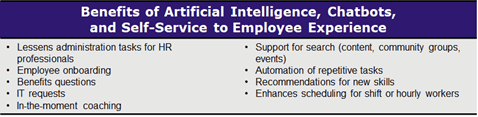
Experience Solutions: For customer facing issues, increased use of chatbots, self-service, and automation technologies will help to smooth out potential customer headaches related to call times. Again, customer insights and feedback tools and technologies that help companies listen to what their customers are saying will be important.
The trickle-down effect on employees is often immediate as companies rejuggle responsibilities and workloads. The same technologies that can smooth out CX also have application with EX and will be important to help field what could be a deluge of questions, schedule changes, and administrative tasks.
Surveying and listening tools to help gauge employee burnout will need to be used on an ongoing basis.
Loss of Institutional Knowledge and Skillsets: This is a facet of layoffs that does not often get a lot of thought until after the fact. The constant churn in companies is causing a knowledge and skills deficit.
Experience Solutions: Aside from the pain that employers feel from losing institutional knowledge, training and capability development is a critical component of an employee’s experience. People want to be supported in building or deepening skill sets that they can use for personal and career development. After a corporate reorganization, people may be taking on new responsibilities they are not as familiar with and may lack the skills needed to feel successful. Performance management programs that support ongoing conversations and coaching can help improve engagement and build deeper commitment to an employer, an important goal when a company is having turnover.
Brand Damage: This has become a larger program with the increased usage of social media channels for both employees and customers to share information and vent frustration.
Experience Solutions: Layoff not handled well? The world will hear about it. When the infamous Better.com Zoom layoff occurred, it went viral. Fast. And with brand consequences that an apology and leadership training could not erase. Companies will need to have a strategy for potentially handling misinformation that is being disseminated and will need a robust customer listening strategy in place that includes reputation management.
While it can be disheartening to hear about the layoffs that have occurred in both the larger tech sector and in the CX segment in particular, there is still much to be optimistic about. Experience solutions provider Qualtrics just announced a quarter that saw the company beat earnings expectations and the company has raised its full year outlook for both revenue and earnings. It is encouraging to see that there has still been a steady pace of new products, partnerships, and innovation in the CX and EX segments. When Oracle announced cuts in its CX group this past summer, there was concern expressed in the industry. However, CX related products were announced at Oracle’s CloudWorld just this month. Microsoft continues to stake its ground in EX with continued Viva enhancements. Smaller providers in the EX and CX technology ecosystems continue to gain customers and enhance offerings.
CX and EX companies are still well positioned to help with many of the pain points layoffs and economic instability may bring. Companies will need to keep or expand their investments in EX and CX technologies as a way to maintain or increase customer retention, loyalty, and brand promotion as well as support internal operations and employee wellbeing.
Author Information

As a detail-oriented researcher, Sherril is expert at discovering, gathering and compiling industry and market data to create clear, actionable market and competitive intelligence. With deep experience in market analysis and segmentation she is a consummate collaborator with strong communication skills adept at supporting and forming relationships with cross-functional teams in all levels of organizations.
Sherril holds a Master of Business Administration in Marketing from University of Colorado, Boulder and a Bachelor of Arts in Psychology from Rutgers University.