
The News: Veritas has released a new research study examining consumer sentiment on the environmental impact of IT: Consumer Sentiment on the Environmental Impact of Hoarding Unnecessary Enterprise Data. The results of the study show that there is concern amongst consumers with the environmental impact of data storage practices, and many additionally stated that these environmental concerns would impact their willingness to make purchases. The results of the study further highlight the importance of data management when considering the environmental impact of data storage. See the full research study from Veritas here.
The Environmental Impact of IT: Veritas Environmental Study Highlights Importance of Data Management
Analyst Take: The environmental impact of IT, and specifically the environmental impact of data centers, has been a hot topic recently, and one that I have been writing about extensively over the last few months. And for good reason – data centers consume large amounts of energy, and the issue is becoming top of mind for both IT vendors and IT organizations. The environmental impact of companies’ data storage is also becoming a concern for consumers according to a new research study sponsored by Veritas exploring consumer sentiment on data management practices and their impact on the environment.
The Veritas Consumer Sentiment study concluded that 46% of consumers are concerned with the environmental impact of data centers, which are responsible for around 2% of all global energy emissions. Additionally, 51% of survey respondents stated that they are concerned about the environmental impact of organizations storing redundant, obsolete, and dark data, with 49% stating that they believe it is a company’s obligation to delete consumer data when it is no longer needed. A significant 59% of the consumers polled stated they would like to see organizations focus on the negative environmental impact of data storage, and 47% even stated they would stop purchasing from a company that was willfully causing environmental damage due to storing unnecessary data.
The study highlights two important points. First, data storage has a clear environmental impact, and it is a concern that consumers truly care about. And second, what data is actually stored is key to reducing this impact. Data storage is critical for most organizations to execute their day-to-day operations, but much of the concern around the environmental impact is with regard to how much, and how necessary the data is. In general, only about 15% of an organization’s data falls into the category of “business critical” – and crucial to an organization’s operations. A larger portion of organizational data is often redundant or obsolete data, and an even further amount is considered “dark” in which the data, and its value, are unknown.
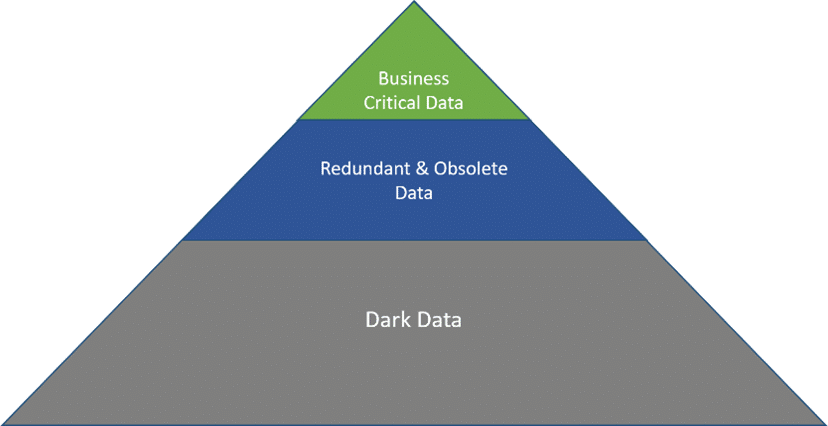
It is fairly well known that organizations are storing large amounts of data and that this contributes significantly to the environmental impact of IT. The more troubling issue is that much of this data does not actually need to be stored. In practice, however, IT organizations are often hesitant to delete data due to a limited understanding of the data’s importance and a fear of deleting something that may be important. As a result, in many instances, data is never deleted.
This highlights the need for data management tools and practices, especially as the capacities of data grow and spread across multiple locations in multi-hybrid-cloud environments. IT organizations need visibility into their data to understand what it is, where it is stored, and what actions may need to be taken – such as removing redundant or stale data. Data management has a clear economic benefit from strictly an IT perspective – reducing unnecessary data, identifying the value – or the lack of value – in data sets, and moving data to the appropriate tier. But looking beyond the economic value data management can deliver, the new focus on environmental impact highlights additional incentives for data management.
Storing data unnecessarily is a key concern in the environmental impact of data storage, and the study from Veritas demonstrates that it is an issue that may even influence consumer spending if they become aware of an organization’s poor data management. Data management tools can help organizations identify the data critical to their business. In some cases, data can be removed entirely, and in others, certain identified datasets can be moved to more energy efficient options such as public cloud or offline tape storage. This helps reduce the energy consumption of storing unnecessary data and can help organizations meet their internal sustainability goals, meet current or future environmental regulations, and appeal to environmentally conscious consumers.
Many of the data management tools available today have the capabilities to help organizations deal with the environmental impact of their unnecessary data. Moving forward with more focus on sustainability in IT, I believe that the topics of data management and the environmental impact of data will become further interwoven. I expect more IT organizations to utilize existing data management capabilities with environmental factors in mind, as well as data management vendors to include new sustainability and environmental capabilities within their products – such as energy monitoring and sustainability focused automation or recommendations – to further assist IT organizations reduce the environmental impact of their data.
Additional insights of interest:
Technical Insight: Data Management in a Multi-Cloud World
Multi-Cloud Data Management EvaluScale Comparison Matrix
Storage, Sustainability, and ESG Reporting
Disclosure: Futurum Research, part of The Futurum Group is a research and analyst firm that engages or has engaged in research, analysis, and advisory services with many technology companies, including those mentioned in this article. The author does not hold any equity positions with any company mentioned in this article. Analysis and opinions expressed herein are specific to the analyst individually.
Author Information

Mitch comes to The Futurum Group through the acquisition of the Evaluator Group and is focused on the fast-paced and rapidly evolving areas of cloud computing and data storage. Mitch joined Evaluator Group in 2019 as a Research Associate covering numerous storage technologies and emerging IT trends.
With a passion for all things tech, Mitch brings deep technical knowledge and insight to The Futurum Group’s research by highlighting the latest in data center and information management solutions. Mitch’s coverage has spanned topics including primary and secondary storage, private and public clouds, networking fabrics, and more. With ever changing data technologies and rapidly emerging trends in today’s digital world, Mitch provides valuable insights into the IT landscape for enterprises, IT professionals, and technology enthusiasts alike.