The News: Microsoft has announced the opening of the public preview of the all-new Teams. This version of the leading communications platform promises faster performance, reduced resource consumption, and a simpler user experience in the most common workflows. Powering all these performance enhancements are changes to the client framework that have been in the works for several years. Read the official blog post here.
Microsoft Launches the New Faster, Simpler Teams 2
Analyst Take: Discussion about Teams 2 started in mid-2021 when word started drifting out of Redmond that there were structural changes being made to address the reputation for laggy, memory-chugging performance that Teams was getting. Since then, there hasn’t been much beyond the occasional report of a sighting. It began to take on the tone of Sasquatch hunting. And in all the AI-oriented chatter since the OpenAI announcement in November of 2022, there was no mention of Teams 2. But the day has finally arrived, and we’re underway with the new era of Teams.
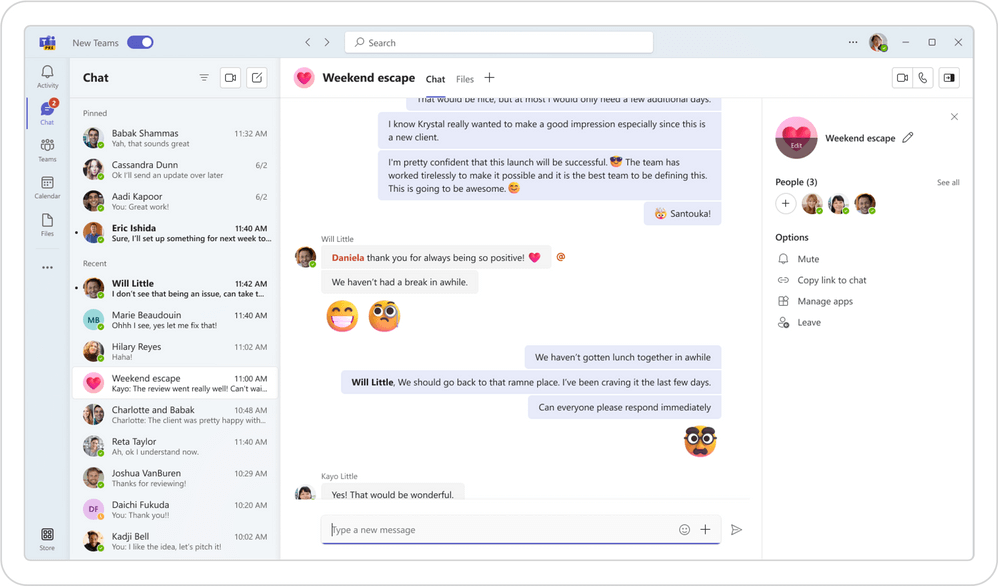 Teams 2 (or 2.1, depending on whom you listen to) is being heralded as “All New” and to be clear, there has been a tremendous amount of work done to improve the experience. The goal of the release was to make the product twice as fast and use half the machine resources of Classic Teams. According to test results from GigaOm, they’ve hit that mark with 2x faster launch and meeting join times. In addition, install times are 3x faster, and it is now 1.7x faster to switch between chat threads and channels. In addition, the new Teams uses 50% less memory and 70% less disc space on the user’s machine. Content loads faster, so you see a lot less of the grey boxes that have become the “buffering” spinner for our work lives, and the whole experience feels a lot snappier. All of this makes a substantial difference for users with slower machines or lower bandwidth (or if you’re working from home on a congested network).
Under all these performance enhancements are changes to the underlying data, network chat, and video architectures, along with client-side moves from Electron to Edge Webview 2 and from Angular to React. Much of the detail of those changes is best saved for conversation at another time, but they imply two things. First, that this wasn’t a minor effort. The team behind Teams has gone to the foundation of the app and started over. Secondly, it gives Microsoft ownership of more of the stack they use and can therefore unlock velocity.
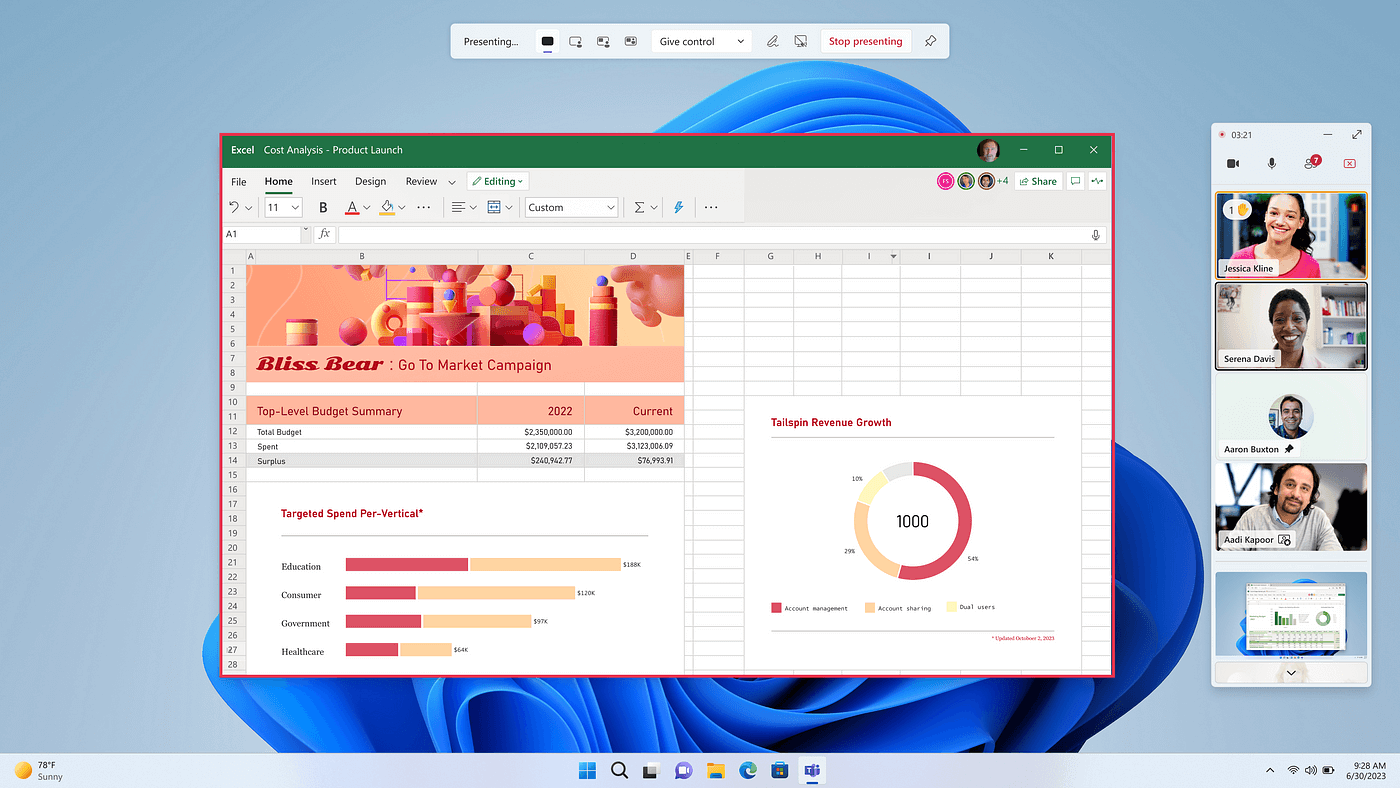
There are some additional changes in the UX that will benefit users. The Teams Design team made a great post on Medium that walks through all the intricacies, but at a high level, there are new flows in chat and channels to better separate 1:1 chats from group channel conversations and make them both more intuitively usable. There are also several changes to the meetings experience. One of my personal frustrations over the years was that I always lost the connection with my audience while I was sharing. The new Teams solves this with a better view of more participants while in presenter mode.
 As with most releases of this magnitude, there are also some security enhancements and improvements in manageability for IT. The preview is open to Microsoft Commercial accounts now and will be rolling out to other customers in due course.
What is most clear in this release is that Microsoft has retooled for another big push of innovation in the Teams experience. The old 2017 platform wasn’t going to take them where they needed to go, so they rebuilt it, and we’re just seeing the faintest glimmers of what this baby’ll do.
If you combine Teams 2 with all the AI action happening, you have to think that the roadmap for Teams is a long one. Microsoft Teams has become the dominant product in the unified communications market and they show no signs of slowing down.
Disclosure: Wainhouse Research, part of The Futurum Group family of companies, is a research and advisory firm that engages or has engaged in research, analysis, and advisory services with many technology companies, including those mentioned in this article. The author does not hold any equity positions with any company mentioned in this article.
Analysis and opinions expressed herein are specific to the analyst individually and data and other information that might have been provided for validation, not those of Wainhouse Research as a whole.
Other insights from Wainhouse Research:
Microsoft Teams Announces a Copilot to Help Users Navigate Their Data, Spur Productivity
Author Information

Sean is a trusted advisor to and assists industry vendors and enterprises with workplace communications and collaboration strategies, market entry and product assessment, product portfolio analysis, and sales enablement services.
Sean holds a Bachelor of Science in International Business from University of Colorado, Boulder.