Analyst(s): Olivier Blanchard
Publication Date: August 14, 2026
Samsung recently introduced Flex Titanium to strengthen foldable displays and reduce crease visibility through a titanium-alloy film and a titanium plate. The engineering addresses longstanding foldable-device concerns, but sustained durability and device-level trade-offs will determine its value.
What Is Covered in This Article:
- The structure and components behind Samsung Flex Titanium
- Samsung’s durability and crease-visibility claims
- Device availability and the reported S Pen trade-off
- The need for long-term testing and visible user benefits
- Competitive pressure across the foldable-device category
The News: Last month, Samsung Electronics unveiled Flex Titanium for its next generation of Galaxy foldable devices. The display structure combines a titanium-alloy film beneath the OLED panel with a titanium plate supporting the display module, targeting improved durability, reduced crease visibility, and a balance between slimness, flexibility, and strength.
The titanium-alloy film promises 20x greater mechanical stiffness than polymer film even though it measures approximately one-third the thickness of an average human hair. The titanium plate uses micro-patterned holes and tighter bonding to support the unfolded display while retaining flexibility, and a high-resolution architecture and next-generation organic materials will reduce power consumption.
Do Samsung Flex Titanium’s Advantages Come With Tricky Tradeoffs?
Analyst Take: Samsung Flex Titanium aims to address two persistent concerns surrounding foldable displays: durability and crease visibility. The titanium-alloy film aims to strengthen the structure beneath the OLED panel, while the titanium plate should provide more stable support while preserving the flexibility required for repeated folding.
While Samsung engineers were at it, they also combined these structural changes with new organic materials and a high-resolution display architecture to improve power efficiency. This is a meaningful engineering change, but will these new specs be enough to help solve for the types of wear and tear users complain about after prolonged daily use?
Samsung Flex Titanium Attacks the Crease at the Structural Level
Because the titanium-alloy film provides 20x greater mechanical stiffness than polymer film (while remaining approximately one-third as thick as an average human hair), I think Samsung’s solution here is already a very big step in the right direction. Beneath it, the titanium plate’s use of micro-patterned holes adds flexibility and tighter bonding (to eliminate air gaps between the plate adhesive and display module), which complements the improved mechanical stiffness. Together, these two design elements should significantly strengthen support from within the display rather than relying only on surface-level changes. That approach is perhaps what I like best about it, and why the engineering case for this approach feels so credible. Time will be the ultimate arbiter of the design’s viability, but the approach looks solid.
Durability Must Be Demonstrated Beyond Controlled Testing
Samsung designed the new structure to withstand external shock and repeated folding without making the display thicker – a pretty critical feature given the success of foldables, especially with Apple now getting into the foldable game. What this signals is that foldables are now expanding from semi-niche into scaling mainstream form factors with a loyal, enthusiastic, and growing customer base.
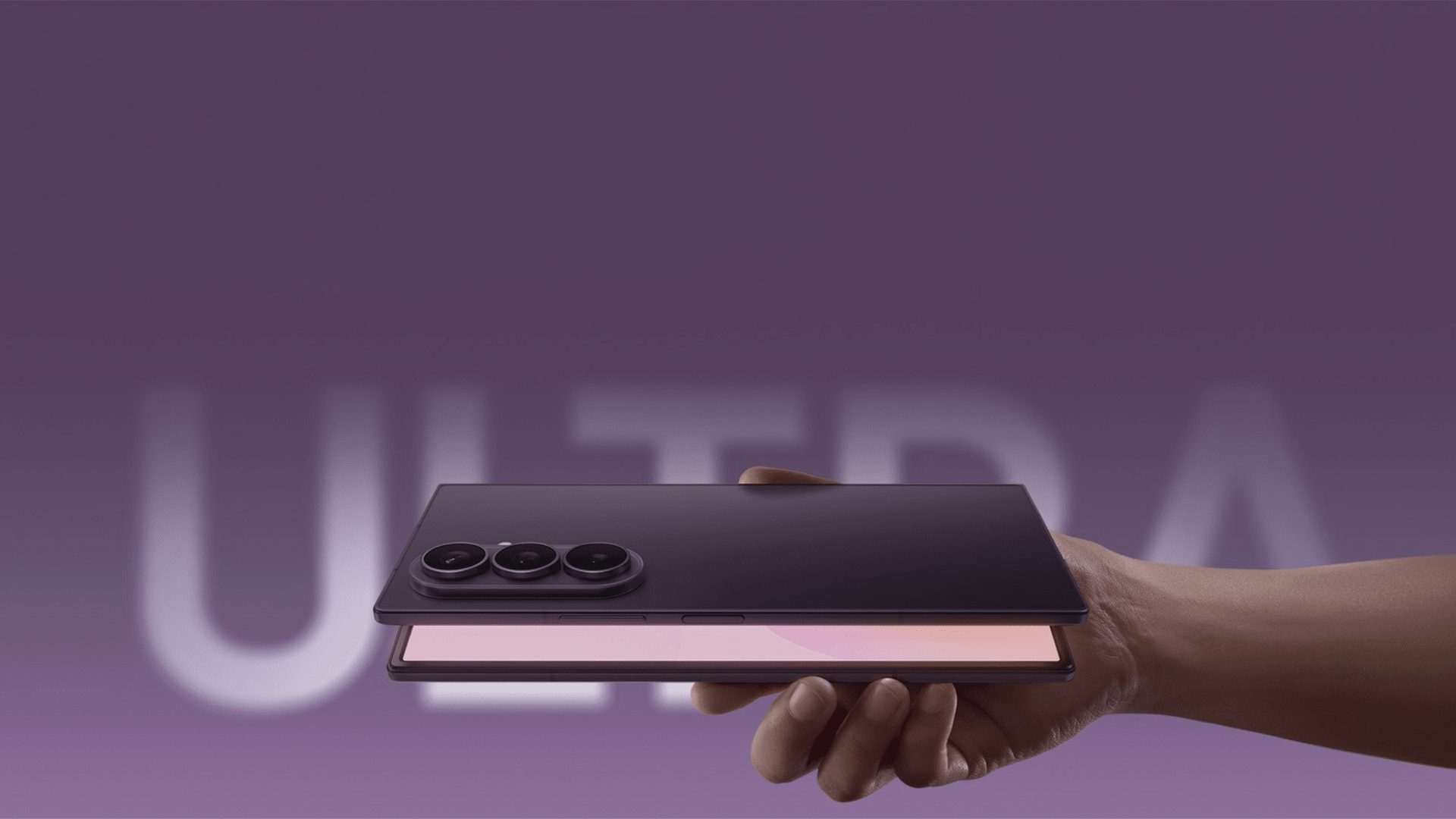
As expected, testing included extreme heating and cooling, tens of thousands of folding cycles, ball-drop tests, and detailed measurements of how light reflects from the crease. Early hands-on impressions found the Galaxy Z Fold 8 Ultra resilient and almost flat when unfolded. A crease that looks faint at launch could still become more pronounced after sustained daily use, but Flex Titanium’s impact on durability (more than aesthetics) already seems like the primary value proposition for customers.
A Better Display Introduces a Functional Trade-Off
The Galaxy Z Fold 8 and Galaxy Z Fold 8 Ultra are the first Samsung devices to use Flex Titanium, with the Galaxy Z Flip 8 holding on to a more traditional foldable-panel structure.
Give-and-take note: The titanium-based construction will give the Fold models a flatter and more uniform display but, unfortunately, removes S Pen support. The trade-off reflects the challenge of balancing display stiffness, folding flexibility, thinness, and additional input functionality within the same structure: Durability and a less visible crease will be valuable to many buyers, but stylus users will lose an established and important capability – one that Android ecosystem competitors, like Motorola, could leverage to lure Samsung customers over to their stylus-friendly alternatives Samsung will need to show that the improvement in everyday display quality outweighs the loss of S Pen functionality. Risky market test that will be well worth keeping an eye on.
What to Watch:
- Will independent long-term reviews confirm that 20x greater mechanical stiffness limits crease development and display degradation after repeated folding?
- How will buyers weigh a flatter, stronger display against the reported absence of S Pen support, and will stylus fans switch to stylus-friendly alternatives in the Android ecosystem?
- Can Samsung extend Flex Titanium beyond the Galaxy Z Fold 8 and Galaxy Z Fold 8 Ultra if the Galaxy Z Flip 8 does not use the same structure?
- Will Samsung’s crease reduction compare favorably with the flatter display reported on the Oppo Find N6 and the smoother hinge attributed to the Google Pixel 10 Pro Fold?
- If (when) Apple introduces the reported foldable iPhone, will Samsung’s seven generations of foldable engineering work as a visible advantage/moat?
Read Samsung’s Full Flex Titanium Technology announcement on the Samsung website.
Declaration of generative AI and AI-assisted technologies in the writing process: This content has been generated with the support of artificial intelligence technologies. Due to the fast pace of content creation and the continuous evolution of data and information, The Futurum Group and its analysts strive to ensure the accuracy and factual integrity of the information presented. However, the opinions and interpretations expressed in this content reflect those of the individual author/analyst. The Futurum Group makes no guarantees regarding the completeness, accuracy, or reliability of any information contained herein. Readers are encouraged to verify facts independently and consult relevant sources for further clarification.
Disclosure: Futurum is a research and advisory firm that engages or has engaged in research, analysis, and advisory services with many technology companies, including those mentioned in this article. The author does not hold any equity positions with any company mentioned in this article.
Analysis and opinions expressed herein are specific to the analyst individually and data and other information that might have been provided for validation, not those of Futurum as a whole.
Read the full Futurum Group Disclosure.
Other Insights From Futurum:
Can Google and Samsung Displace Meta in the Smart Glasses Segment?
Samsung Electronics Q4 FY 2025 Highlights AI-Driven Memory Strength
Samsung’s 2nm Advance Draws on EDA Innovation from Cadence, Siemens, and Synopsys
Featured Image: Samsung
Author Information

Olivier Blanchard is Research Director, Intelligent Devices. He covers edge semiconductors and intelligent AI-capable devices for Futurum. In addition to having co-authored several books about digital transformation and AI with Futurum Group CEO Daniel Newman, Blanchard brings considerable experience demystifying new and emerging technologies, advising clients on how best to future-proof their organizations, and helping maximize the positive impacts of technology disruption while mitigating their potentially negative effects. Follow his extended analysis on X and LinkedIn.