
Analyst(s): Brendan Burke
Publication Date: September 14, 2026
IBM has introduced a 2 nm processor whose cores natively execute Arm and IBM Z, or LinuxONE instructions. The design removes the need to port Arm64 Linux applications to s390x, but IBM must still prove that software support and mixed-workload performance can broaden mainframe adoption.
What Is Covered in This Article:
- IBM’s integration of Arm64 and Z instructions within the same processor cores
- The processor’s core, cache, acceleration, and virtualization architecture
- The software ecosystem and mixed-workload requirements for adoption
- The role of Spyre in IBM’s enterprise AI strategy
- IBM’s delivery timeline and remaining production requirements
The News: At Hot Chips 2026, IBM unveiled the first dual-architecture mainframe processor for future IBM Z and LinuxONE systems, designed around its “fit-for-purpose computing” philosophy to support mission-critical data serving, workload consolidation, and transaction processing (which handles 70% of global financial transactions with “nine nines” or 99.9999999% availability). The architecture enables Arm64 Linux environments to operate alongside z/OS and Linux on IBM Z without porting or emulation. Rather than assigning Arm and Z workloads to separate core types, IBM designed each core to execute both instruction sets natively. Built on a 2 nm node, the processor contains 11 cores operating above 5.7 GHz, 36 MB of L2 cache per core, 432 MB of on-chip virtual L3 cache, and 3.5 GB of system-level virtual L4 cache.
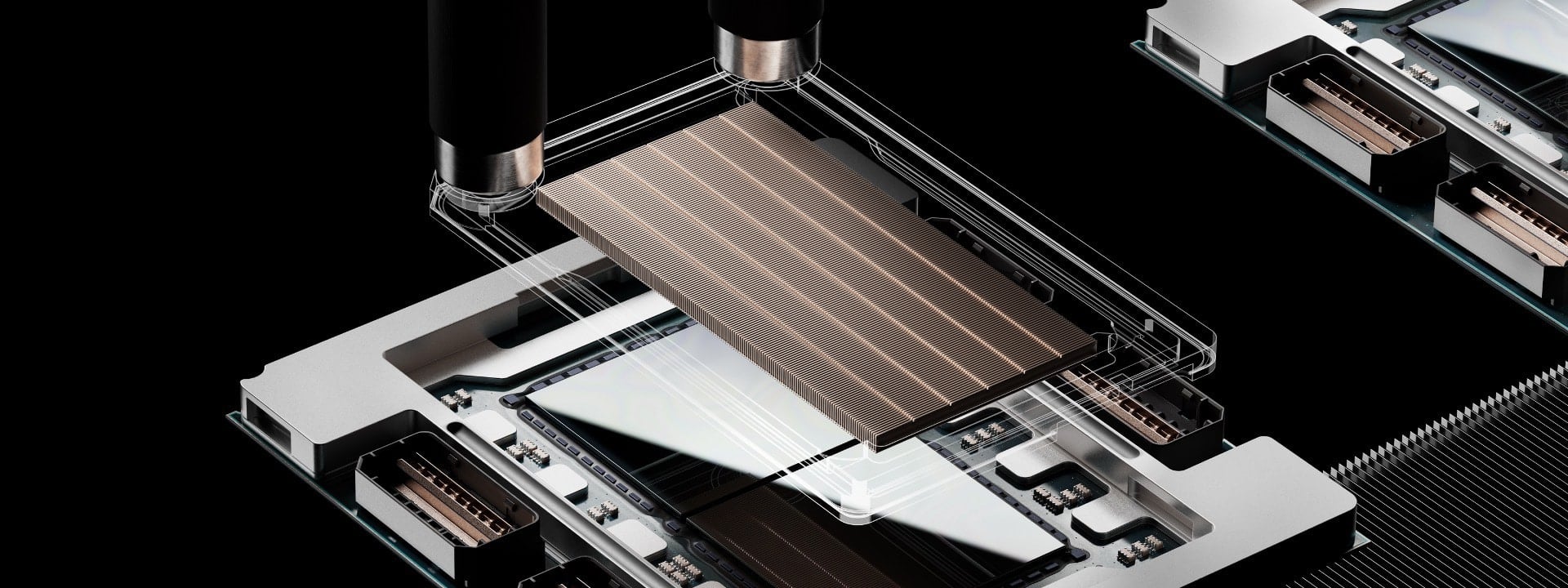
Each core supports two-way simultaneous multithreading, with each hardware thread able to switch independently between Z and Arm64 modes within nanoseconds as KVM dispatches virtual machines. IBM added 2,792 Arm64 instructions and 239 system registers, while retaining acceleration for AI, cryptography, compression, data sorting, and I/O. IBM also introduced a new Spyre accelerator with 16 active AI cores and one redundant core, 96 GB of HBM3E, more than 4 TB/s of bandwidth, 16 PCIe Gen6 links, and up to four times the previous FP8 throughput.
Can the IBM/Arm Dual Architecture Processor Align the Mainframe with the Agentic CPU Market?
Analyst Take: IBM has solved the processor compatibility problem, but it has not yet proven that Arm will become a meaningful mainframe software platform. Native execution removes the cost and delay of porting Arm applications to s390x, which addresses a longstanding constraint on IBM’s software reach. However, application availability depends on OS support, commercial certification, licensing, development tools, and sustained vendor participation.
Compatibility Does Not Guarantee Software Availability
Arm’s ecosystem of more than 22 million developers gives IBM access to a much larger application base than it could reach through individual s390x ports. Native binary compatibility allows Arm64 Linux applications to run unmodified, removing a material technical obstacle for developers and infrastructure teams. However, executable software is not automatically supported software, particularly in environments that depend on defined service levels, security controls, and vendor accountability. IBM must provide a supported application catalog, clear licensing treatment, and validation processes before enterprises can determine which Arm workloads belong on the mainframe. The IBM dual architecture processor expands IBM’s software opportunity, but ecosystem participation will determine whether it expands actual deployment.
Shared Cores Create a Workload-Governance Test
IBM’s decision to run Arm and Z instructions on the same cores supports deeper consolidation, while also making resource governance central to the platform’s success. IBM confirmed that both simultaneous threads compete for processor resources and can independently switch between instruction sets as KVM dispatches each virtual machine. Nanosecond-scale switching and virtually negligible virtualization overhead address the transition between modes, but they do not establish how mixed workloads perform under sustained contention. High availability remains paramount, backed by an architectural checkpoint mechanism that enables instantaneous hardware rollback to the last completed instruction, transparent state transfers to spare cores upon persistent failure without OS awareness, concurrent repair, and full memory protection. While these mechanisms provide a robust fault-tolerant foundation for achieving “nine nines” reliability, enterprises will still require workload-level evidence of predictable performance and isolation. IBM must prove that shared execution preserves mainframe service levels, because consolidation loses its value if Arm workloads introduce performance variability into critical Z environments.
Data Proximity Is the Stronger AI Argument
IBM’s strongest AI proposition is not the Spyre accelerator’s peak throughput, but the ability to place AI execution beside the data and transactions that models must analyze. The accelerator’s 20x increase in memory bandwidth (exceeding 4 TB/s via 96 GB HBM3E) and support for FP4, MXFP4, and FP8 precision formats reflect the shift from raw arithmetic capacity toward moving model weights, activations, and state efficiently during inference. Connected via PCIe Gen6 x16 with peer-to-peer mesh interconnects and secured by protected pass-through, confidential computing, and on-chip cryptography, Spyre is tailored for enterprise generative AI and agentic tasks.
IBM has identified business process agents, operations incident detection, software development lifecycle automation, fraud detection, sanctions screening, document understanding, and insurance adjudication as primary target workloads. The architecture connects processor execution, Arm-native software, acceleration, enterprise data, and operational controls, but IBM has not yet demonstrated that complete stack under production conditions. Spyre strengthens the mainframe AI architecture only if IBM can demonstrate that data proximity yields measurable operational value without compromising security, resilience, or workload performance.
The Roadmap Protects Relevance Before It Creates Growth
The Arm-integrated IBM Z is expected in the successor to the z17, with IBM’s product cadence pointing to approximately 2028, which limits its effect on near-term infrastructure decisions. The growth of dedicated agentic worker CPUs as a standalone deployment method supports the broader case for renewed CPU investment. However, Arm support remains limited to Linux, and IBM has not disclosed a confirmed launch date, supported software list, licensing model, pricing, or production performance results. Enterprises should treat the IBM dual-architecture processor as a credible direction for long-term mainframe modernization, not as a deployment-ready expansion of the platform.
What to Watch:
- IBM must define a confirmed launch date, supported operating systems, application catalog, licensing structure, and customer-testing process before enterprises can plan production adoption.
- Mixed-workload benchmarks should test contention, latency, isolation, and performance consistency when Arm64 and Z workloads compete for shared processor resources.
- Software vendors will determine whether native compatibility translates into commercially supported applications across monitoring, security, middleware, AI, and development environments.
- End-to-end demonstrations must show Arm-native AI software, Spyre acceleration, enterprise data, and mainframe operational controls working together under production conditions.
- Continued investment in Telum, Spyre, GPU infrastructure, and IBM’s collaboration with NVIDIA will show whether Arm becomes central to mainframe AI or remains one component of a broader multi-architecture strategy.
See the complete announcement of IBM’s dual-architecture processor for IBM Z and LinuxONE.
Declaration of generative AI and AI-assisted technologies in the writing process: This content has been generated with the support of artificial intelligence technologies. Due to the fast pace of content creation and the continuous evolution of data and information, The Futurum Group and its analysts strive to ensure the accuracy and factual integrity of the information presented. However, the opinions and interpretations expressed in this content reflect those of the individual author/analyst. The Futurum Group makes no guarantees regarding the completeness, accuracy, or reliability of any information contained herein. Readers are encouraged to verify facts independently and consult relevant sources for further clarification.
Disclosure: Futurum is a research and advisory firm that engages or has engaged in research, analysis, and advisory services with many technology companies, including those mentioned in this article. The author does not hold any equity positions with any company mentioned in this article.
Analysis and opinions expressed herein are specific to the analyst individually and data and other information that might have been provided for validation, not those of Futurum as a whole.
Read the full Futurum Group Disclosure.
Other Insights From Futurum:
IBM Q2 FY 2026: Software Growth Continues as Mainframe Purchases Slow
IBM and Arm Partner on Dual-Architecture Computing To Redefine Mainframes for AI
$2 Billion CHIPS Act Investment in Quantum Bets on IBM’s 300mm Superconducting Silicon
Author Information

Brendan is Research Director, Semiconductors, Supply Chain, and Emerging Tech. He advises clients on strategic initiatives and leads the Futurum Semiconductors Practice. He is an experienced tech industry analyst who has guided tech leaders in identifying market opportunities spanning edge processors, generative AI applications, and hyperscale data centers.
Before joining Futurum, Brendan consulted with global AI leaders and served as a Senior Analyst in Emerging Technology Research at PitchBook. At PitchBook, he developed market intelligence tools for AI, highlighted by one of the industry’s most comprehensive AI semiconductor market landscapes encompassing both public and private companies. He has advised Fortune 100 tech giants, growth-stage innovators, global investors, and leading market research firms. Before PitchBook, he led research teams in tech investment banking and market research.
Brendan is based in Seattle, Washington. He has a Bachelor of Arts Degree from Amherst College.