The News: AMD announced revenue for first quarter (Q1) 2024. It was a strong start for the year with AMD’s Data Center and Client segments growing more than 80% year-over-year (YoY), with solid momentum already for the company’s MI300 AI accelerator and adoption of Ryzen and EPYC processors. Read the full press release here.
By the numbers:
- Revenue of $5.5 billion
- Gross margin of 47% GAAP, 52% non-GAAP
- Operating income of $36 million GAAP, $1.1 billion non-GAAP
- Net income of $123 million GAAP, $1.0 billion non-GAAP
- Diluted earnings per share (EPS) of $0.07 GAAP, $0.62 non-GAAP
AMD Q1 2024 Earnings Showcase Its Data Center and PC Solutions
Analyst Take: AMD is off to a great start in 2024 with Q1 numbers showing strong growth in its Data Center and Client (PC) businesses. Data Center segment revenue was $2.3 billion, up 80% YoY, driven by growth in both AMD Instinct GPUs and 4th Gen AMD EPYC CPUs. Revenue increased 2% sequentially driven by the first full quarter of AMD Instinct GPU sales (but was partially offset by a seasonal decline in server CPU shipments). AMD’s Client segment revenue was $1.4 billion, up 85% YoY, driven primarily by AMD Ryzen 8000 Series processor sales, although revenue decreased 6% sequentially. One point of softness was Gaming segment revenue, down 48% YoY (and 33% quarter-over-quarter [QoQ]) to $922 million, which can be attributed both to a decrease in semi-custom revenue and a contraction of AMD Radeon GPU sales.
Nonetheless, “widespread deployment of AI is driving demand for significantly more compute across a broad range of markets,” confirmed AMD Chair and CEO Dr. Lisa Su, pointing to the company’s solid execution in enabling AI capabilities across its product portfolio. AMD EVP, CFO, and Treasurer Jean Hu also highlighted the quarter’s record Data Center segment revenue and gross margin expansion, which is expected to continue into subsequent quarters.
Breaking down the momentum behind those numbers, we can look at how AMD expanded its AI solutions for the cloud, enterprise, embedded, and PC markets, with Lenovo announcing its ThinkSystem SR685a V3 8 GPU server, which features the AMD Instinct MI300X for both enterprise on-premises AI and public AI cloud service providers, as well as Dell Technologies and Supermicro previewing their own AMD Instinct MI300X systems.
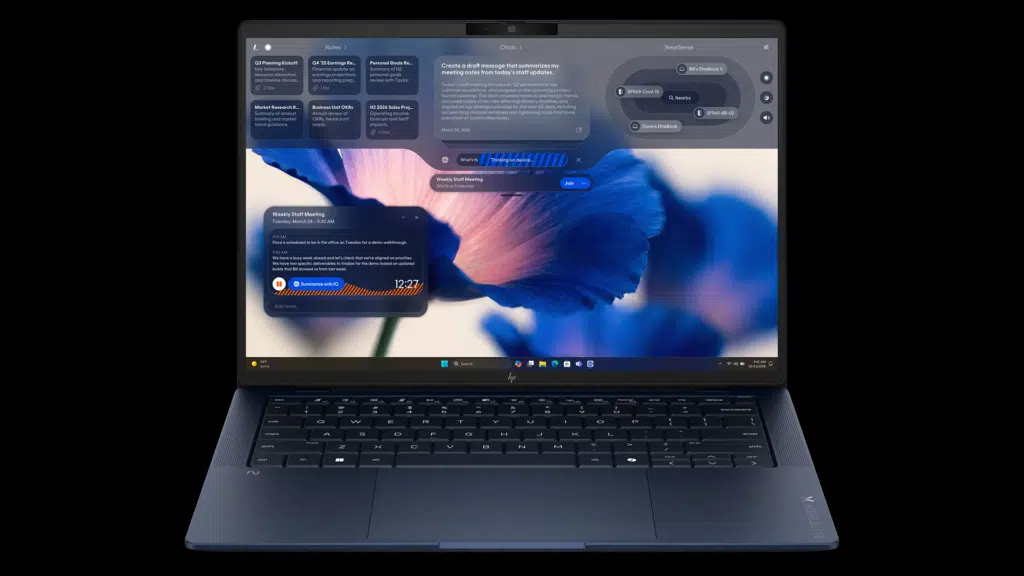
AMD also expanded its commercial AI PC processor portfolio with the launch of its new Ryzen PRO notebook and desktop processors (the Ryzen PRO 8000 Series processors have already turned up in new HP and Lenovo enterprise PCs). As a footnote, new AMD Embedded+ architecture combines x86 embedded processors with adaptive SoCs to accelerate time to market for edge AI applications. Lenovo, HP, and other partners showcased over 100 AI experiences already available through AMD platforms at the Advancing AI PC Innovation Summit, highlighting AMD-enabled emerging AI experiences. AMD expects to have more than 150 independent software vendors (ISVs) developing for Ryzen AI by the end of the year.
Speaking of AI, the AMD AI software ecosystem continues to mature with new optimizations and features in the AMD ROCm 6.1 software stack, enabling native support for new generative AI tools and frameworks, expanding the performance horizon of AMD Instinct MI300X solutions, and broadening support for AMD Radeon PRO W7800 and Radeon RX 7900 GRE workstation and desktop GPUs.
On the mobility end of its solutions ecosystem, AMD also launched new Versal Series Gen 2 devices, including the Versal AI Edge Series Gen 2 SoCs, which combine multiple compute engines on a single chip for highly efficient end-to-end acceleration of AI-driven embedded systems. (Subaru reportedly plans to deploy Versal AI Edge Series Gen 2 to power its next-gen EyeSight ADAS vision system.) Sony Semiconductor Solutions also selected the AMD Artix-7 FPGA and Zynq UltraScale+ MPSoC for its LiDAR automotive reference design. This selection underscores AMD’s investments in the automotive market, where I think it can fill some gaps and perhaps even displace some of its semiconductor competition.
Key industry partners also expanded their application-optimized solutions powered by EPYC processors. First, Lenovo announced two new platforms powered by 4th Gen EPYC processors: the ThinkAgile MX455 V3 Edge Premier Solution, AI-optimized and fully integrated with the Microsoft Azure Stack HCI, and the ThinkSystem SD535 V3, designed for mixed enterprise workloads. AMD, Samsung, and Vodafone also demonstrated virtualized RAN solutions powered by EPYC CPUs. Meanwhile, Ericsson and Telstra are using 4th Gen EPYC processors to deliver further energy efficiencies and performance improvements to 5G core functions.
In addition, AMD further enhanced its software offerings for gamers with AMD FidelityFX Super Resolution 3.1, which brings image quality improvements, expanded developer support, and AMD Fluid Motion Frames to increase frame generation for thousands of games.
AMD’s second quarter (Q2) 2024 outlook points to approximately $5.7 billion (plus or minus $300 million), translating into roughly 6% YoY growth and 4% QoQ growth in the mid-range, with non-GAAP gross margin expected around 53%.
Daniel Newman and his co-host of The Six Five Webcast, Patrick Moorhead of Moor Insights and Strategy discusses AMD’s earnings in their latest episode. Check it out here and be sure to subscribe to The Six Five Webcast so you never miss an episode.
Disclosure: The Futurum Group is a research and advisory firm that engages or has engaged in research, analysis, and advisory services with many technology companies, including those mentioned in this article. The author does not hold any equity positions with any company mentioned in this article.
Analysis and opinions expressed herein are specific to the analyst individually and data and other information that might have been provided for validation, not those of The Futurum Group as a whole.
Other Insights from The Futurum Group:
The Role of AMD in Google Cloud’s Next-Gen Offerings
Talking Apple, AMD, Samsung & Micron, Adobe, Samsung & Apple, Arm
Author Information

Olivier Blanchard is Research Director, Intelligent Devices. He covers edge semiconductors and intelligent AI-capable devices for Futurum. In addition to having co-authored several books about digital transformation and AI with Futurum Group CEO Daniel Newman, Blanchard brings considerable experience demystifying new and emerging technologies, advising clients on how best to future-proof their organizations, and helping maximize the positive impacts of technology disruption while mitigating their potentially negative effects. Follow his extended analysis on X and LinkedIn.