New research from FOUNT and TI People demonstrates the need for quality employee experience data. According to the report, for companies running employee surveys once a year, 70% say the employee data is not adequate for their needs. While a relatively small sample (less than 200 responses), the research had representation from both large and small companies across a variety of industries and had some interesting findings.
EX Data Lacks Depth
According to the study, 2022 State of EX, organizations’ data is not capturing the depth and context of employees’ experience thoroughly enough to guide decision-making and action.
“The upheaval of post-pandemic work life has driven many organizations to reevaluate their employee listening strategies to be more responsive to their workers’ expectations,” says Christophe Martel, co-founder and CEO of FOUNT. “Given our experience working with early adopters of advanced EX practices, we expect to see more global brands extend their existing survey capabilities to dig deeper into what causes friction for their employees and focus their data collection activities on things they can actually fix.”
These findings about data make sense if the organizations do not have a more comprehensive and ongoing listening, feedback, and analytics program in place. Also, the employee journey cannot be captured with annual or twice-a-year employee surveys any longer. Companies need to expand beyond core employee journey points and look toward milestones and micro-moments, which make up the bulk of an employee’s experience with a company.
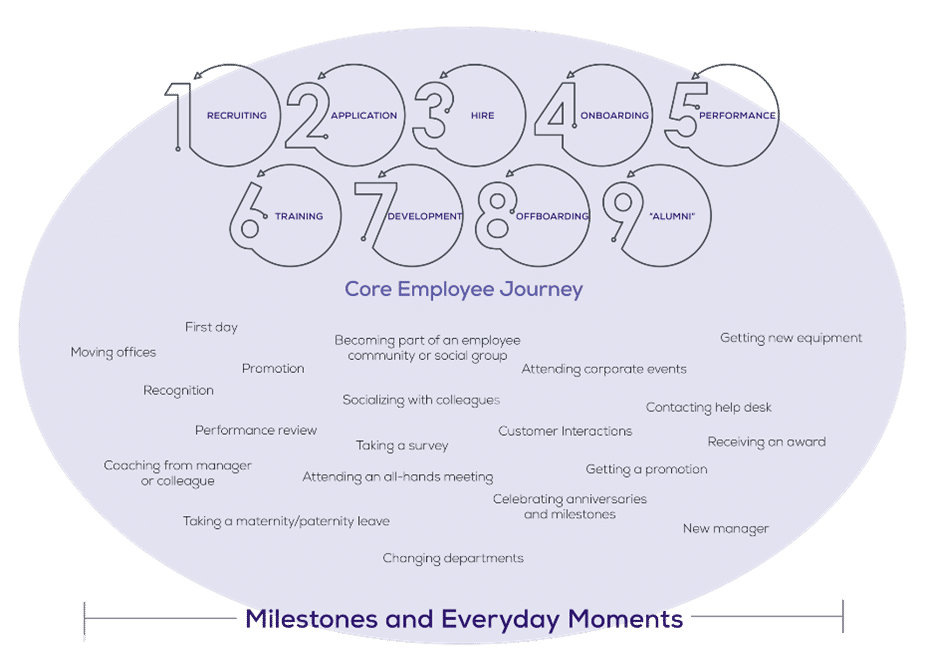
Companies also need to keep in mind there has been a lot of growth in the number and type of digital channels available for employee data collection. Employers need to reach employees where and in what format they want to be communicated with.
Motivation for EX Investment
Research respondents report favorable views of EX investments, realizing it is not a quick fix for a specific problem. Ninety-four percent report that EX improvement is more than just a short-term project at their organizations. For 51%, EX work is a permanent change in how their organizations operate. Other data points are as follows:
- 81% report that intense competition for talent is motivating their colleagues to invest more in EX
- 63% report that post-pandemic return-to-office/hybrid work issues are also motivating more EX investment
- 85% report their top challenge is measuring the business and financial impact of EX improvements
This last point is an important piece of data as companies will need to demonstrate clear ROI for EX as budgets start to come under the microscope during this time of economic uncertainty.
Internal EX Participants and Structure
The FOUN/TI People research found that 79% of respondents struggled to coordinate EX work across their organizations. Other data points:
- EX professionals ranked business leaders and managers as having the most impact on EX and as their most important partner, yet also ranked them less helpful than HR colleagues
- 70% of EX teams report into HR, 50% have budgets of less than $100k/year, and 75% have fewer than seven members
One of the market barriers Dash Research identified in its Employee Experience report was lack of ownership of the EX function. In our own research, those in the industry reported ownership is an evolving answer, but the most successful efforts were cross functional with clear responsibilities and supported at the C-level.
Author Information

As a detail-oriented researcher, Sherril is expert at discovering, gathering and compiling industry and market data to create clear, actionable market and competitive intelligence. With deep experience in market analysis and segmentation she is a consummate collaborator with strong communication skills adept at supporting and forming relationships with cross-functional teams in all levels of organizations.
Sherril holds a Master of Business Administration in Marketing from University of Colorado, Boulder and a Bachelor of Arts in Psychology from Rutgers University.