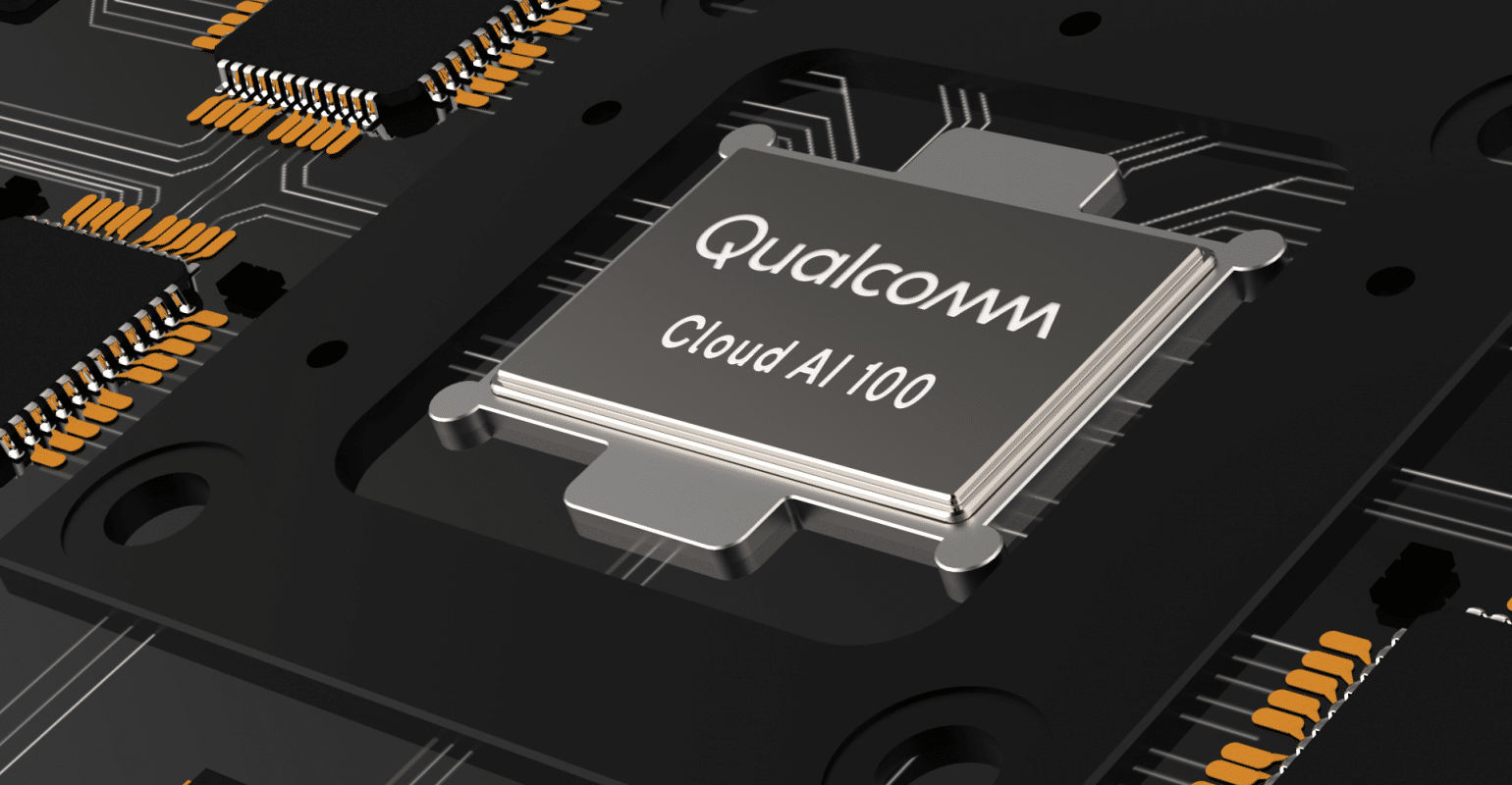
This week at the AI Hardware Summit, Qualcomm VP of Product Management Ziad Asghar presented the company’s new AI inference chip, the Cloud AI 100, placing the company square in the middle of the AI inference conversation.
While the Cloud AI 100 demonstrations at the event represented the workings of a prototype, Qualcomm expects to have the solution in market in 2020. I expect this to up level Qualcomm’s AI profile; in particular in the AI inference discussion. I believe that AI inference will be the next frontier for AI as the mass of training data and models stem the demand for inference; especially as mobile continues to rapidly proliferate
The Mobile AI Challenge
We have entered the 5G era, but not only 5G, but also AI. This means billions of connected devices, massive volumes of data being created, and a race for new services at the edge.
For mobile AI to work, the technology needs to be able to handle complex concurrencies, large and complicated neural networks, real-time demand and the need for low power consumption. Low power, is something that Qualcomm truly outperforms at as the company has built IP that enables it to baseline using milliwatts as opposed to 10s of watts. While this sounds somewhat benign, it will be extremely important as the exponential increase in cloud inferencing is driving up power needs in the cloud at a fast pace. To counter that trend, companies that can do more AI compute at the lowest power possible are best positioned.
To put all of this into perspective, perhaps noting the pure scale of mobile growth that lies ahead. With more than 7.3 Billion units expected to ship between 2018 and 2023, mobile will be the most diverse challenge in the near future.
The Cloud AI 100 appears to be designed with these specific challenges in mind.
What Was On Display?
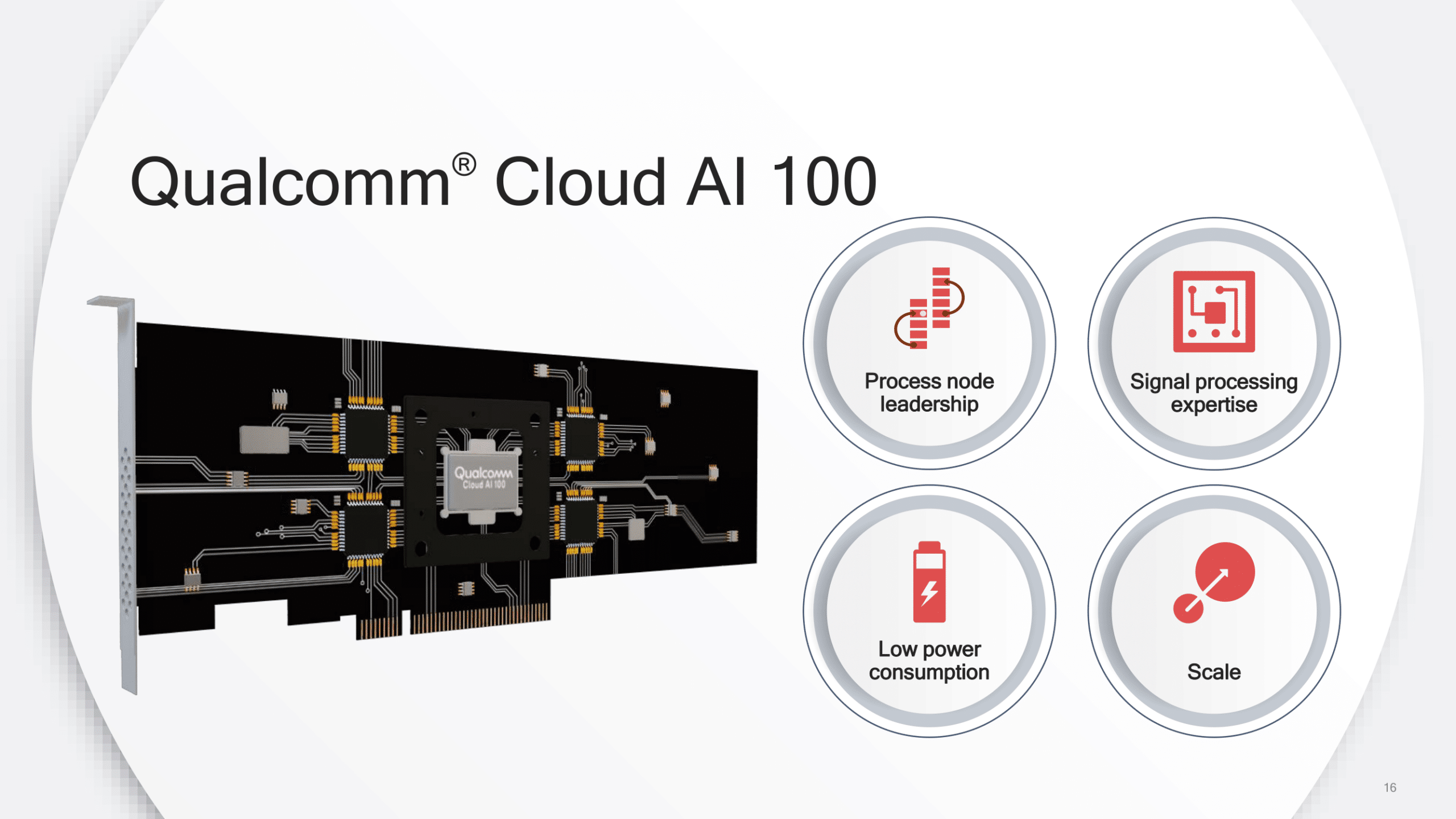
During the AI Hardware summit, Qualcomm demonstrated for the first time the Cloud AI 100 running ResNet50, performing real time inferencing on an FPGA platform. Built on 7nm , Qualcomm’s Cloud AI 100 currently delivers more than 350 TOPS, which enables it to provide best-in-class inferencing.
The Cloud AI 100 will support the full software and application stack including Pytorch, TensorFlow and more.
Target Markets for the Cloud AI 100?
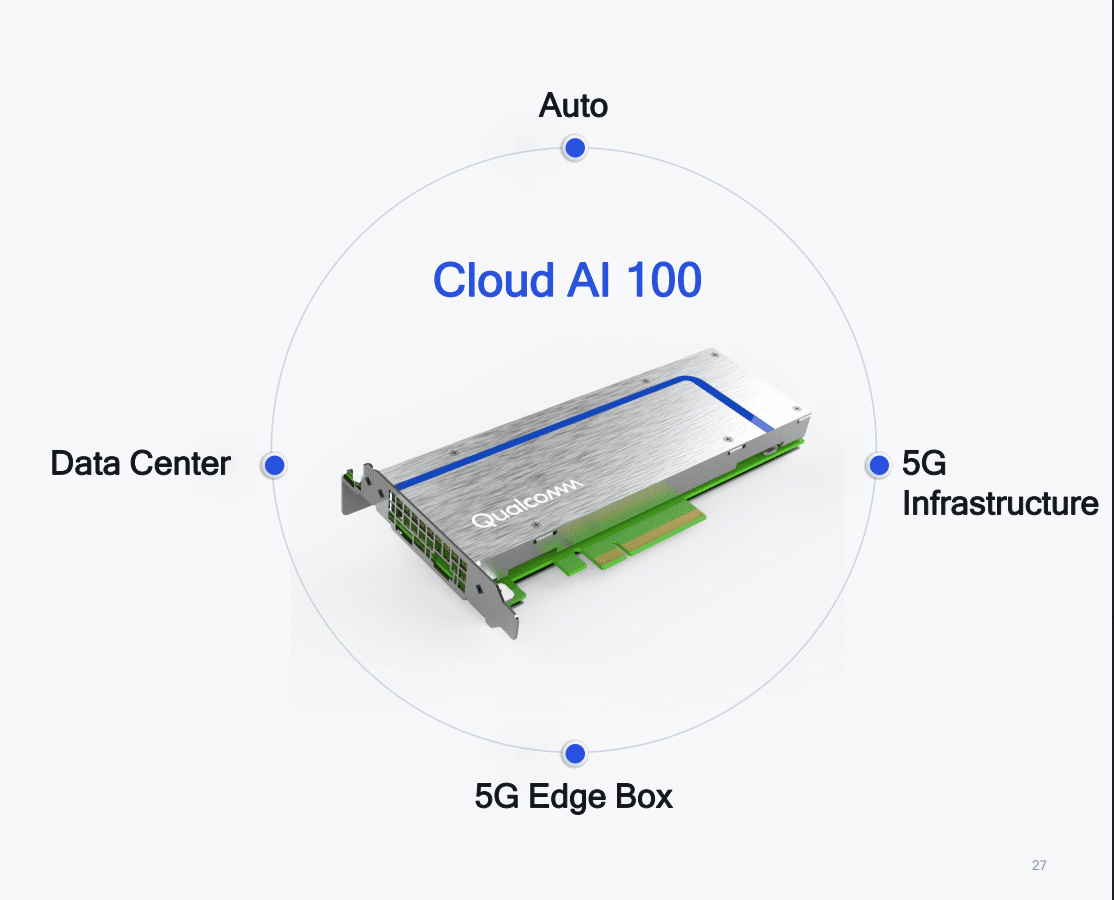
Qualcomm’s new inference chip is designed to handle inferencing workloads for multiple markets with the following markets identified.
Datacenter: A competitive offering against current AI inference chips available in the market focused on traditional datacenter workloads.
Autonomous Vehicles: As ADAS levels continue to rise toward full autonomy, enhanced inferencing capability will be critical.
5G Infrastructure: The ability to handle complex load balancing tasks will be necessary as 5G infrastructure expansions rapidly grow in the coming years.
5G Edge: Applications to deliver on the promise of smart cities and future retail environments.
Qualcomm: A Sure Competitor With the Cloud AI 100
While Qualcomm has been quiet in the AI chip discussion, the company is making its intentions clear with the launch of the Cloud AI 100. And It shouldn’t be surprising to see the company enter this market given its role in 5G and Mobile Technology. This gives Qualcomm a deep knowledge in signal processing, low-power computing and global scale. All of which can be developed utilizing the latest process nodes.
As far as I can see, having another company with a strong track record of innovation driving the competitive development of AI Inference chips will continue to drive innovation.
Read more Analysis from Futurum Research:
Qualcomm Wins Partial Stay In FTC Ruling, Overturn Likely To Follow
VMware and NVIDIA Partnership Accelerates AI From On-Prem To The Cloud
IBM Wisely Goes Open Source With Its Power CPU Architecture
Futurum Research provides industry research and analysis. These columns are for educational purposes only and should not be considered in any way investment advice.
Author Information

Daniel is the CEO of The Futurum Group. Living his life at the intersection of people and technology, Daniel works with the world’s largest technology brands exploring Digital Transformation and how it is influencing the enterprise.
From the leading edge of AI to global technology policy, Daniel makes the connections between business, people and tech that are required for companies to benefit most from their technology investments. Daniel is a top 5 globally ranked industry analyst and his ideas are regularly cited or shared in television appearances by CNBC, Bloomberg, Wall Street Journal and hundreds of other sites around the world.
A 7x Best-Selling Author including his most recent book “Human/Machine.” Daniel is also a Forbes and MarketWatch (Dow Jones) contributor.
An MBA and Former Graduate Adjunct Faculty, Daniel is an Austin Texas transplant after 40 years in Chicago. His speaking takes him around the world each year as he shares his vision of the role technology will play in our future.