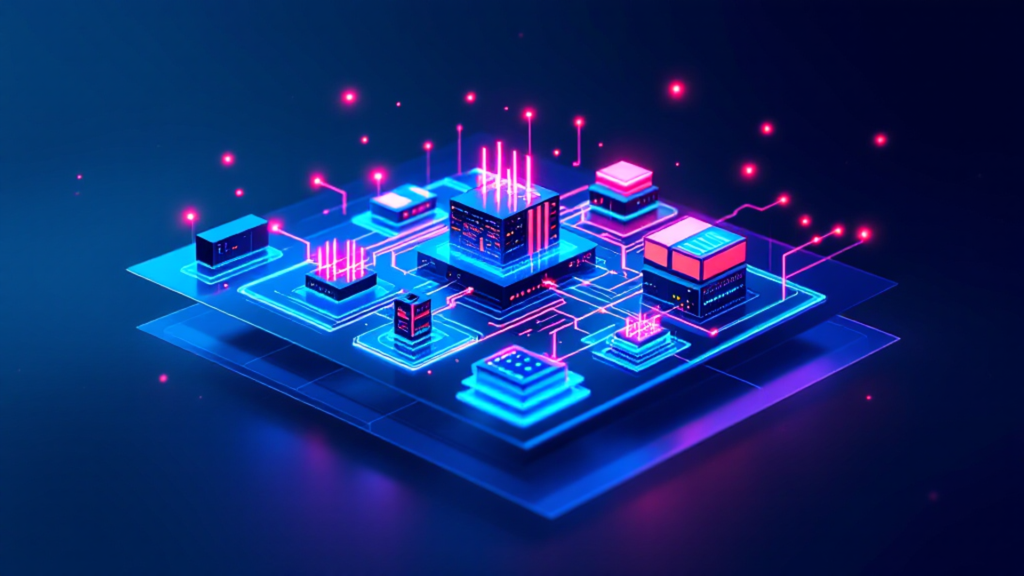
Some of the hardest changes are the most important. The massive shift to digitalize industries, sometimes referred to as Industry 4.0 is a great example of difficult, yet critical changes that need to happen. Just as the Internet of Things (IoT) is set to shake up tons of other industries thanks to the increasing outgrowth of cloud and 5G, it’s also set to change the stake in the field of manufacturing. The good news: there is so much to be gained from moving to a new form of managing the industrial work process, from saved time to money to new ways of doing business altogether. The bad news: it’s challenging. Overwhelming. It takes strategy and the ability to think differently about how manufacturing works—and will continue to work—in the years ahead. While we have been hearing about the shift to industrial IoT for sometime, this is a movement that is still early days, but the move is underway, and imperative in nature. Luckily, there are solutions to make the transition a bit easier.
Indeed, while some companies may have been avoiding the transition to the IIoT due to fears or misunderstandings surrounding it, there are lots of reasons to get in the game now—even if you’re not sure your company is fully ready. The following are a few ways the growth of the IIoT is changing the future of manufacturing work—which ultimately improves everything from operational efficiency to delivering customer experience improvements through shorter build times and better pipeline visibility.
Understanding the IIoT: What Is it—Really?
One of the reasons many manufacturers have avoided joining the IIoT until recently is that they assumed it was simply a fancy dashboard—an easier way to view the data they are already collecting from their machines. That couldn’t be further from the truth. The IIoT is actually a platform that can help companies increase, improve, and accelerate value creation by finding new and better ways to process data being collected, often in real time throughout the enterprise.
For instance, one Microsoft plant was able to cut inventory costs by $200 million by using the IIoT to identify inventory that was about to go obsolete. The information detailing the inventory had always been there; it took technology via the IIoT to make the connection. These are the reasons the IIoT has been growing like gangbusters in the past year. In fact, McKinsey estimates that value created from the IIoT will hit between $1.2 and $3.7 trillion by 2025. This is especially poignant as companies around the world have had to pivot quickly thanks to a global pandemic. Microsoft, btw, isn’t only leveraging this technology in its own plants, but is also expanding its participation in the growth of IIoT. A recent partnership announcement with Honeywell, to combine forces around cloud and building solutions is a great example of two leaders in their respective spaces coming together to scale around the growing opportunity of industrial data.
Value in the IIoT: Digitized Maintenance
One of the most important ways the IIoT is helping manufacturing companies be more efficient and productive is through digitized and automated preventative maintenance. How? By collecting tons of data—more than humans could possibly process—to predict when machine issues might occur and prevent them before they even happen. Leading enterprise software companies like Siemens, SAS, SAP, Honeywell, and Oracle are a few of the companies that have built solutions to tackle predictive maintenance. Infrastructure companies like HPE, Dell, and Cisco have also been actively building hardware that enables greater connectivity between the operational data and IT systems.
Not sure where to start? You’re not alone. Trying to wrap your head around the vast amounts of data that can be collected—and the ways the IIoT can process it—can be overwhelming. Start slow and easy. Consider tracking simple things like: production count, sensor malfunctions, machine state changes, energy status, average time of stagnation, etc. Even simple statistics like that can be manipulated by AI to show you valuable patterns like: when your machine is least productive, when you are wasting high amounts of energy, how often you’re experiencing machine failures—and why. By empowering your employees with that type of information—without making them calculate it themselves. (Let’s face it—given the vast amounts of data available, that could literally take years.)
Value in the IIoT: Improving Employee Safety
Just as the IIoT can provide valuable data in keeping your machines running, it can also provide value in keeping your employees safe. Work injury costs totaled more than $170 billion in 2018. That’s before coronavirus and the increased need to take proactive measures to keep employees safe from a global pandemic. Using data collected from the IIoT, companies are better equipped to keep their workplaces safer.
How? By finding areas where teammate training is lacking, where typical injuries occur, where machines typically malfunction, etc. Even wearable devices can help determine if teammates are over-exerting themselves or suffering from extreme heat, etc. Yes, it can be difficult to get employees to buy-in to typical worker safety programs. But with help from the IIoT, it’s truly never been easier to take positive steps to keep employees safe.
Value in the IIoT: Digital Twins
One of the coolest and most valuable things you can create with value from the IIoT is the digital twin. This is a digital representation of any number of things from a production line to a new product, or the performance of a product over time. Using data collected from the digital twin, such as the Siemens Mindsphere digital twin, for instance, companies can save millions of dollars because it eliminates the cost of having to create full-size, real-life prototypes. And they can save time because they don’t have to run those prototypes in real-time to see the long-term effects. They can simply run the algorithms to determine how performance would play out over time given the data collected. It’s literally a game-changer for manufacturing, where machines cost so much to build and power.
Thanks to ongoing developments in cloud and especially edge technologies, cybersecurity associated with the IIoT is getting increasingly strong, and connectivity is increasingly reliable. There’s truly never been a smarter time to consider getting your company started on its own IIoT journey.
Futurum Research provides industry research and analysis. These columns are for educational purposes only and should not be considered in any way investment advice.
The original version of this article was first published on Forbes.
Author Information

Daniel is the CEO of The Futurum Group. Living his life at the intersection of people and technology, Daniel works with the world’s largest technology brands exploring Digital Transformation and how it is influencing the enterprise.
From the leading edge of AI to global technology policy, Daniel makes the connections between business, people and tech that are required for companies to benefit most from their technology investments. Daniel is a top 5 globally ranked industry analyst and his ideas are regularly cited or shared in television appearances by CNBC, Bloomberg, Wall Street Journal and hundreds of other sites around the world.
A 7x Best-Selling Author including his most recent book “Human/Machine.” Daniel is also a Forbes and MarketWatch (Dow Jones) contributor.
An MBA and Former Graduate Adjunct Faculty, Daniel is an Austin Texas transplant after 40 years in Chicago. His speaking takes him around the world each year as he shares his vision of the role technology will play in our future.