With 5G seeing rapid growth, we are in the midst of a major update in devices as OEMs seek to develop eye catching designs to win early adopters looking to gain access to extraordinary speeds using cellular technology.
Fast mobile connections are great, but given that we live in a world where our devices keep much of our most critical, private and personal information, device security should be (and is) a major concern for both device makers and users alike.
Currently, the options include passcodes, biometrics fingerprint readers and Face Identification. While passcodes are still commonplace, newer generations of phones have brought Fingerprint Sensors and Face Recognition Sensors with many android devices leaning toward Fingerprint Sensors while the newest Apple devices have promoted the Facial Recognition (FaceID) option as the most secure.
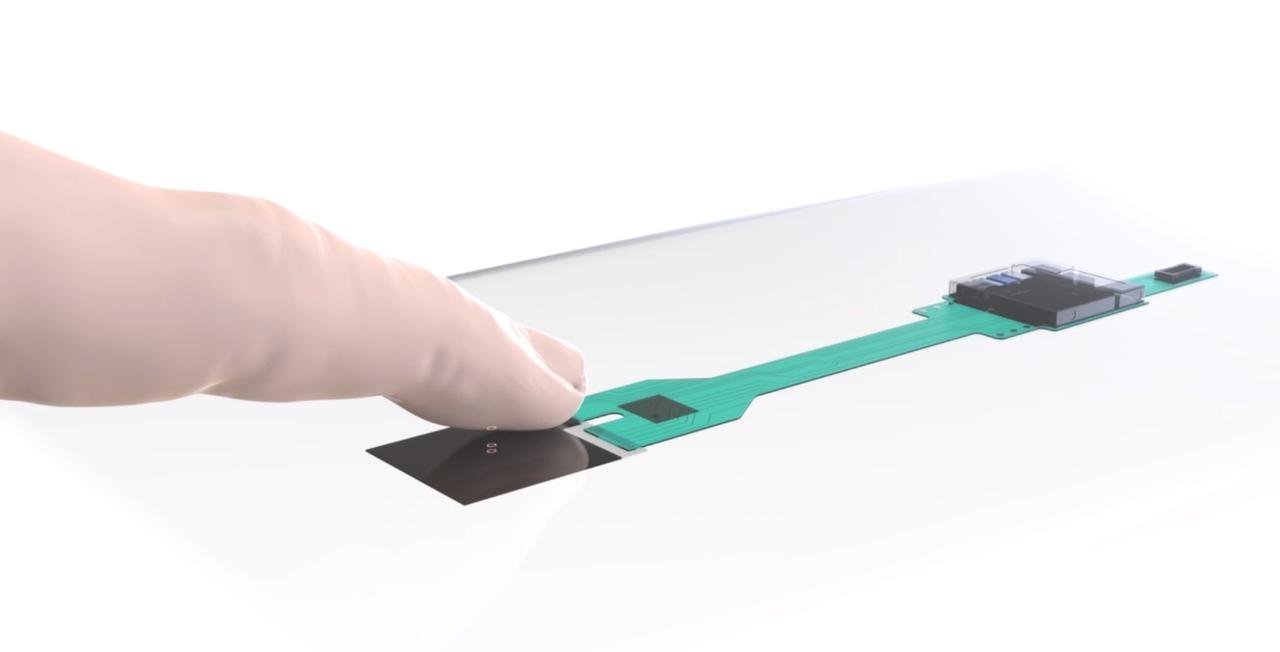
Going forward, Qualcomm has developed a new and improved biometric option for fingerprint sensors that has moved beyond traditional capacitive fingerprint solutions with the development of its 3D Sonic Fingerprint technology. A very interesting, capable and advanced technology that will improve device designs and biometric security. Let’s have a look at how 3D Sonic works and how it differentiates.
3D Sonic Features and Differentiation
If you have used past biometrics on phones, you will likely recall a physical biometric reader that was on the device. For Apple devices, you would find it on the home button. On older Samsung models and some others, you may have recalled it being located on the back of the phone near the camera. This varied from device to device, but usually it was a small surface area that used an optical reader to contrast the fingerprint being presented versus what was saved securely on device.
The technology worked well enough, but it wasn’t the most secure, even compared to a six-digit password, nor was it the most elegant having to use precious physical space on device to incorporate the technology.
Qualcomm’s 3D Sonic offers the following security and aesthetic advantages making it differentiated from current biometric offerings.
- Can work on any platform, not just Snapdragon
- Robust security due to the fact that it is matching ultrasonic waves, not a photo
- It’s important to note here that the technology detects blood flow and heartbeat making it near impossible to spoof.
- Works with Qualcomm’s hardware security features (Qualcomm Trusted Execution Environment and Hexagon DSP Security)
- First to offer an under display, bezel-less ultrasonic sensor enabling sleeker and thinner designs
- Better overall performance in terms of reliability
- This is the first sensor that has been proven to work underwater.
- Also deals well with contaminants on the glass, something competing under display optical solutions cannot handle.
- No image-burn in the display as it is not a camera
- Since it is bezel-less and sits under the glass, this is important.
- First fingerprint solution certified by FIDO biometric component certification program
- Multiple sizes available to OEMs
- Provides flexibility in device designs and placement of the reader.
The Verdict on 3D Sonic Fingerprint Tech
With its robust security and platform agnostic implementation, ultrasonic is clearly a sound option for OEMs to offer the latest and most secure biometric protection of devices.
As a user of the Samsung S10+, which was the first commercial model to employ 3D Sonic fingerprint tech, I can vouch for the smooth unlocking, the accuracy and the lack of any type of image burn due to the technology not utilizing any type of optical/camera sensors beneath the screen. Also, the placement of the sensor beneath the display allows OEMs to maximize the screen surface without sacrificing security.
I have no doubt that Face ID will continue to have a significant role in device security, especially in the Apple ecosystem, but in the Android ecosystem, which is the only place where 5G exists for likely the next 12-18 months, the ultrasonic option will provide value, aesthetics and security in the most advanced models currently available.
Read more Analysis from Futurum Research:
AWS Announces NVIDIA GPU instances for it G4 Elastic Compute Cloud
MATRIXX is Ready to Power Operator Embrace of eSIM in order to Monetize IoT
Amazon’s 2019 Hardware Launch: Quick Take on the 14+ Announcements
Futurum Research provides industry research and analysis. These columns are for educational purposes only and should not be considered in any way investment advice.
Image: Qualcomm
Author Information

Daniel is the CEO of The Futurum Group. Living his life at the intersection of people and technology, Daniel works with the world’s largest technology brands exploring Digital Transformation and how it is influencing the enterprise.
From the leading edge of AI to global technology policy, Daniel makes the connections between business, people and tech that are required for companies to benefit most from their technology investments. Daniel is a top 5 globally ranked industry analyst and his ideas are regularly cited or shared in television appearances by CNBC, Bloomberg, Wall Street Journal and hundreds of other sites around the world.
A 7x Best-Selling Author including his most recent book “Human/Machine.” Daniel is also a Forbes and MarketWatch (Dow Jones) contributor.
An MBA and Former Graduate Adjunct Faculty, Daniel is an Austin Texas transplant after 40 years in Chicago. His speaking takes him around the world each year as he shares his vision of the role technology will play in our future.