Analyst(s): Olivier Blanchard
Publication Date: October 20, 2026
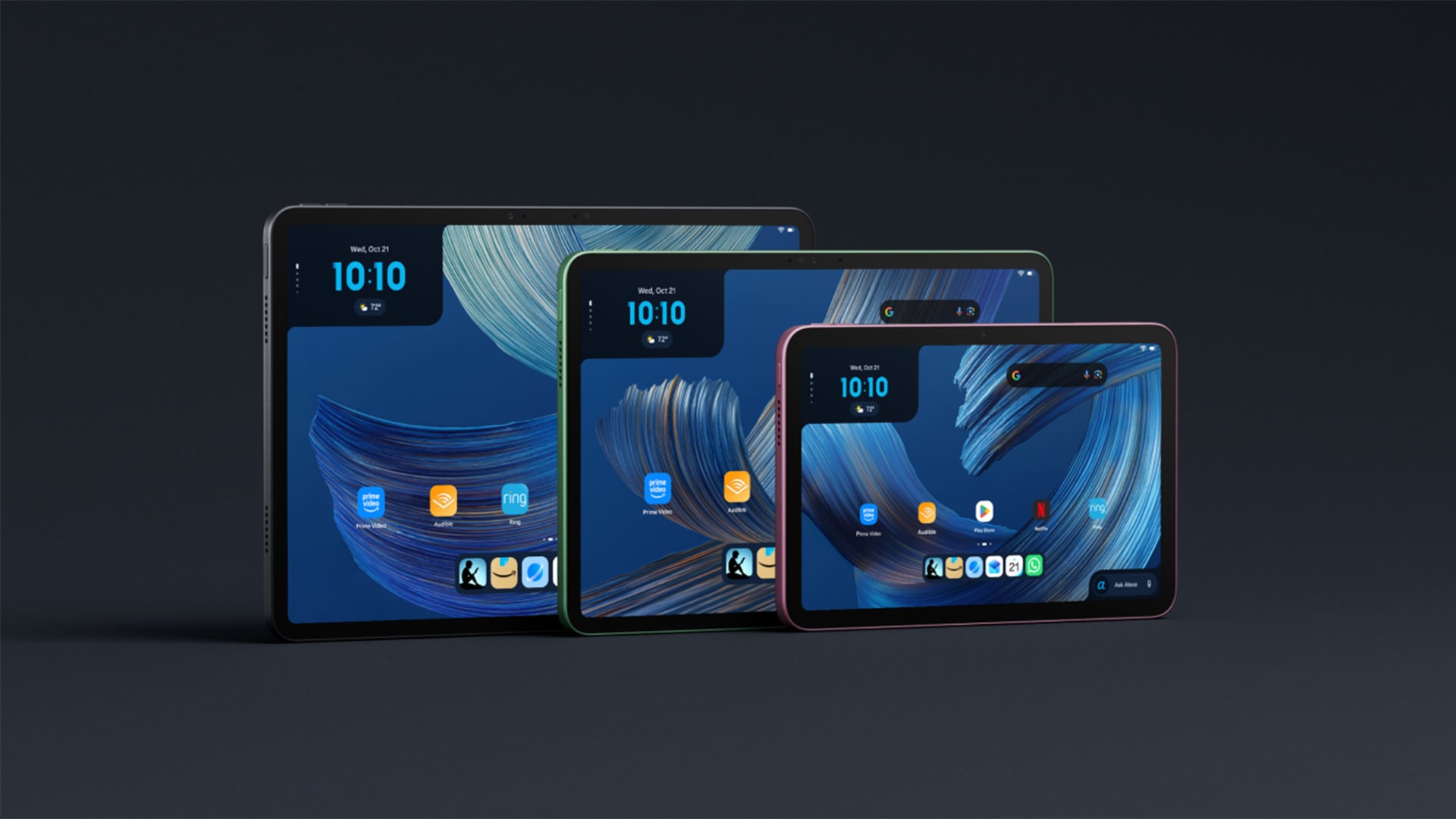
Amazon introduced three Alexa Tablets and new Kids Tablets, replacing Fire with aluminum devices running Android and offering full Google Play access. The transition moves Amazon beyond its budget-tablet positioning while maintaining a strategy centered on content, services, and shopping through Alexa+.
What Is Covered in This Article:
- Amazon’s move from budget Fire tablets to a higher-priced lineup.
- Google Play’s role in addressing app limitations while preserving Amazon’s services.
- The Pro’s positioning against established productivity tablets.
- Alexa’s integration of contextual assistance and shopping.
- Family-device pricing and implications for the reported smartphone initiative.
The News: Amazon announced Amazon Alexa Tablets on October 8, 2026, introducing three Android devices with full Google Play access, aluminum construction, and built-in Alexa+. The Alexa Tablet 8 starts at $229.99, the Alexa Tablet 11 at $329.99, and the Alexa Tablet 12 Pro at $499.99, with a Nanomatte version starting at $549.99; new Kids Tablets start at $229.99 and $329.99.
The lineup replaces Fire tablets and begins shipping October 14 in the United States, Mexico, and Canada, followed by the UK, Germany, France, Italy, and Spain on October 19; Kids Tablets also ship in Japan on October 14. Features include opt-in Alexa On-Screen Intelligence, hands-free live sessions, a distraction-free Kindle reading mode, and optional Pro keyboard and pen accessories.
Alexa Tablets Reset Part Of Amazon’s Device Strategy
Analyst Take: Amazon’s Fire tablet was in dire need of a serious reset to become relevant to tablet buyers again. For a minute there, I was worried that Amazon might abandon the category altogether, but Panos Panay’s product design team decided to rethink what an Amazon tablet should really be about instead, and so we now have Amazon’s new, reimagined tablet built around, you guessed it, Alexa.
Until now, Amazon’s tablet strategy had essentially been to use inexpensive hardware to bring customers into its content and retail businesses. Not a bad strategy on paper, but obviously not an effective one for tablet buyers who aren’t entirely focused on the Amazon ecosystem. Fundamentally, Fire Tablets failed to create the kind of value for tablet users that other tablets brought to the market, and Fire tablets struggled to compete. It also didn’t help that nothing about the design, UX, or purpose really set them apart. To solve these problems, Amazon needed to establish the tablet’s independent usefulness while retaining the commercial benefits of its integrated experience, but also provide a differentiated value proposition at the right price point. Basic Product Marketing 101, but sometimes even tech giants stumble over the basics.
Alexa Tablets Are Part of a Bigger Design Thinking Reset at Amazon
Amazon’s new Alexa tablets aim to address all of those misses: For starters, the replacement lineup asks the hardware itself to support a stronger purchase proposition. Yes, they cost more, but also yes, they actually bring differentiated value to the space: Replacing a Fire range priced from approximately $60 to $280 with devices starting at $229.99 changes the customer proposition that supported Amazon’s tablet business. The company can no longer build its case principally around exceptionally inexpensive access to entertainment, particularly when the Pro enters a price range occupied by Apple’s iPads.
The shift fits the broader premium-hardware direction set by Panos Panay, head of Amazon’s Devices & Services division. You will have noticed an uptick in price for Echo products and redesigned aluminum Kindles, alongside efforts to boost revenues from the devices business. It would be easy to interpret this trend as a purely margin-driven move, but that would be a mistake. Having spent a bit of time with Panos and his design team, I have gained an appreciation for just how serious everyone working on upgrading these devices and the experiences they deliver really is. At its core, elevating the Amazon brand and Alexa-powered experiences through its most popular touchpoints (screens, tablets, speakers, cameras, TVs, etc.) is a passion project. Anyone who knows what other products they have all worked on before joining Amazon can appreciate just how good and serious about design they all are, and what their mission is at Amazon.
Alexa experiences shouldn’t feel cheap, and neither should Alexa-powered objects. I am reluctant to call them devices, because the idea is to move beyond devices and turn them into useful objects that users can interact with at will, with minimal interference or disruption when not in use. This isn’t to say that Amazon is looking to turn its devices into luxury AI-powered objects. Instead, what Panos and his team are attempting to do, it seems, is to make technology feel less like “technology” and more like objects that naturally exist in the home, like a plant or a book or a picture frame – objects that, when active, enhance the aesthetic and utility of a room, and when at rest, easily melt into the background. It’s a challenging trick to pull off, but Amazon’s leadership in smart home tech makes it the perfect company for Panos and his team to make the attempt.
We also note that Amazon denied that memory costs drove the new tablet prices, even as the company acknowledged that the shortage complicated building premium hardware at a reasonable price. Investors should assess this launch as a deliberate repositioning whose commercial case depends on customers valuing the expanded Alexa and Amazon ecosystem experience enough to accept a higher purchase price.
Google Play Preserves Amazon’s Commercial Strategy While Correcting Fire
Also worthy of note is Amazon’s adoption of Google Play, which addresses a product limitation that Panos Panay acknowledged when he said Fire “wasn’t giving customers what they were asking for.” Native Google applications remove the browser-only access that constrained services such as Gmail, YouTube, and Google Drive, supporting Amazon’s effort to move beyond inexpensive media-consumption devices and into more versatile, utility-rich devices.
Dynamic Tab and the For You feed do preserve prominent placement for Amazon content and recommendations, however. This demonstrates how broader application access can be made to fit within the company’s established services strategy. It feels like Amazon is shifting the emphasis of its interface toward personalized discovery and continuity across its services while also accepting Google Play as the source of a wider app catalog. This gives Amazon Alexa Tablets a stronger commercial foundation, with customers gaining broader utility without Amazon abandoning its content and retail presence. This model strikes the right balance between the two without compromising Amazon’s discovery funnel or overall user experience.
Productivity Raises the Standard Amazon Must Meet
The 12 Pro’s keyboard, pen, multiwindowing, and virtual desktops also place it in a purchasing conversation that includes iPad and Surface devices. Again, this expands the scope of comparison beyond Fire’s entertainment positioning. Panos welcomed comparisons with Microsoft hardware while confirming that Amazon has no current plans for a full PC or laptop, defining the tablet as the company’s chosen vehicle for this expansion. This makes sense. An Alexa PC isn’t something anyone has asked for yet, and Amazon’s device ecosystem remains a bit busy as it is. Amazon doesn’t need to divert resources to try and force its way into an already crowded and competitive category, especially at a time when PC growth isn’t looking all that great. Better to focus on the core product ecosystem, and build a loyal customer base that will 1) keep coming back for more and 2) serve as recommendation engines to their family and friends.
The one minor issue here is that Alexa Tablets’ optional accessories can make the entry tablet price an incomplete basis for comparison against competitors: Buyers seeking the advertised typing and handwriting experience will also have to consider the additional $149.99 keyboard and $89.99 pen. No easy workarounds for this, but selling the add-ons separately does give buyers control over their setup and spending. Timing those purchases around special sales events can also help alleviate the extra cost for budget-conscious customers.
Amazon’s performance claims also establish a substantial improvement over previous tablets, but that internal comparison alone is unlikely to settle a purchase decision involving competing productivity devices. I wish that Amazon would do a more thorough job of demonstrating complete workflows across the applications it now supports, making practical productivity the basis for its competitive argument. Not enough has been done on that front yet, in my view.
Alexa Extends Amazon’s Retail Model Into the Screen Experience
One thing that I really like about this is that including Alexa+ without a separate subscription on these tablets gives Amazon another way to promote its assistant, even as it charges non-Prime users for the service elsewhere. The ability to identify a product in a video and move it into an Amazon shopping cart places the assistant directly within the retail journey, extending the company’s historical use of hardware to encourage purchases and service subscriptions. Calendar management and contextual webpage assistance also provide everyday uses alongside shopping, making the quality of those interactions central to the assistant’s overall value.
The family lineup applies the same integrated approach through included Kids+ access and parental controls, but its higher entry prices change the proposition for a customer base that Kevin Keith, Vice President, Devices at Amazon, says already includes one in five US children. I feel that Amazon needs to preserve useful assistance and clear user control as the organizing principles of these experiences because commercial integration needs to support the reasons why many customers chose these devices in the first place.
All in all, I am glad that Amazon took the time to rethink its tablet business, starting with all of the necessary hardware, design, and UX reboots, even at the risk of creating an initial wave of sticker shock. The alternative would have been to simply watch the Fire tablet product line rot on the vine from obsolescence and critical utility gaps. It is also worth noting that the product design group waited this long to reboot the category. This signals that tablets were a much lower priority for Amazon than hero products like Echo, Kindle, Ring, and even Fire TV: Smaller stakes, lower risk, less urgency. This suggests to me that if the Alexa tablets take off, Amazon will have something else to celebrate, but if they don’t, well… it won’t be the end of the world.
The real question now is whether or not tablet buyers will even notice the new Alexa tablet options before the Holiday season goes into full swing (ad placement and awareness campaign 101), and whether or not Amazon’s own ad efforts will pull the right levers to trigger curiosity, interest and demand at scale.
What to Watch:
- Customer acceptance of the higher entry prices will test Amazon’s move away from budget-led tablet positioning, particularly in the family lineup.
- Demonstrations of complete work tasks should establish how the 12 Pro’s applications, multitasking, and accessories compare with the alternatives Amazon now invites buyers to consider.
- Alexa’s accuracy in identifying products, creating calendar entries, and interpreting webpages will determine the practical usefulness of its screen-aware experience.
- Delivery of Android 17 in early 2027 and the minimum four-year software-update commitment will provide concrete milestones for Amazon’s new platform.
- Kids Tablet warranty terms require clarification: the official announcement specifies a one-year limited warranty, while the media coverage describes accidental-damage replacement coverage.
- Amazon has tied any future cellular tablet to demonstrated demand, leaving connectivity as an open decision within its broader productivity ambitions.
See the complete announcement introducing Amazon Alexa Tablets on the Amazon website.
Disclosure: Futurum is a research and advisory firm that engages or has engaged in research, analysis, and advisory services with many technology companies, including those mentioned in this article. The author does not hold any equity positions with any company mentioned in this article.
Analysis and opinions expressed herein are specific to the analyst individually and data and other information that might have been provided for validation, not those of Futurum as a whole.
Other Insights From Futurum:
Amazon Q2 2026: AWS Momentum Accelerates as AI Investment Climbs
Amazon’s Sleep Studio Finally Strengthens the Value of Amazon Kids+
AWS Embeds DuckDB in Aurora to Collapse Operational and Lakehouse Silos
Featured Image: Amazon
Author Information

Olivier Blanchard is Research Director, Intelligent Devices. He covers edge semiconductors and intelligent AI-capable devices for Futurum. In addition to having co-authored several books about digital transformation and AI with Futurum Group CEO Daniel Newman, Blanchard brings considerable experience demystifying new and emerging technologies, advising clients on how best to future-proof their organizations, and helping maximize the positive impacts of technology disruption while mitigating their potentially negative effects. Follow his extended analysis on X and LinkedIn.