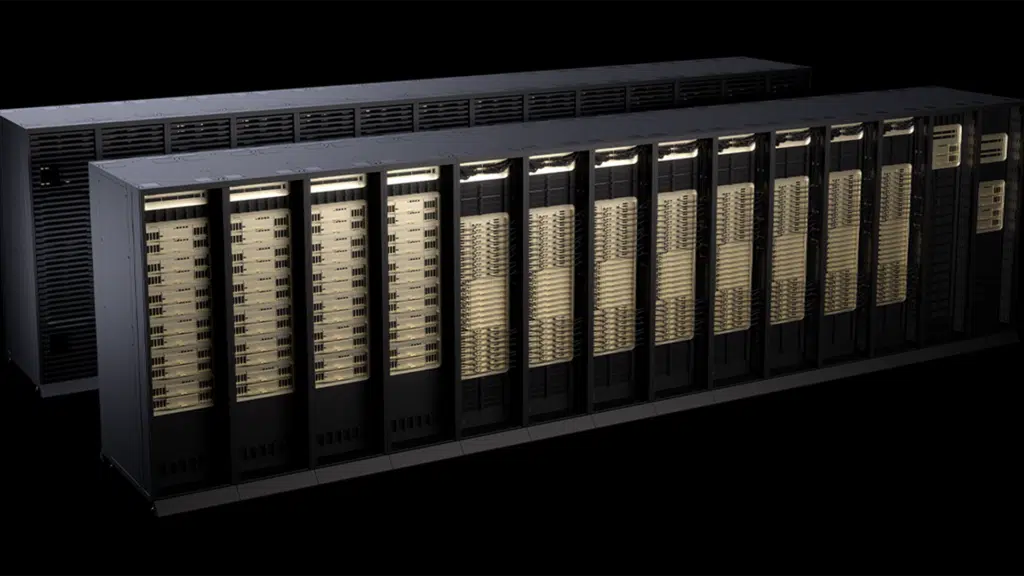
AMD and Microsoft announced an expanded strategic partnership that brings the AMD Helios rackscale platform to Azure for frontier model inference, adds two EPYC “Venice”-powered VM series, and broadens Pensando DPU deployment across Azure networking. Microsoft’s framing names reinforcement learning and agent coordination as target workloads for the new HDv2 CPU instances, extending the hardware-for-RL signal Futurum identified in the January Maia 200 launch.
What Is Covered in This Article:
- AMD and Microsoft expanded their strategic partnership across GPUs, CPUs, networking, and software: Microsoft will ramp the AMD Helios rack-scale solution, combining Instinct MI455X GPUs, EPYC “Venice” CPUs, Pensando networking, and ROCm, to power frontier model inference for Microsoft, its AI customers, and Azure AI services, with shipments beginning in the second half of 2026.
- Azure HDv2 VMs, co-designed with AMD and featuring nearly 500 physical 6th Gen EPYC cores, 4 terabytes of RAM, 32 terabytes of local NVMe storage, and 400 Gb Azure Boost networking, target data preparation, search, reinforcement learning, and agent coordination at scale.
- Azure HXv2 VMs bring 176 6th Gen EPYC cores clocked above 5 GHz with 3D V-cache, up to 4 terabytes of RAM, and 800 Gb InfiniBand to electronic design automation and technical computing workloads.
- Azure is broadening AMD Pensando DPU deployment and integrating AMD silicon with Azure Boost to scale cloud networking performance across the fleet.
- Microsoft has now justified new hardware with reinforcement learning twice in six months, following the Maia 200 XPU launch that targeted RL and synthetic data generation.
The News: AMD announced on July 20, 2026, an expanded strategic partnership with Microsoft spanning AMD GPUs, CPUs, networking, and software on Azure. Microsoft will deploy the AMD Helios rackscale solution to power frontier model AI inference, add two new VM series powered by 6th Gen AMD EPYC “Venice” processors, and broaden deployment of Pensando DPUs across Azure networking services. AMD will begin shipping Helios to customers, including Microsoft, in the second half of 2026.
“Customers are looking for AI infrastructure that is optimized for a wide range of workloads, from training and inference to data preparation, search, and reinforcement learning,” said Satya Nadella, Chairman and CEO, Microsoft.
In a companion post, Scott Guthrie, Executive Vice President, Cloud + AI at Microsoft, detailed the three upcoming Azure offerings: HDv2 VMs for AI data processing, HXv2 VMs for electronic design automation, and ND MI455X v7 VMs for AI inference, positioning CPU infrastructure as “essential to the performance and efficiency of modern AI systems.”
Azure’s AMD Partnership Expands: Is Reinforcement Learning the Hardware Bottleneck?
Analyst Take: Committing to ramp Helios at scale for frontier model inference hands AMD its most consequential hyperscale rackscale win to date. For the second time in six months, Microsoft has justified new silicon by naming reinforcement learning as a target workload, first with the Maia 200 XPU in January and now with HDv2, a CPU instance family built for “data preparation, search, reinforcement learning and agent coordination at scale.” The implication is that RL and synthetic data generation have graduated from a research line item into a procurement driver that now spans every silicon tier in Azure: XPUs, GPUs, and CPUs. The Azure AMD partnership is best understood not as a supplier swap but as Microsoft provisioning an entire workflow it cannot yet feed.
Microsoft Keeps Justifying New Hardware With Reinforcement Learning
When Microsoft launched Maia 200 in January, it positioned the accelerator around cost-per-token inference and, notably, synthetic data generation and reinforcement learning pipelines for the Microsoft Superintelligence team. Futurum’s analysis of that launch argued that RL and synthetic data are becoming the dominant marginal consumers of compute in frontier AI systems: simultaneously bandwidth-intensive, latency-sensitive, and economically unforgiving due to extremely high iteration counts. Six months later, the same justification reappears in a CPU announcement. Nadella’s quote places reinforcement learning alongside training and inference as a first-class demand category, and Guthrie’s post is blunter still, warning that without CPU capacity “training jobs don’t have enough data to learn from, and agents don’t have enough capacity to perform tasks.”
The workload logic holds up. RL pipelines stress the CPU tier in ways pre-training never did. Environment execution, tool calls, reward scoring, data filtering, and rollout orchestration are control-flow-heavy, highly parallel, and scale with iteration count rather than model size. A VM with nearly 500 physical cores, 4 terabytes of RAM, and 32 terabytes of local NVMe co-optimizes with that demand profile. The skeptical reading is that naming a workload in a press release is marketing, not utilization data, and Microsoft has disclosed no figures on what share of Azure compute RL actually consumes. But two independent silicon programs converging on the same justification within six months is a pattern, not a coincidence, and patterns in hyperscaler procurement language tend to precede disclosure of the underlying demand.
The Azure AMD Partnership Restores the CPU Tier to Procurement Parity
HDv2 is the clearest hyperscaler endorsement yet of a thesis Futurum has been advancing all year: agentic AI is restructuring compute demand around the CPU. Futurum’s 1H 2026 Data Center Semiconductors Forecast has the data center CPU market on pace to grow 38.8% in 2026. Against that backdrop, the Azure AMD partnership is a defense of x86 as much as a win for AMD: Microsoft is scaling the agentic CPU tier on EPYC “Venice” silicon, ramping on TSMC’s 2nm process rather than on Arm designs like NVIDIA’s Vera or a Cobalt-first path, preserving software continuity for the enterprise workloads that surround every agent deployment.
AMD’s own rack-scale modeling claims EPYC 9965 “Turin” delivers 2.37x the throughput of an NVIDIA Vera baseline in a 100 kW rack, with Venice projected to extend that to 3.30x, figures that stand in tension with a per-core comparison and focus on multi-threaded workloads. HXv2 rounds out the CPU story from the supply side: 176 cores above 5 GHz with 3D V-cache and 800 Gb InfiniBand serve the EDA workloads through which AMD will design its next EPYC and Instinct parts on Azure itself.
Helios Lands in an Inference Fleet That Already Has Two Incumbents
Azure’s inference fleet now spans three silicon lines: the NVIDIA GPU fleet, first-party Maia 200, which Microsoft claims delivers 30% better performance per dollar than its latest fleet generation, and now MI455X-based Helios. The bull case calls this disaggregation strategy, matching purpose-built silicon to workload profiles and gaining negotiating leverage across suppliers. The bear case calls it overlapping capacity with an internal allocation conflict: if Maia 200 hits its economics targets, marginal Helios capacity must win on absolute supply rather than cost. The most credible reconciliation is that TSMC capacity puts hard limits on how fast Microsoft can scale first-party silicon, and internal RL, synthetic data, and inference demand appears to exceed what Maia-class XPUs can supply this cycle. Helios shipping in the second half of 2026 fills that gap, but commitments must turn into deployments and utilization.
The competitive read-through is sharpest for NVIDIA and Intel. NVIDIA retains the majority of Azure’s accelerator fleet, but a frontier inference mandate for Helios is precisely the kind of production validation AMD’s MI400 series needed after years of hyperscale wins concentrated in internal and second-tier workloads. Intel, meanwhile, watches the agentic CPU tier, the segment it targets with 288-core Xeon 6+ and its Foxconn-integrated rack designs, get standardized on EPYC at the largest AMD CPU customer in the cloud. The Azure AMD partnership does not end either contest, but it moves the burden of proof onto the incumbents.
What to Watch:
- Whether AMD ships Helios to Microsoft on the stated 2H 2026 timeline and how quickly ND MI455X v7 reaches general availability with disclosed performance against GB300-class instances.
- Whether Microsoft begins quantifying reinforcement learning and synthetic data generation as named consumption categories across Maia 200 and HDv2 capacity, an early proxy for RL becoming the dominant marginal workload.
- Whether AWS and Google Cloud answer HDv2 with dedicated agent coordination CPU instance families, confirming the discrete CPU tier as a distinct procurement category.
- Intel’s Xeon 6+ rack-density response and NVIDIA’s positioning of Vera-based instances inside Azure as the Arm alternative to the EPYC tier.
- Third-party testing of AMD’s rack-scale throughput claims and Helios inference economics, which remain vendor-modeled today.
For more information, read the complete press release on AMD’s website.
Declaration of generative AI and AI-assisted technologies in the writing process: This content has been generated with the support of artificial intelligence technologies. Due to the fast pace of content creation and the continuous evolution of data and information, The Futurum Group and its analysts strive to ensure the accuracy and factual integrity of the information presented. However, the opinions and interpretations expressed in this content reflect those of the individual author/analyst. The Futurum Group makes no guarantees regarding the completeness, accuracy, or reliability of any information contained herein. Readers are encouraged to verify facts independently and consult relevant sources for further clarification.
Disclosure: Futurum is a research and advisory firm that engages or has engaged in research, analysis, and advisory services with many technology companies, including those mentioned in this article. The author does not hold any equity positions with any company mentioned in this article.
Analysis and opinions expressed herein are specific to the analyst individually and data and other information that might have been provided for validation, not those of Futurum as a whole.
Read the full Futurum Group Disclosure.
Other Insights From Futurum:
Can AMD and Rackspace Scale Sovereign AI Inference?
Can AMD EPYC Extend Its Lead Over Vera and Xeon in the Agentic Data Center?
How Desktop AI Hubs Could Deflect Over 56.23 TWh of Industrial Data Center Load by 2035
Author Information

Brendan is Research Director, Semiconductors, Supply Chain, and Emerging Tech. He advises clients on strategic initiatives and leads the Futurum Semiconductors Practice. He is an experienced tech industry analyst who has guided tech leaders in identifying market opportunities spanning edge processors, generative AI applications, and hyperscale data centers.
Before joining Futurum, Brendan consulted with global AI leaders and served as a Senior Analyst in Emerging Technology Research at PitchBook. At PitchBook, he developed market intelligence tools for AI, highlighted by one of the industry’s most comprehensive AI semiconductor market landscapes encompassing both public and private companies. He has advised Fortune 100 tech giants, growth-stage innovators, global investors, and leading market research firms. Before PitchBook, he led research teams in tech investment banking and market research.
Brendan is based in Seattle, Washington. He has a Bachelor of Arts Degree from Amherst College.