Analyst(s): Nick Patience
Publication Date: July 13, 2026
What Is Covered in This Article:
- Adobe pushed CX Enterprise Coworker from the Las Vegas launch toward production at Summit London, positioning it as the connective layer across brand visibility, customer engagement, and content supply chain.
- Early customer traction is real, with dozens of live deployments and financial services emerging as an unexpected leading vertical, ahead of media and retail.
- Adobe extended MCP-based agent interoperability to Anthropic’s Claude, ChatGPT, Gemini, Copilot, watsonx, and Amazon Q, betting an open front door beats forcing customers onto a single model.
- Adobe’s own four-level autonomy model suggests most enterprises sit well behind where Coworker is designed to operate, a gap Adobe itself frames as the near-term opportunity.
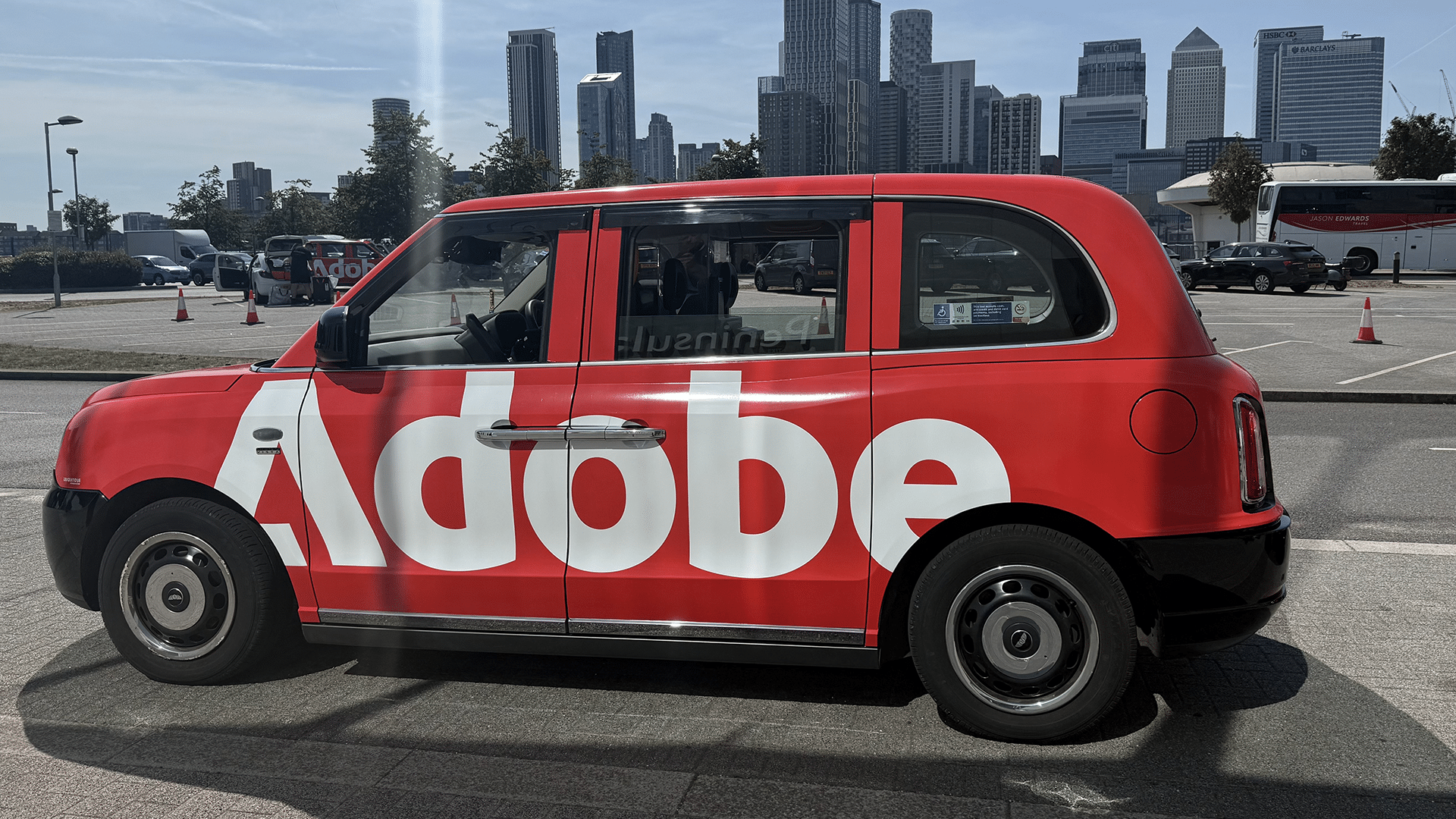
The Event—Major Themes & Vendor Moves: Adobe Summit London arrived in a London heatwave this week, drawing roughly 3,000 marketers, technologists, and creatives. This UK/EMEA edition follows the flagship Las Vegas Summit by about two months and serves as Adobe’s venue for translating global product news – this year, the CX Enterprise agentic platform and its centerpiece, CX Enterprise Coworker – into EMEA-specific proof points.
EMEA president Luc Dammann and VP of Marketing Claire-Louise Green framed 2026 as the year enterprise AI moves from pilot to scale and used the stage to spotlight two flagship EMEA customer relationships: Tesco, which now runs a joint innovation lab with Adobe, and Sky, whose customer and commercial director, Siobhan McMullan-Finnegan-Dehn, argued that AI raises the bar for creativity, rather than replacing craft. Live demonstrations built around Marriott, Ulta Beauty, ServiceNow, and Heathrow Airport showed CX Enterprise Coworker orchestrating brand visibility, customer engagement, and content-supply-chain agents end to end, alongside expanded MCP-based interoperability with Anthropic’s Claude, ChatGPT, Gemini, Copilot, watsonx, and Amazon Q.
Adobe CX Enterprise CoWorker is Ready. Is the Enterprise?
Analyst Take: Adobe wants CX Enterprise Coworker, launched at the Las Vegas Summit in April, to be the connective layer that finally unifies brand visibility, customer engagement, and content production under one governed, agentic system. Adobe’s early numbers suggest real enterprise appetite: dozens of live pilots are already running, with financial-services accounts – including American Express and Wells Fargo – rather than the media and retail brands usually first to adopt new marketing technology, moving fastest.
One Adobe executive described Coworker as the ‘best unboxing experience for CX,’ similar to what Claude Code did for code and ChatGPT for consumer chat. But there is a gap between what Coworker is designed to do and where most enterprises currently are. Adobe executives we spoke to described Adobe’s four-level autonomy model, running from AI-assisted through human-in-the-loop and human-on-the-loop to full autonomy, and placed most of the customers he talks to at level one or two. Adobe’s own near-term goal is to move them to level three. That is a more modest ambition than the marketing language around an ‘autonomous coworker’ suggests, but it lines up with the data Adobe cited on stage: only around a quarter of enterprise AI proofs of concept have ever reached production – so far.
However, the strategic logic behind CX Enterprise remains intact. Bundling brand visibility, engagement, and content production into a single intelligence and governance layer addresses genuine fragmentation and makes that layer accessible through Claude, ChatGPT, Gemini, and Copilot, rather than forcing a single model to match how enterprise AI-platform strategy is actually decided today. The harder problem Adobe has taken on is less technical than organizational: getting customers through several stages of process change on a timeline set by their own readiness, not by Adobe’s product cycle. An open CEO search and a newly departed CFO add a further layer of uncertainty to that timeline, but we’re sure that will be resolved soon. For the rest of 2026, the more useful question to track is whether Adobe’s customers can move at the pace the roadmap now assumes.
What to Watch:
- Whether the live AI pods Adobe cited at Summit convert into renewed, expanded contracts once introductory credits and pricing roll off.
- Watch whether AI-platform partners hosting Adobe’s Marketing Agent – Anthropic, OpenAI, Google, and Microsoft – move from hosting Adobe’s agents to building their own CX-adjacent capabilities. Some may, others are less likely to.
- Governance and data-residency terms for MCP-based third-party agent queries into AEP and Real-Time CDP, particularly for EU/UK customers tracking the sovereignty conversation.
- Whether Adobe’s succession committee names an internal CX Orchestration leader, such as Anil Chakravarthy, a Creativity & Productivity Business leader, such as David Wadhwani, or an external AI-native candidate, and what that means for CX Enterprise’s roadmap commitments.
You can read more on the launch of Adobe’s announcement of CX Enterprise Coworker.
Disclosure: Futurum is a research and advisory firm that engages or has engaged in research, analysis, and advisory services with many technology companies, including those mentioned in this article. The author does not hold any equity positions with any company mentioned in this article.
Analysis and opinions expressed herein are specific to the analyst individually and data and other information that might have been provided for validation, not those of Futurum as a whole.
Other Insights From Futurum:
Adobe CX Enterprise Coworker Aims to Disrupt Agentic AI in Customer Experience
Adobe’s CX Enterprise Coworker Raises the Stakes for Agentic AI in Marketing Orchestration
Is Adobe’s Agentic AI Push the New Standard for Enterprise Customer Experience?
Author Information

Nick Patience is VP and Practice Lead for AI Platforms at The Futurum Group. Nick is a thought leader on AI development, deployment, and adoption - an area he has researched for 25 years. Before Futurum, Nick was a Managing Analyst with S&P Global Market Intelligence, responsible for 451 Research’s coverage of Data, AI, Analytics, Information Security, and Risk. Nick became part of S&P Global through its 2019 acquisition of 451 Research, a pioneering analyst firm that Nick co-founded in 1999. He is a sought-after speaker and advisor, known for his expertise in the drivers of AI adoption, industry use cases, and the infrastructure behind its development and deployment. Nick also spent three years as a product marketing lead at Recommind (now part of OpenText), a machine learning-driven eDiscovery software company. Nick is based in London.