PORTLAND, Ore. — November 4, 2021 – To shed light on changing consumer behaviors and preferences for the crucial holiday shopping season, the mobile app experience company Airship partnered with Sapio Research to survey more than 9,000 consumers across three regions and seven countries including the U.S., U.K., France, Germany, Australia, Singapore and India.
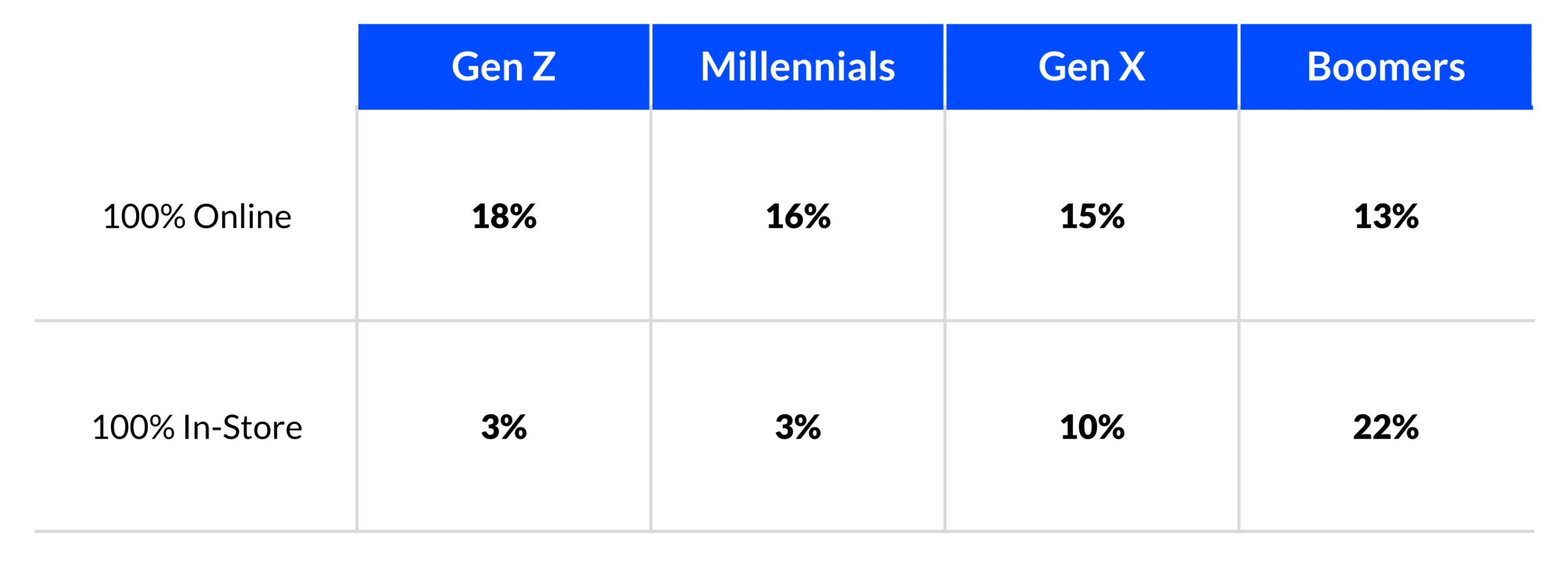
Globally, 48% of respondents expect to do three-quarters or more of their holiday shopping online, and a nearly equal percent (47%) say that three-quarters or more of their online shopping will be done using smartphones rather than desktops. Among respondents saying 100% of their holiday shopping will be online, the U.K. comes in on top at 20%, followed by India (18%) and then the U.S. (16%). The generational spread for this online-only audience is not wide, though differences emerge examining those that say 100% of their shopping will be done in-store.
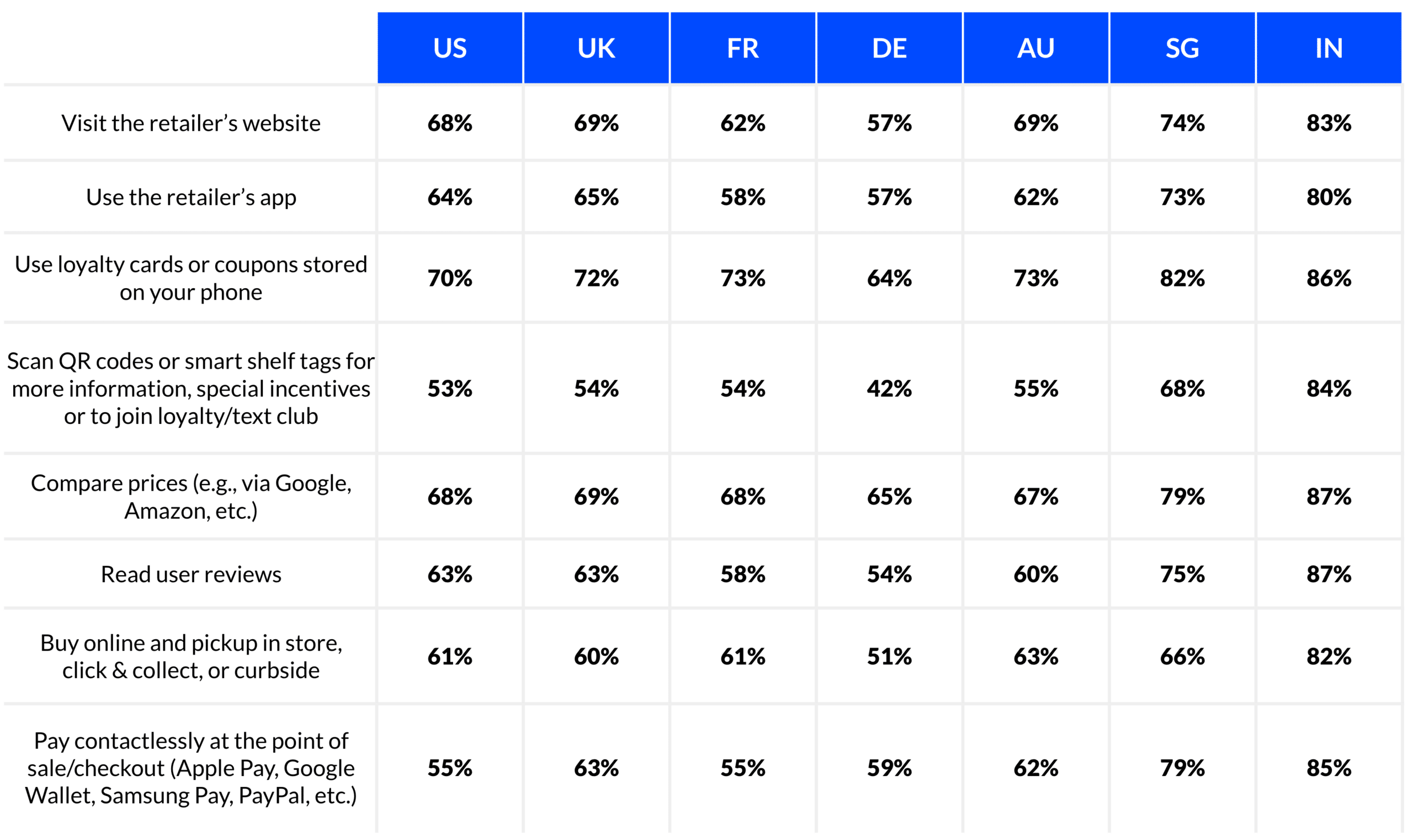
When asked about eight different activities one might use their smartphone to accomplish while shopping in-store, more than half of respondents in every country surveyed said they’d be likely to do that. Germany was the one exception for only one activity “Scan QR codes or smart shelf tags for more information, special incentives or to join loyalty/text club ” — where only 42% said they’d be likely to do that. On the same token, Germans are just as likely to open the retailer’s app as their website when shopping in-store. Singapore and India over-index on all of these in-store digital activities:
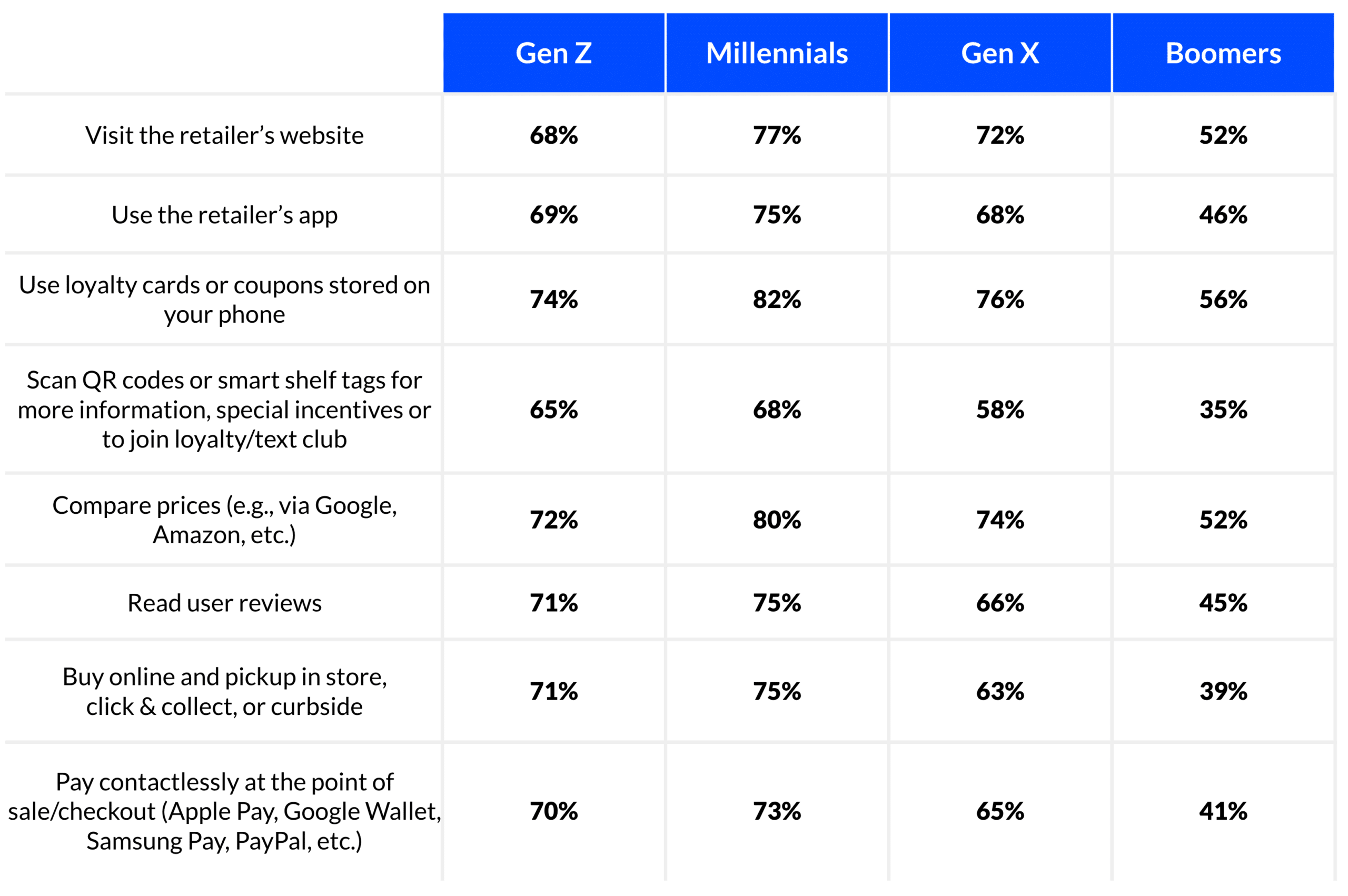
Generationally, millennials lead in likelihood to perform all of these in-store digital activities:
For most countries and generations, the likelihood of using a retailer’s app while shopping in-store, is only a few percentage points behind visiting the retailer’s website, despite people having to first download them from the App Store or Google Play. Indeed, 81% of millennials have used retail apps more or about the same since the pandemic began, followed by 77% of Gen X, 74% of Gen Z and 66% of baby boomers.
“Consumers are clearly developing a preference for mobile apps as the primary destination to save them time and streamline their shopping experiences from in-store wayfinding to click-and-collect and curbside pickup,” said Brett Caine, CEO and president, Airship. “For retailers, apps offer better opportunities to truly understand their customers and form stronger direct relationships, as it’s much easier to tie together their digital and physical activities and engage them throughout their journey with the brand.”
The survey was conducted by Sapio Research on behalf of Airship in September 2021. Respondents included 9,143 consumers in seven countries who were asked a number of questions on their plans for online and physical retail shopping during the 2021 holiday season.
About Airship
No one knows more, does more, or cares more when it comes to helping brands master mobile app experiences than Airship. From the beginning of apps, we powered the first commercial messages and then expanded our data-led approach to all re-engagement channels (mobile wallet, SMS, email), app UX experimentation, proactive in-app conversations and now rich in-app experiences that business users can create and adapt on their own — with no ongoing developer support or app update required.
From the trillions of mobile app interactions we’ve powered for thousands of global brands, we’ve been there, and done that, lending our solutions and expertise to help apps become the pinnacle of elegant customer experiences and winning brand loyalty strategies.
Author Information

As a detail-oriented researcher, Sherril is expert at discovering, gathering and compiling industry and market data to create clear, actionable market and competitive intelligence. With deep experience in market analysis and segmentation she is a consummate collaborator with strong communication skills adept at supporting and forming relationships with cross-functional teams in all levels of organizations.
Sherril holds a Master of Business Administration in Marketing from University of Colorado, Boulder and a Bachelor of Arts in Psychology from Rutgers University.