
Analyst(s): Dion Hinchcliffe
Publication Date: June 1, 2026
Microsoft, Salesforce, ServiceNow, AWS, Google, IBM, Oracle, Palantir, SAP, and UiPath are rapidly reshaping the enterprise software market as agentic AI evolves from copilots into autonomous systems of action. This Futurum Signal report assesses which vendors are best positioned to become the operational control planes for enterprise AI, where orchestration, governance, execution, and ecosystem alignment increasingly determine long-term market leadership.
Key Points:
- Microsoft, Salesforce, and ServiceNow have emerged as the early leaders in enterprise agentic AI by combining orchestration, governance, workflow execution, and ecosystem scale into cohesive operational platforms.
- The market is rapidly shifting from isolated AI assistants toward governed multi-agent systems capable of executing complex enterprise workflows across applications, data systems, and human processes.
- Open interoperability standards such as MCP and A2A are becoming strategic battlegrounds as vendors compete to establish themselves as the central orchestration layer for enterprise AI ecosystems.
Overview:
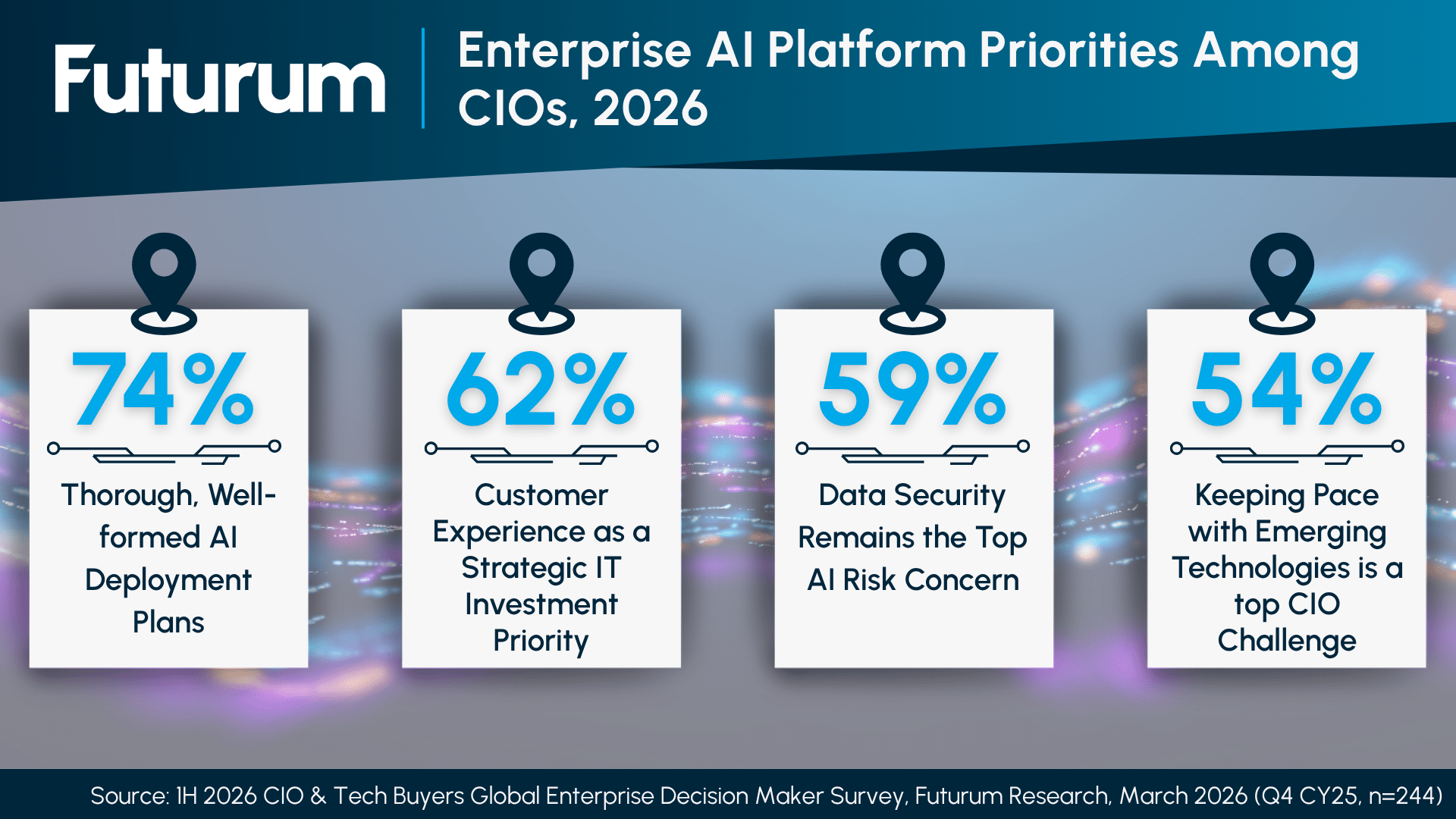
Figure 1: Enterprise AI Platform Priorities Among CIOs, 2026
Microsoft’s leading position reflects one of the industry’s most aggressive attempts to establish a universal enterprise AI control plane. Through the combination of Agent 365, Azure AI Foundry, Copilot Studio, Microsoft Graph, Fabric, and enterprise identity integration via Entra ID, the company is attempting to create a deeply embedded orchestration fabric spanning productivity, data, workflow automation, and governance. Its embrace of interoperability standards such as MCP and A2A further strengthens its ecosystem leverage while positioning Azure as the operational backbone for heterogeneous multi-agent environments.
Salesforce, meanwhile, is rapidly extending beyond CRM into broader enterprise workflow orchestration through Agentforce, Headless 360, Data Cloud, and MuleSoft. The company’s API-first strategy and emphasis on autonomous systems of action position it as one of the market’s most commercially aggressive agentic AI vendors. Salesforce’s rapid Agentforce ARR growth demonstrates that enterprises are increasingly willing to invest in platforms capable of embedding autonomous execution directly into customer engagement and operational workflows.
ServiceNow is differentiating itself through a governance-first model tightly anchored in enterprise workflow reliability. The company’s AI Control Tower, workflow-native orchestration approach, and acquisition strategy – including Armis for asset visibility and security posture integration – demonstrate a deliberate effort to become the trusted operational nervous system for governed enterprise automation. Its transition toward tokenized consumption pricing also signals a broader industry move away from traditional seat-based monetization toward execution-based AI economics.
AWS and Google are approaching the market from infrastructure and developer ecosystem positions. AWS is evolving Bedrock AgentCore into a flexible orchestration runtime designed to support open frameworks and large-scale multi-agent execution, while Google is attempting to consolidate its historically fragmented AI portfolio through the Gemini Enterprise Agent Platform and Agentic Data Cloud initiatives. Both vendors possess substantial technical advantages, though they continue working to simplify operational complexity and sharpen enterprise messaging around autonomous workflow execution.
Palantir remains one of the market’s most strategically differentiated players through its ontology-driven operational architecture. Rather than emphasizing generalized AI flexibility, Palantir focuses on deterministic, high-trust execution for mission-critical environments where auditability and operational safety are paramount. Its expanding AIP ecosystem and industrial deployments demonstrate how deeply governed autonomous systems are beginning to move beyond experimentation into real-world operational execution.
The broader implication is that enterprise AI is becoming a competition over operational architectures rather than standalone models. Vendors that successfully integrate orchestration, governance, interoperability, workflow execution, and trust into cohesive enterprise platforms are establishing early advantages that could shape the next era of enterprise software and digital operations.
Conclusion
The enterprise AI market is entering a critical new phase as organizations move from experimentation toward large-scale autonomous execution. Vendors capable of combining orchestration, governance, workflow integration, interoperability, and operational reliability into unified platforms are establishing early leadership positions that could shape the future of enterprise software for the next decade. While foundational models remain important, the competitive center of gravity is rapidly shifting toward the operational control planes that govern how AI agents safely execute enterprise work at scale.
The latest Futurum Signal Report – Agentic AI Platforms for Enterprise is available here. Subscribers can also read a full Analyst perspective, “Who Will Control the Enterprise Agentic Workforce? – CIOs Face a New Platform War,” at the link or on the Futurum Intelligence Platform.
Futurum clients can read more in the Futurum Intelligence Platform, and non-clients can learn more here: Digital Leadership & CIO Practice.
About the Futurum Digital Leadership & CIO Practice
The Futurum Digital Leadership & CIO Practice provides actionable, objective insights for market leaders and their teams so they can respond to emerging opportunities and innovate. Public access to our coverage can be seen here. Follow news and updates from the Futurum Practice on LinkedIn and X. Visit the Futurum Newsroom for more information and insights.
About Futurum Intelligence for Market Leaders
Futurum Intelligence’s IQ service provides actionable insight from analysts, reports, and interactive visualization datasets, helping leaders drive their organizations through transformation and business growth. Subscribers can log into the platform at https://app.futurumgroup.com/, and non-subscribers can find additional information at Futurum Intelligence.
Follow news and updates from Futurum on X and LinkedIn using #Futurum. Visit the Futurum Newsroom for more information and insights.
Author Information

Dion Hinchcliffe is a distinguished thought leader, IT expert, and enterprise architect, celebrated for his strategic advisory with Fortune 500 and Global 2000 companies. With over 25 years of experience, Dion works with the leadership teams of top enterprises, as well as leading tech companies, in bridging the gap between business and technology, focusing on enterprise AI, IT management, cloud computing, and digital business. He is a sought-after keynote speaker, industry analyst, and author, known for his insightful and in-depth contributions to digital strategy, IT topics, and digital transformation. Dion’s influence is particularly notable in the CIO community, where he engages actively with CIO roundtables and has been ranked numerous times as one of the top global influencers of Chief Information Officers. He also serves as an executive fellow at the SDA Bocconi Center for Digital Strategies.

