The News: I recently had the opportunity to test the Poly Voyager Free 20 True Wireless Earbuds, which are targeted at workers needing earbuds that work with all collaboration platforms and can also serve double duty for personal device use.
You can read more product information at HP’s website.
Review: Poly Voyager Free 20 Wireless Earbuds
Analyst Take: Today’s workers are finding themselves in a greater number of meetings than ever before, often on collaboration platforms such as Microsoft Teams, Zoom, Google Meet, and others. However, workers in shared spaces, or those on the go, cannot simply utilize the built-in microphone and speaker on their device of choice due to privacy concerns, noise issues, or both. Quality headphones ensure clear communication during voice and video meetings and calls.
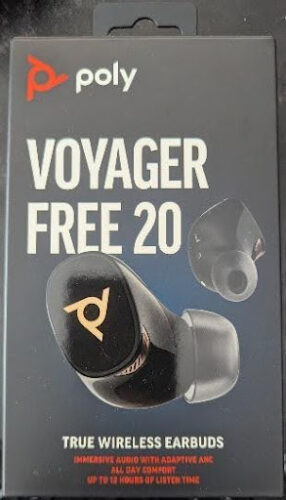
HP Poly’s Voyager Free 20 wireless earbuds are targeted at users who are on calls and meetings all day and are seeking a comfortable solution with good sound quality, all-day battery life, and the ability to wear the buds for long stretches of time.
The Poly Voyager Free 20 earbuds are available at HP.com and Amazon for about $150, which places them in direct competition with professional-level offerings from Sony, Audio-Technica, Cambridge Audio, and other vendors. However, the Voyager Free 20’s features and performance generally align with the expectations for a product at this price point and should serve users well.
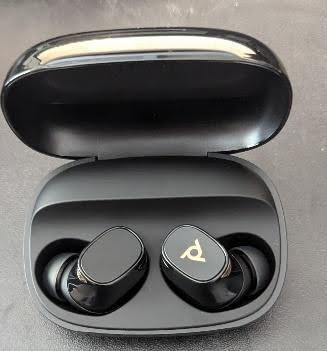
I tested the Voyager Free 20 earbuds over a period of 3 weeks, connecting to my Google Pixel 6 Pro, and both of my Lenovo Laptops, and used the earbuds in a variety of work- and leisure-related scenarios.
Comfort, Wearability, and Longevity
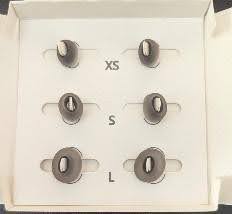
One of the most important factors impacting the suitability of earbuds is physical comfort. The Voyager Free 20 earbuds ship with four sizes of silicon ear tips (medium-size pre-installed and extra-small, small, and large sizes in the box). I used the S tips and found them extremely comfortable. I wore the earbuds continuously for six hours with no discomfort or fatigue.
The Voyager Free 20 earbuds are rated for eight hours with automatic noise cancellation turned on and up to 12 with it turned off. I used them for six hours continuously, and according to the Poly app on my phone, they still had approximately 35% battery life left. Furthermore, dropping them in the included stylish charging case will extend their useful life even more, making them capable of lasting a full workday and beyond, handy when on the go.
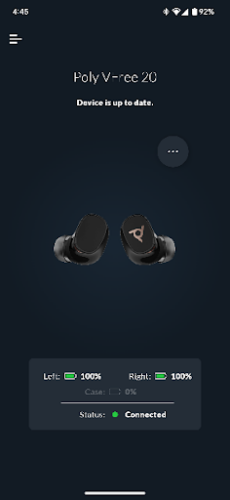
I was able to charge the earbuds from a low of about 10% to full in about 2.5 hours using the included USB-C cable and a standard USB-C power adapter. Topping up, of course, took far less time, and the ability to simultaneously charge the earbuds themselves and the charge case is a noteworthy feature.
Audio Quality
Another key criterion used to evaluate earbuds is the ability to cancel unwanted noise to enhance the quality of speech or music. The HP Poly noise reduction technology worked well in my testing, though it was put to the test when I conducted a video call in a noisy environment. I
Conducted a Zoom video call in the middle of a busy conference center, with lots of background noise from passersby, as well as conference proceedings that were being piped into an overhead speaker. While the ANC did not eliminate all the noise, conference call participants could still clearly hear me.
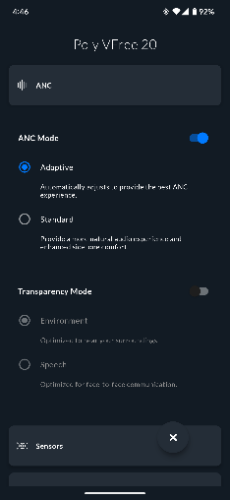
Because the Voyager Free 20 earbuds use an open-ear design, they allow outside sound to permeate, which can be positive or negative, depending upon the situation.During the Zoom call, the ambient noise of my surroundings threatened to overpower the sounds from the earbuds. However, walking around New York City with the earbuds in and the volume up near the maximum, the open-air design ensured I could still hear my surroundings when listening to my favorite tunes.
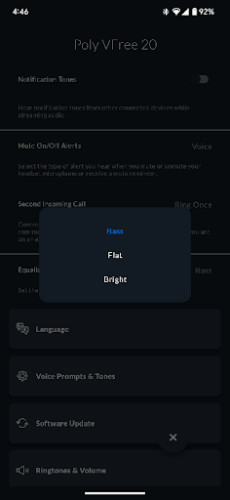
The Voyager Free 20’s ability to play back music quality was good, but it did not seem superior to the quality of my $10 Tozo wireless headphones. This is likely due to the drivers in the Voyager Free 20 earbuds, which have been tuned to perform well with podcasts and calls, instead of music. Voices generally are heavy with energy in the midrange frequencies, whereas “good” sounding earbuds tend to favor a more bass-heavy response. In addition, the HP Poly app does not offer much granular control over equalization settings, providing just three EQ presets: Bass, Flat, and Bright, none of which provided an ear-rattling bass response.
The Verdict
All told, the market for high-performance earbuds is crowded, which has led to significant innovation around noise cancellation, compatibility with myriad devices via standards (such as Bluetooth), and a focus on all-day usability. In all of these aspects, the Voyager Free 20 earbuds performed admirably. While music playback performance was somewhat hampered by the earbuds’ midrange-focused drivers, the long battery life and in-ear comfort of the Voyager Free 20 earbuds help make them a solid choice for workers who spend a significant amount of time in virtual meetings or on calls and need an all-day solution.
Disclosure: The Futurum Group is a research and advisory firm that engages or has engaged in research, analysis, and advisory services with many technology companies, including those mentioned in this article. The author does not hold any equity positions with any company mentioned in this article.
Analysis and opinions expressed herein are specific to the analyst individually and data and other information that might have been provided for validation, not those of The Futurum Group as a whole.
Other Insights from The Futurum Group:
The Future of Workplace Collaboration – Six Five In the Booth at InfoComm 2024
Poly Offers Collaboration Solutions for Microsoft Teams Rooms
Elevate the Hybrid Workspace: HP | Poly Unveil Innovative Solutions
Image Credit: HP
Author Information

Keith Kirkpatrick is VP & Research Director, Enterprise Software & Digital Workflows for The Futurum Group. Keith has over 25 years of experience in research, marketing, and consulting-based fields.
He has authored in-depth reports and market forecast studies covering artificial intelligence, biometrics, data analytics, robotics, high performance computing, and quantum computing, with a specific focus on the use of these technologies within large enterprise organizations and SMBs. He has also established strong working relationships with the international technology vendor community and is a frequent speaker at industry conferences and events.
In his career as a financial and technology journalist he has written for national and trade publications, including BusinessWeek, CNBC.com, Investment Dealers’ Digest, The Red Herring, The Communications of the ACM, and Mobile Computing & Communications, among others.
He is a member of the Association of Independent Information Professionals (AIIP).
Keith holds dual Bachelor of Arts degrees in Magazine Journalism and Sociology from Syracuse University.