Analyst(s): Futurum Research
Publication Date: July 30, 2026
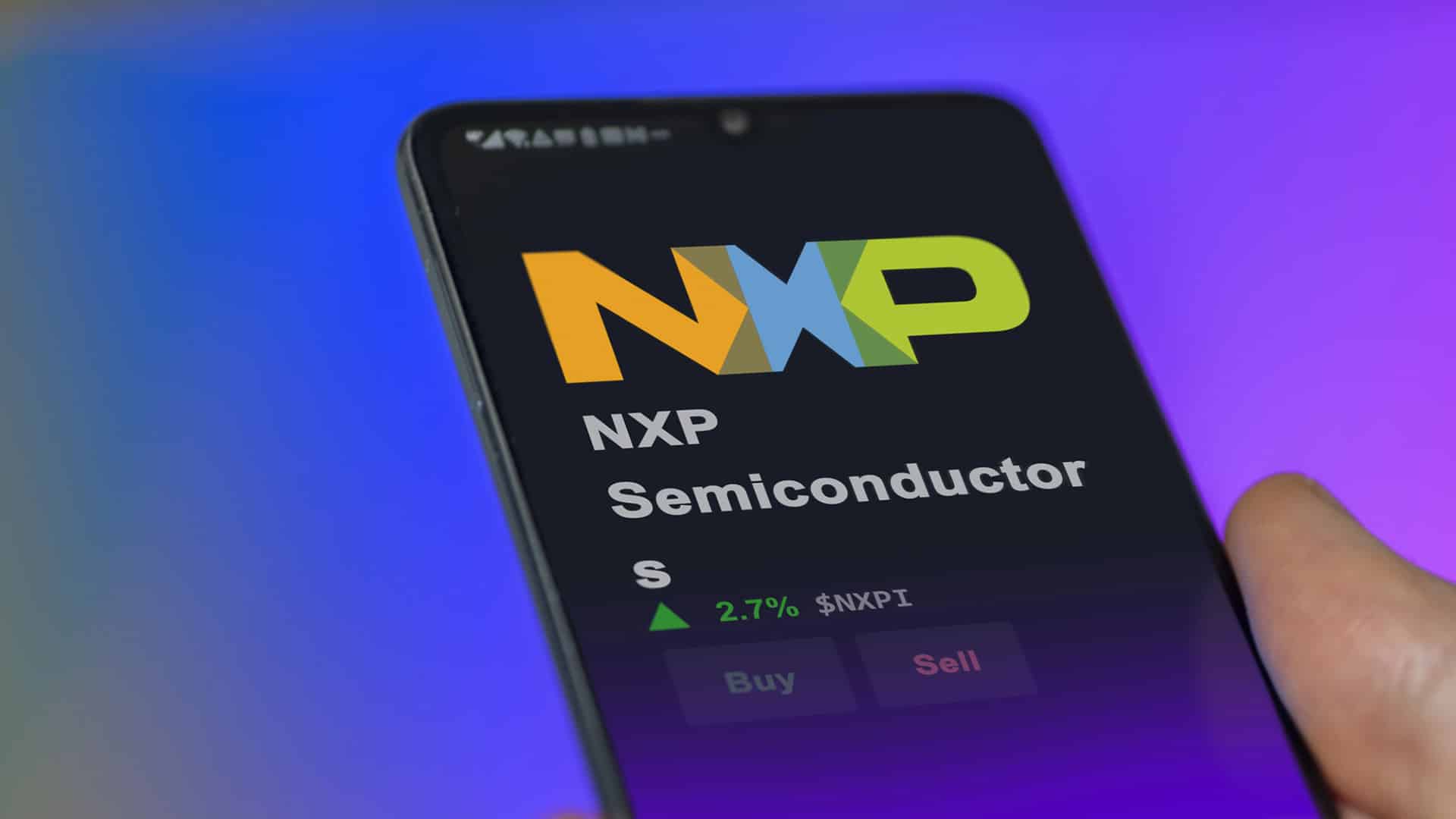
NXP Q2 FY 2026 earnings centered on growth across all end markets, with software-defined vehicles, physical AI, and data center control-plane exposure emerging as the main strategic themes. The quarter also showed investor caution toward chip stocks, even as NXP guided for continued year-over-year revenue growth in Q3 FY 2026.
What Is Covered in This Article:
- NXP’s Q2 FY 2026 financial results
- Software-defined vehicle content expansion
- Physical AI at the edge
- Data center control-plane growth
- Guidance and Final Thoughts
The News: NXP Semiconductors (NASDAQ: NXPI) reported Q2 FY 2026 revenue of $3.50 billion, up 19% year over year (YoY), compared with consensus of $3.46 billion. Automotive revenue was $1.94 billion, up 12% YoY; Industrial and IoT revenue was $755 million, up 38% YoY; Mobile revenue was $351 million, up 6% YoY; and Communications Infrastructure and Other revenue was $452 million, up 41% YoY. Non-GAAP operating income was $1.23 billion, up 31% YoY, with non-GAAP operating margin of 35.1% (Q2 FY 2025: 32%). Non-GAAP net income attributable to stockholders was $918 million, up 33% YoY. Non-GAAP diluted EPS was $3.61, up 32.7% YoY.
“NXP delivered second-quarter revenue of $3.5 billion, up 19 percent YoY and 10 percent sequentially, with growth across all end markets and all regions. This performance reflects the strength of our company-specific growth drivers, particularly in Software-Defined Vehicles and Physical AI, with Data Center emerging as an additional growth engine,” said Rafael Sotomayor, NXP President and Chief Executive Officer.
NXP Q2 FY 2026: AI at the Edge Strengthens Automotive and Industrial Demand
Analyst Take: NXP’s Q2 FY 2026 results show a company moving beyond a cyclical recovery narrative and toward a content-driven growth model. The quarter was supported by demand across all end markets, but the more important point is where that demand came from. Software-defined vehicles, industrial edge processing, connectivity, and early data center exposure are now shaping NXP’s growth profile. Investor reaction was cautious because broader chip sentiment weakened during the week, but NXP’s operating data still points to better order visibility and stronger backlog.
Software-Defined Vehicles Remain the Core Content Story
NXP’s automotive business is becoming more tied to architecture-led content growth than to vehicle unit growth alone. Automotive revenue grew 12% YoY in Q2 FY 2026, but growth was 17% YoY after adjusting for the MEMS sensor business sale. Company-specific automotive growth drivers grew in the low 20% range and represented 47% of the automotive business, with software-defined vehicles, electrification, and connectivity doing the heavy lifting. NXP also reported continued design-win activity across S32N and S32K platforms, plus new awards for multi-gigabit Ethernet switches used in software-defined vehicle network architectures. Importantly, some of the latest automotive platforms, including S32N 5-nanometer products and S32K5 zonal products, have not started revenue ramps yet. NXP’s automotive position is increasingly a content-per-vehicle story, and that makes its growth less dependent on a broad auto production rebound.
Physical AI Expands the Industrial Growth Vector
Physical AI is becoming a more concrete growth path for NXP, especially in industrial and Internet of Things (IoT) markets. Industrial and IoT revenue grew 38% YoY in Q2 FY 2026, while the company’s newest processing portfolio, including i.MX, RT, and MCX, grew 40% YoY and represented 36% of the segment. NXP expects AI-enabled processors to represent about 15% of industrial and IoT processor revenue in FY 2026, more than doubling from the prior year. The company’s Kinara-related design funnel grew from more than $1 billion last quarter to more than $1.5 billion, spanning more than 200 distinct customers. Target use cases include human-machine interfaces, voice control, vision, predictive maintenance, in-cabin automotive applications, and robotics. Physical AI gives NXP a way to attach higher-value processors, connectivity, security, and safety content to fragmented edge markets.
Data Center Creates a New Control-Plane Opportunity
NXP’s data center exposure is still small relative to its automotive business, but it is becoming more visible. Data center revenue was about $200 million in FY 2025 and is expected to exceed $500 million in FY 2026. NXP’s position sits in the control plane of AI infrastructure, including top-of-rack switching, SmartNIC control, rack monitoring, cooling, component control, and security. The Layerscape franchise is ramping across leading hyperscalers, and faster switch generations require stronger control-plane performance. This is not a direct accelerator story, which matters because it gives NXP an adjacent role in AI infrastructure without competing head-on with GPU or custom accelerator suppliers. Data center control functions could become a recurring growth layer if AI infrastructure keeps adopting industrial-grade reliability and real-time monitoring requirements.
Guidance and Final Thoughts
NXP guided Q3 FY 2026 revenue of $3.65 billion to $3.85 billion, with midpoint revenue of $3.75 billion (consensus $3.71 billion), up 18% YoY and 7% sequentially. The company guided non-GAAP gross margin of 58% to 59%, non-GAAP operating income of $1.31 billion to $1.45 billion, and non-GAAP operating margin of 36% to 37.6%. Non-GAAP diluted EPS is expected to be $3.89 to $4.32, with midpoint EPS of $4.11. NXP expects all regions and all end markets to grow sequentially, with automotive up in the mid-single-digit range sequentially, industrial and IoT up in the mid-single-digit range, mobile up in the mid-teens range, and Communications Infrastructure and Other up in the high-single-digit range.
NXP’s growth story is increasingly being defined by the expanding intelligence around compute rather than compute itself. As software-defined vehicles, industrial automation, and AI infrastructure become more distributed, demand is shifting toward the processors, connectivity, networking, security, and control technologies that coordinate these systems. That creates a broader opportunity than traditional automotive semiconductors alone, but sustaining this momentum will depend on NXP continuing to increase silicon content per deployment while translating emerging opportunities such as data center control planes and physical AI into meaningful long-term revenue streams.
See the full press release on NXP’s Q2 FY 2026 financial results on the company website.
Declaration of generative AI and AI-assisted technologies in the writing process: This content has been generated with the support of artificial intelligence technologies. Due to the fast pace of content creation and the continuous evolution of data and information, The Futurum Group and its analysts strive to ensure the accuracy and factual integrity of the information presented. However, the opinions and interpretations expressed in this content reflect those of the individual author/analyst. The Futurum Group makes no guarantees regarding the completeness, accuracy, or reliability of any information contained herein. Readers are encouraged to verify facts independently and consult relevant sources for further clarification.
Disclosure: Futurum is a research and advisory firm that engages or has engaged in research, analysis, and advisory services with many technology companies, including those mentioned in this article. The author does not hold any equity positions with any company mentioned in this article.
Analysis and opinions expressed herein are specific to the analyst individually and data and other information that might have been provided for validation, not those of Futurum as a whole.
Read the full Futurum Group Disclosure.
Other Insights From Futurum:
NXP’s Neural Axis Architecture: A Blueprint to Own the Robotic Nervous System
NXP’s Q1 2026: Can Automotive and Industrial Momentum Outrun Semiconductor Volatility?
NXP Strengthens Industrial Edge Capabilities With port GmbH Acquisition
Author Information

Futurum Research
Futurum Research delivers forward-thinking insights on technology, business, and innovation. Content published under the Futurum Research byline incorporates both human and AI-generated information, always with editorial oversight and review from the expert Futurum Research team to ensure quality, accuracy, and relevance. All content, analysis, and opinion are based on sources and information deemed to be reliable at the time of publication.
The Futurum Group is not liable for any errors, omissions, biases, or inadequacies in the information contained herein or for any interpretations thereof. The reader is solely responsible for any decisions made or actions taken based on the information presented in this publication.