My take: The best outcomes/$ goes a long, long way.
But just as important is whether you can trust the AI you’re using with your most important information. Safety is paramount for a great many ...use cases.
And why the hyperscalers have the edge: Massive shared security at scale.
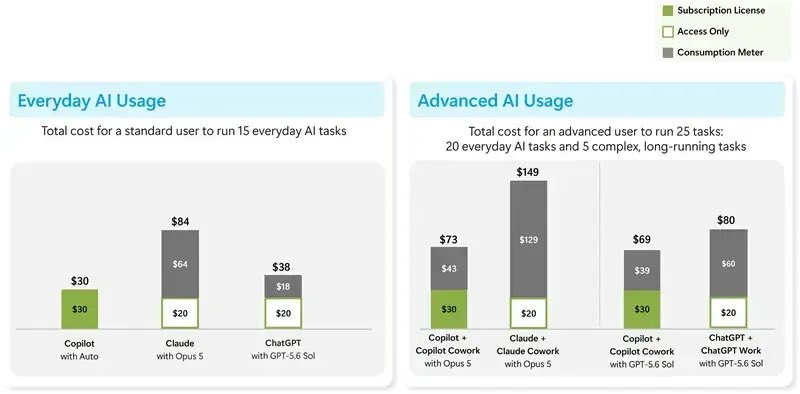
With Copilot we’re focused on giving customers the best outcomes/$ and optimizing this everyday. See the latest comparison:
https://techcommunity.microsoft.com/blog/microsoft-copilot-blog/evolution-of-the-copilot-pricing-model/4559416
NVIDIA just launched OpenShell and Sentry, pushing AI-agent security into runtime and infrastructure.
Our analysis: The agent stack is separating intelligence from authority. This will redraw where ...enterprise AI control really lives.
What CIOs should do:

NVIDIA Open Agent Safety Platform: The Agent Security Stack Moves Below the Model
Frontier analyzes why NVIDIA OpenShell and Sentry signal a new enterprise control plane for autonomous agents — and what CIOs should do now.
thisisfrontier.ai
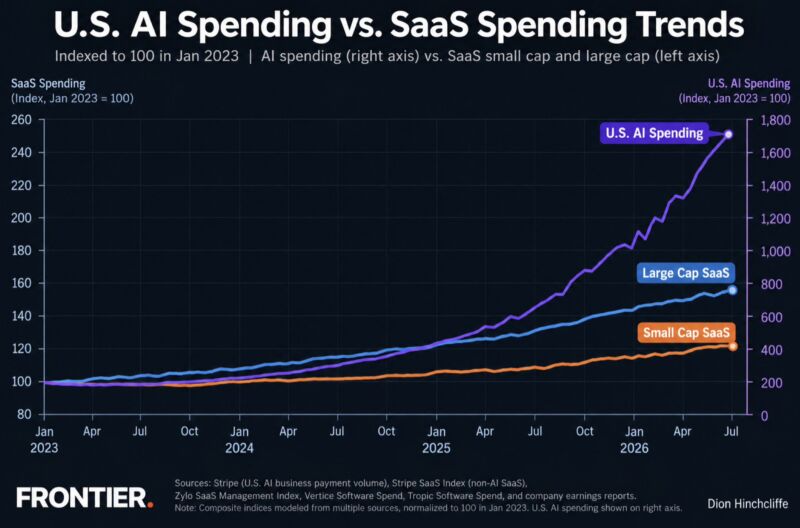
Exactly right. Here’s my case that AI is actually lifting the SaaS boat, even as it clearly cannibalizes some of the market:
The “SaaSpocalypse” thesis is backwards.
@Stripe currently shows ...U.S. AI spending growing 91% YoY. Yet its non-AI SaaS index is also growing at a rapid
The SaaSpocalypse was more like a RenaiSaaS https://www.stripeeconomics.com/p/the-saaspocalypse-was-more-like-a
Exactly right … it’s absurd that the models are irresponsibly attacking organizations, but at the same time the models arent doing crazy creative things, they are executing the fundamentals if ...attack at scale, things that should have already been cleaned up by defenders
And then there’s the OpenClaw bombshell:
Microsoft Autopilot is built on OpenClaw.
This strongly suggests something much bigger about Microsoft’s agent strategy:
Microsoft is just not that ...invested in its own agent runtime.
It actually wants to own the CONTROL PLANE around
Today Microsoft announced Autopilot, an always on agent built on OpenClaw
The best part of this collaboration is how much @OmarShahine and others at Microsoft have contributed BACK to OpenClaw
Read all about the contributions Omar and his team made here: https://openclaw.ai/blog/microsoft-autopilot-openclaw
Everyone is looking at @Microsoft’s new Copilot as an AI product announcement.
I think it’s also an economic model announcement.
Home = Where work begins.
Code = Where software gets created on ...demand.
Autopilot = Persistent digital labor that keeps working after you leave.
And
I am noticing a significant and disturbing uptick in AI-based breaches. Some of them quite serious.
And it’s probably going to increase quite a bit.
I’m not alone: Attacks attributed to ...AI-enabled adversaries rose 89% year-over-year says Crowdstrike.
CIOs must yet again
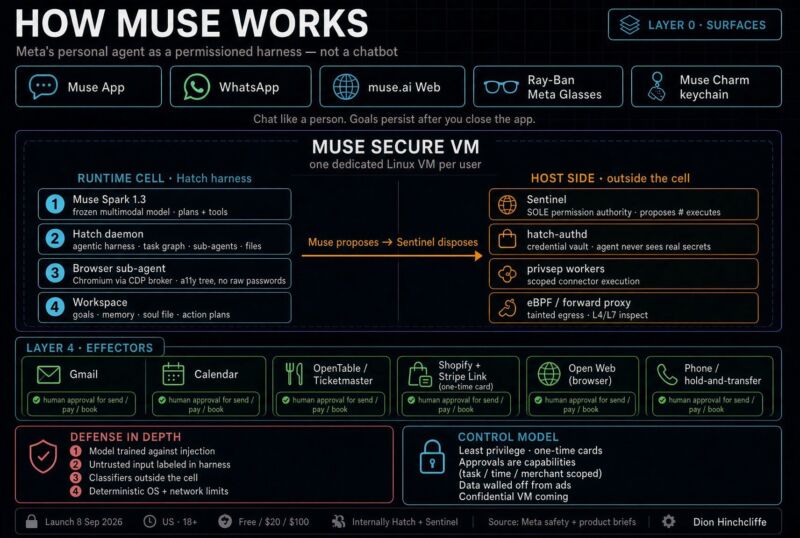
Muse has emerged from out of nowhere from @Meta as a leading agentic harness. Here’s the most important things about what we know about it so far.
What is Muse?
• Meta launched Muse on Sept 8,... 2026. It’s a consumer personal agent that does things, not a chatbot. US-only, 18+,
Very glad to see the run-assert-eval in @code for identifying agentic risks.
This is the kind of guardrail that we need to see added across the industry to make agentic AI safe + trusted.
My take: ...AI agents are one of the most powerful tech tools ever developed, but that means
Introducing run-assert-eval.
With a single prompt in @code, the skill identifies risks specific to your agent, measures how often they occur, generates runtime policy based on those findings, and reruns the same eval to see whether the policy worked.
https://commandline.microsoft.com/run-assert-eval-responsible-ai-agent-risk-discovery-at-runtime/
I’m seeing enterprise platforms quickly support agents like Muse to agentify IT development, even of key systems + platforms.
Also hearing plenty of anecdotal evidence that business devs have ...shifted from AI code assist to agentic coding oversight.
Few are doing major

👩💻 Big engineering challenges need more than code completion.
@Meta Model API and Muse Code are now available through Oracle Marketplace, giving developers new ways to build with Meta’s AI models and use agentic coding to tackle complex software engineering work. See what’s
The companies racing to build frontier AI are now racing to govern it
As are enterprises, AI capabilities are far outracing most orgs’ ability to oversee and control it.

The companies racing to build frontier AI are now racing to govern it
Google, OpenAI, and Anthropic are reportedly preparing to found a new industry body for frontier AI safety, but en...
www.cio.com
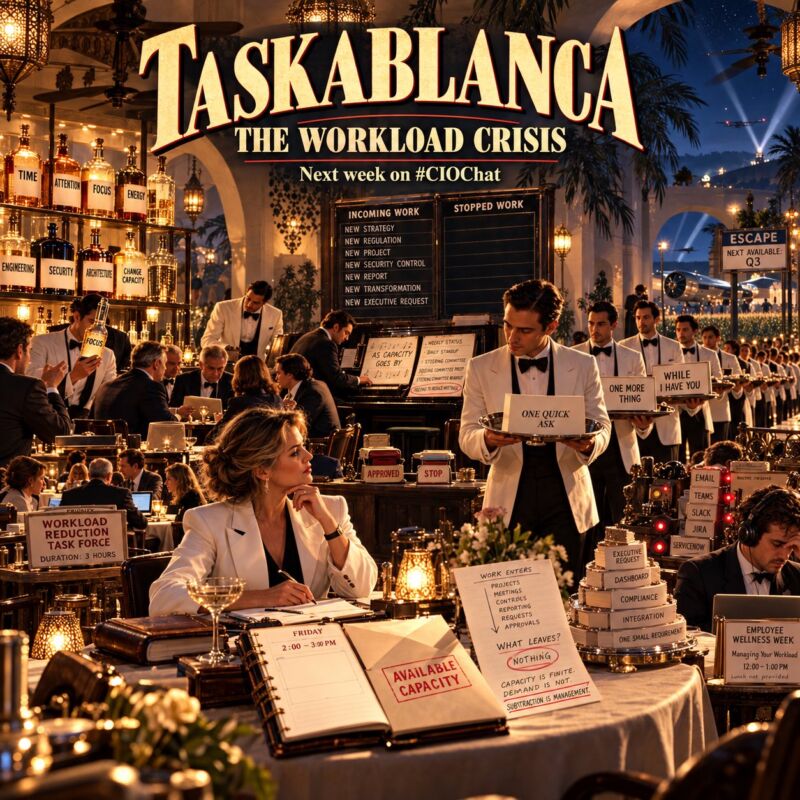
#CIOChat Great chat today! Join us at 2pm ET next Thursday. Topic: The Workload Crisis
Hope you enjoy our movie tie-ins to intro next week’s topic.
Please suggest topics and invite your IT ...colleagues. Every Thursday at 2pm ET.







VP, Custom Research · The Futurum Group