The Six Five Team discusses the termination of the Intel-Tower acquisition, and what’s next now that the deal is off.
If you are interested in watching the full episode you can check it out here.
Disclaimer: The Six Five Webcast is for information and entertainment purposes only. Over the course of this webcast, we may talk about companies that are publicly traded and we may even reference that fact and their equity share price, but please do not take anything that we say as a recommendation about what you should do with your investment dollars. We are not investment advisors and we ask that you do not treat us as such.
Transcript:
Patrick Moorhead: The Intel-Tower Semiconductor deal is off. What’s next? What does it mean, Dan? Is Intel just done? Are they toast, or is this just a eh, whatever?
Daniel Newman: When you pat yourself on the back, is that some sort of double entendre? Like Pat patting his pat on the Pat?
Patrick Moorhead: Yeah, pretty much.
Daniel Newman: Yeah, I got a mat, you got a, Pat and mat. All right. So yeah, look, in the wee hours of the night, this was a fast start to the week. I think it was what, Monday night? It was when the release came out and yep, deal is off. Now, it was weird because the deal really started to take shape, it was early ’22 I believe, was when the deal was agreed upon. At the time, the tensions with China looked a lot different than right now. But let’s be very clear, this deal went to China to die, just like the NXP deal went to China to die, just like several other deals go to China to die.
And China’s got a way, people don’t understand, China’s not sitting there going, no. They’ve got a really great way of making these deals linger forever until they end up costing the companies lots of money or they become just obvious and apparent that they will not get done. And this is what happened here. I think when Pat Gelsinger, and I had some people back channel me some press media, I talked to Bloomberg about this and some others, and they asked me about how did he ever think this deal was going to get done? And at the time when the deal was being agreed upon, our relationship with China looked different.
I mean, you have to remember that under the current administration, the cooperation with China from a business front, and then with the advent of AI and the desire to have control of supply chains and be the global technology leader based around AI, has basically caused us to put some very strict controls on access to chips to China. Now, there’s a genuine reason to be concerned. The concern of Taiwan is real. The concern of global technology leadership is real. The concerns about stealing, copying and infringing upon designs is real. These are all things that we do genuinely need to worry about. But we’ve basically cut China off from the process technology, most specifically EUV and the ASML machines that they need to move from 7 nanometer to the next process nodes. And by doing this, we’ve basically cut China off from being able to compete at the leading edge, and most specifically in AI.
This has national security implications, this has technology leadership implications, and of course this makes it hard for China to build an economy that’s going to compete with the US and its allies. This is what it is. Now, this is in its own sense, Pat, it’s a microaggression. And you could argue it’s kind of a form of a nonviolent war that we’re fighting right now to be the most powerful alliance in the world.
And so China has little ways. Obviously we can go to actual war, but I think nobody really wants that. There is a sort of a… I don’t know if you’d call it almost a Stockholm Syndrome type of relationship between our two countries. We need their consumers. You see over the last several weeks, I mean we didn’t talk about this much with the Lenovo and Cisco thing, but China’s economy is down. China’s economy is down, and when China’s economy is down, we don’t sell as much stuff. Things that are produced by US companies are often sold, they often have mid double-digit market share of sales of many of our devices and products. And so right now, we’re not selling a lot of stuff.
So I realized I didn’t talk a lot about Tower, Pat, but I’m going to leave some of that for you. But there were all kinds of opportunities for Intel to become full service, Tower was going to short circuit this opportunity. There is still an opportunity for the company to partner. I think you said something provocative about GlobalFoundries and I’ll leave that to you. I think truth be told though, many of these analog processes and these higher nanometer process nodes have taken many years to develop. They’re highly specialized, there are very few companies in the world that can do them. And by the way, a lot of our shortages were in these processes, not in some of our leading edge processes. And I don’t think people fully appreciate that.
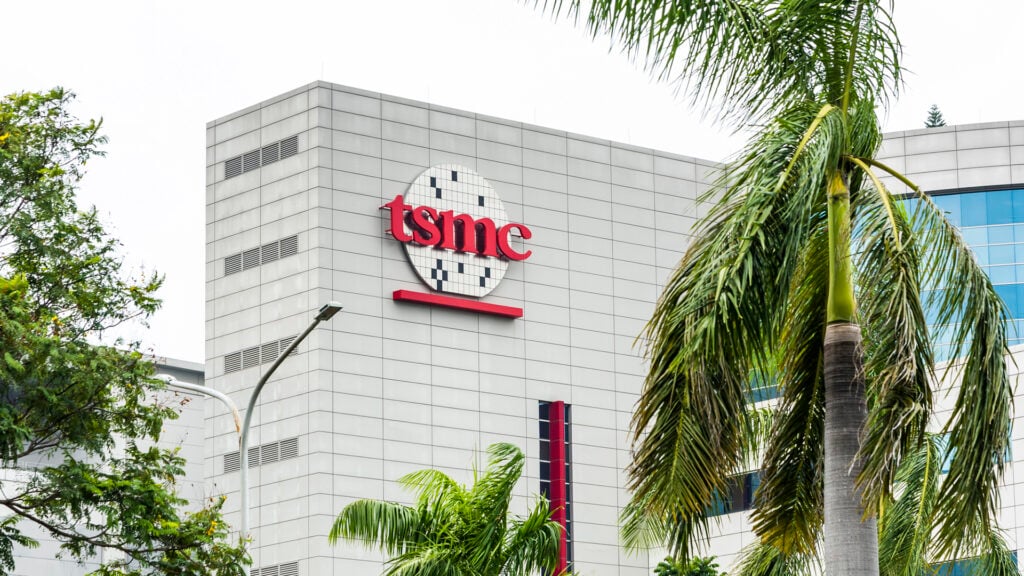
But TSMC has a very, very full repertoire, and now Intel is going to have to figure out how to fill that gap or it’s going to have to partner. That was the biggest sting of this deal not going through, but it was doomed from the day we probably enacted our first chip control several months back in China.
Patrick Moorhead: Yeah, good stuff, Dan. I’m going to give a little bit of background on Intel’s manufacturing strategy and talk about how Tower was supposed to fit in and then talk a little bit about the go forward plan. So back in March of 2021, I had a really good conversation with Pat Gelsinger when he came back. Literally Gelsinger came back in February of ’21 and there was a lot of questions about his strategy. And Pat wasted no time basically saying, no, we are IDM 2.0, this is what we’re doing. Two months after he took the helm, and if you remember IDM 2.0 by the way, IDM is integrated device manufacturer, they announced two new fabs, talked about Intel 7 nanometer, reentering the Foundry business with IFS, increase its external foundry use with companies like TSMC, collaboration with IBM research, and getting back to what was known as IDF with Intel on. So literally Pat wasted no time.
Now part of that was, well listen, how would Intel be what I like to call an end-to-end play? A company that can not only do leading edge, but also bleeding edge. But if you look at the different product areas, analog, I mean Tower Semiconductors sign off is where analog and value meet. They’re very clear. So that’s CMOS sensors, power management, RF that we see in wifi and in 5G, automotive mixed signal CMAs, so you get the idea. And by the way, very similar, not the same as what GlobalFoundries does. Now, Tower is a very small company. I think they did $300 million in the latest quarter. So what that means is the GlobalFoundries is probably about five times bigger than them. So this was really a, hey, Intel is going to put some water on this, some fertilizer, and bring them into a secure supply chain for Western Europe and the United States. It’s your one-stop shop. And like you noted, TSMC is also a one-stop foundry shop.
So what does this mean? Does this mean that Intel is out and can’t be end-to-end? You said it Daniel, I’m expecting a strategic collaboration between Tower, because Tower is a small company. It’s very focused, but I can see a strategic collaboration where Intel is the upfront for Western Europe and the US on end-to-end. RAMP-C is a great example. RAMP-C is the Department of Defense contract that, by the way, both AWS and Nvidia have signed up to. I know Nvidia will likely do their wafers, AWS will probably do their packaging in there, but that’s how that would work. And you would bring Tower in under that RAMP-C as they’re an Israeli, not an American company.
So you get the idea, and I brought this up with some folks at Intel, I mean strategic engagements are great, but your margin sharing, and you’re not getting the full net cash value out of the value that comes out there. But on the other side of my mouth, I’ll say Intel has struck a lot of financing deals to finance their $100, $200 billion in CapEx with third parties. So maybe this would be a good thing. I don’t think it’s as good of a good thing, but I think nonetheless it’s better to have Intel and Tower doing stuff together for not only Tower’s and Intel’s sake for US and Western Europe.
Author Information

Daniel is the CEO of The Futurum Group. Living his life at the intersection of people and technology, Daniel works with the world’s largest technology brands exploring Digital Transformation and how it is influencing the enterprise.
From the leading edge of AI to global technology policy, Daniel makes the connections between business, people and tech that are required for companies to benefit most from their technology investments. Daniel is a top 5 globally ranked industry analyst and his ideas are regularly cited or shared in television appearances by CNBC, Bloomberg, Wall Street Journal and hundreds of other sites around the world.
A 7x Best-Selling Author including his most recent book “Human/Machine.” Daniel is also a Forbes and MarketWatch (Dow Jones) contributor.
An MBA and Former Graduate Adjunct Faculty, Daniel is an Austin Texas transplant after 40 years in Chicago. His speaking takes him around the world each year as he shares his vision of the role technology will play in our future.