Analyst(s): Mitch Ashley
Publication Date: April 29, 2026
SpaceX’s $60 billion acquisition of right on Cursor and $10 billion compute partnership solves two acute problems at once. Cursor faced a compute ceiling from the Anthropic and OpenAI model providers it competed against, and SpaceX needed AI revenue and credibility ahead of its potential IPO. Microsoft reportedly gave Cursor a pass, while the deal has varying implications for Google, AWS, and IBM.
What is Covered in This Article:
- SpaceX has secured the right to acquire Cursor for $60 billion later in 2026, or to pay $10 billion for an ongoing compute and collaboration partnership using xAI’s Colossus supercomputer.
- The agreement preempted a $2 billion Cursor funding round at a $50 billion valuation, and Microsoft reportedly examined an acquisition before declining to bid.
- Cursor was facing a compute ceiling and a margin squeeze from the same model providers it competed against, while SpaceX needed AI revenue and credibility ahead of a record-setting IPO.
- The deal structure allocates risk pragmatically, giving Cursor a $10 billion floor and SpaceX an option exercisable with newly public stock after the IPO closes.
- Enterprise buyers using Cursor face roughly 6 months of vendor identity ambiguity, with model-neutrality assumptions and data-flow arrangements now subject to renegotiation.
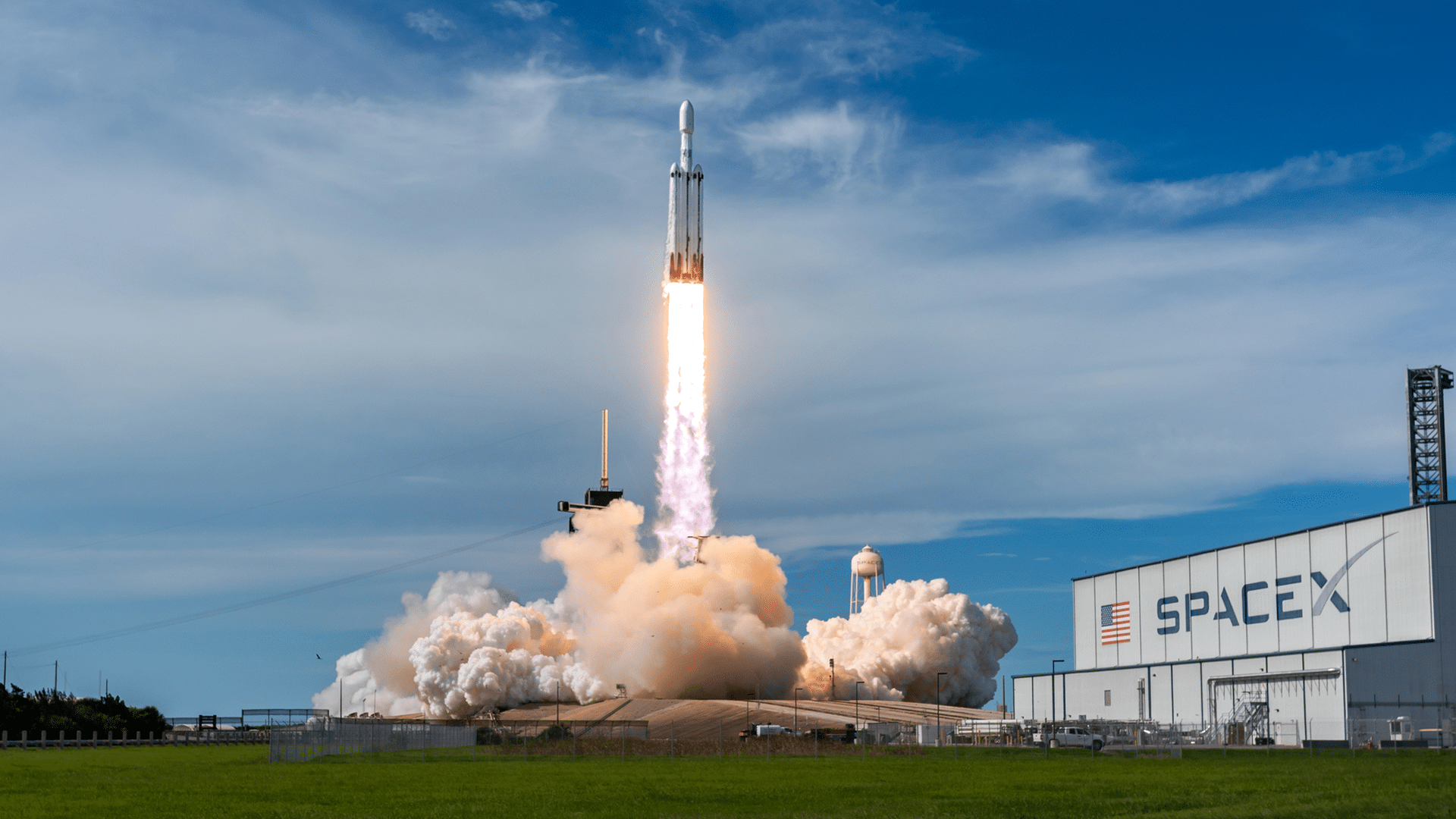
The News: SpaceX announced on April 21, 2026, an agreement that gives it the right to acquire Cursor for $60 billion later this year or pay $10 billion for ongoing collaboration on AI coding and knowledge work. The deal pairs Cursor’s IDE and Composer model with xAI’s Colossus training infrastructure in Memphis, Tennessee, which SpaceX describes as equivalent to 1 million H100 GPUs. The companies disclosed the agreement on X, with Cursor publishing a partnership statement on its blog the same day.
Cursor, owned by Anysphere and used by more than half of the Fortune 500, was reportedly hours from closing a $2 billion funding round led by Andreessen Horowitz, Thrive Capital, and Nvidia at a $50 billion valuation when the SpaceX agreement preempted the raise. CNBC reported separately that Microsoft examined a Cursor acquisition before choosing not to bid. SpaceX absorbed xAI in February 2026 and is positioning for a planned IPO targeted for June 2026 at a reported $1.75 trillion valuation.
Cursor’s blog post stated the partnership addresses a compute bottleneck the company identified after releasing Composer 2 with continued pretraining and reinforcement learning gains. The Composer line of models is positioned by Cursor as the path to closing capability gaps with frontier providers Anthropic and OpenAI.
Why SpaceX-Cursor Works for Both, and What It Means for Google, AWS, IBM
Analyst Take — Cursor Solved a Compute Problem and a Margin Problem in One Move: Cursor’s growth was outpacing its access to training compute, and its ability to fund that compute on commercial terms. Composer 2 hit frontier-level performance, but the company stated openly that further scaling required infrastructure it could not access through normal channels at a competitive cost. Colossus gives Cursor roughly a million H100-equivalent training capacity that would otherwise be unavailable at any price, which is the difference between catching up to OpenAI and Anthropic on agentic coding models or falling further behind through 2027.
The margin pressure mattered as much as the compute ceiling. Cursor pays open-market rates to Anthropic and OpenAI for the models it routes to customers, and one venture investor reportedly told Fortune that Anthropic was actively trying to drown out Cursor on pricing.
Two of Cursor’s engineers had already left for SpaceX and xAI in March, and a public Cursor defection by Valon set off a wave of skeptical commentary in February. Taken together, the substrate Cursor was built on was becoming hostile, and the SpaceX deal moves Cursor toward a substrate where compute pricing is internal rather than adversarial.
SpaceX Needed AI Revenue and a Story for IPO Investors
SpaceX is heading into what is projected to be the largest IPO in history, and Wall Street pays substantially higher multiples for AI revenue than for aerospace revenue. xAI reportedly lost $6.4 billion in 2025, according to Financial Times reporting, while Grok continues to trail Claude and GPT-class models on agentic coding benchmarks that matter to enterprise buyers.
The Cursor deal repositions SpaceX from a rocket-and-satellite business with a struggling AI division into a company with credible distribution into enterprise software development through more than half of the Fortune 500.
The deal structure reflects the IPO calendar with unusual precision. By delaying the actual acquisition until after the June listing, SpaceX avoids updating confidential financial filings before pricing and preserves the option to fund the purchase with publicly traded stock at post-IPO valuation. In practice, SpaceX is buying time, AI optionality, and a revenue narrative for $10 billion, with the larger commitment deferred until the market has priced the IPO and validated the company’s AI positioning.
The Option Structure Allocates Risk More Honestly Than a Straight Acquisition
A $10 billion floor with a $60 billion call option is a more rational deal than either side might have closed as a straight acquisition this quarter. The structure trades certainty for flexibility on both sides, which is the right trade given how much can change between now and Q4.
The Microsoft pass is the clearest signal that this trade was not obviously available to other buyers. Microsoft has the cash, the GitHub Copilot strategy, and the model partnerships to absorb Cursor, but likely decided the integration cost and channel conflict outweighed the strategic gain. SpaceX faces neither of those constraints, which is why the deal made sense for SpaceX in a way it did not make sense for Microsoft.
What Enterprise Buyers Should Reassess
Cursor customers chose the product partly for its position above the model layer, with zero-data-retention arrangements and visible multi-model neutrality. The SpaceX partnership reroutes Composer training to xAI infrastructure under SpaceX ownership. As a result, procurement teams should treat the next six months as a window to recheck contractual assumptions about data flow, model substrate, and vendor identity, none of which were on the risk register before April 21.
What This Deal Means for Vendors
The deal redraws competitive pressure across three vendor groups at once. GitHub Copilot, JetBrains AI, Windsurf, and Replit now compete against an IDE that has internal access to a million-H100-equivalent training cluster, which changes the cost structure of catching up on agentic model capability and forces each to clarify whether they are an IDE company, a model company, or both.
Anthropic and OpenAI lose leverage over their largest IDE distribution partner and gain a motivated competitor inside one of their highest-volume revenue channels, which puts pricing, rate limits, and zero-data-retention terms on the negotiation table for every other IDE vendor still routing to frontier models.
Microsoft, having passed on the deal, now has to defend GitHub Copilot’s position against a Cursor that is better capitalized, better resourced on compute, and competitively motivated to win Fortune 500 accounts where Copilot’s distribution moat has been the primary defense. Taken together, every vendor in the AI-native development tooling market has roughly six months to decide whether to pick a model alignment, build their own, or accept that the cost of remaining substrate-neutral has just gone up materially.
Google feels this deal differently because their positions in the AI coding market are structurally different. Google is the most insulated of the hyperscalers, having already vertically integrated with Antigravity in November 2025, which means SpaceX paid $10 billion to assemble a less complete version of what Google already owns in model, IDE, and TPU compute. The execution question for Google is whether Antigravity converts from free preview to enterprise distribution before Cursor stabilizes under SpaceX.
AWS faces the harder problem because its coding agent strategy depends on Anthropic, whose largest IDE distribution channel just rerouted to xAI infrastructure. As a result, AWS needs Anthropic to win the substrate-neutral IDE market through Claude Code and remaining Cursor competitors, or compete in agentic coding while consolidating around its own vertical stack.
IBM has the lowest direct exposure of any major vendor because watsonx Code Assistant and Granite-based coding tools target regulated industries and governance buyers, not Cursor’s developer base. The indirect opening is real: procurement anxiety around vendor identity and data flow plays directly into the governance narrative IBM has been selling, giving them a six-month window to convert that into distribution if they treat this as a strategic window of opportunity rather than vindication.
What to Watch:
- Whether Anthropic or OpenAI restricts model access to Cursor following the ownership change. The Windsurf precedent shows model providers can move faster than acquirers anticipate, and Cursor’s current revenue mix still depends heavily on Claude Sonnet and GPT-class models.
- Whether SpaceX exercises the $60 billion option or pays the $10 billion fee. The IPO calendar is targeted for June 2026, and Composer training results on Colossus through Q3 will determine which path is taken.
- Microsoft’s response moves on GitHub Copilot, particularly around enterprise governance and any acceleration of native IDE-layer agentic features targeted at defection-prone Cursor customers.
- Enterprise procurement responses, particularly around zero-data-retention contract language, subprocessor disclosure obligations, and whether legal teams require contractual carve-outs ahead of the acquisition decision.
- Competitive moves from JetBrains, Replit, and Windsurf as AI-native IDE category dynamics shift. Expect at least one major IDE platform to announce a model partnership or ownership realignment in response.
See the Cursor blog post about the SpaceX agreement for more information.
Disclosure: Futurum is a research and advisory firm that engages or has engaged in research, analysis, and advisory services with many technology companies, including those mentioned in this article. The author does not hold any equity positions with any company mentioned in this article.
Analysis and opinions expressed herein are specific to the analyst individually and data and other information that might have been provided for validation, not those of Futurum as a whole.
Other Insights From Futurum:
Salesforce Agent API Signals the Next Control Plane Battleground for AI Agents
Futurum Agent Control Plane Framework: A Reference Model for Production AI Agents
SUSECON 2026 – Big Bet On MCP and Partners for Infrastructure AI Operations
Author Information

Mitch Ashley is VP and Practice Lead for the CIO & Technology Buyers and Software Lifecycle Engineering practices at The Futurum Group. A multi-time CIO and CTO with 30+ years leading technical organizations, Mitch built and operated production systems spanning cybersecurity for the U.S. Department of Defense, PKI services for the broadband and 5G industries, SaaS platforms, large-scale telecom and banking systems, and a national broadband network. His work with AI began early, developing expert systems that diagnosed and repaired complex mainframe environments. That operator foundation grounds his analysis in operational consequence, covering the technology buyer's world of software engineering, cybersecurity, DevOps, cloud, and AI.