Analyst(s): Nick Patience
Publication Date: March 5, 2026
What is Covered in This Article:
- S3NS achieves SecNumCloud 3.2 qualification from ANSSI, clearing 276 requirements across 15 security domains
- Current PREMI3NS service catalog and rolling 18-month roadmap for new services, including Vertex AI foundations
- Google Cloud’s broader sovereign cloud portfolio: Data Boundary, Dedicated, and Air-Gapped offerings
- European expansion strategy and S3NS 2030 vision
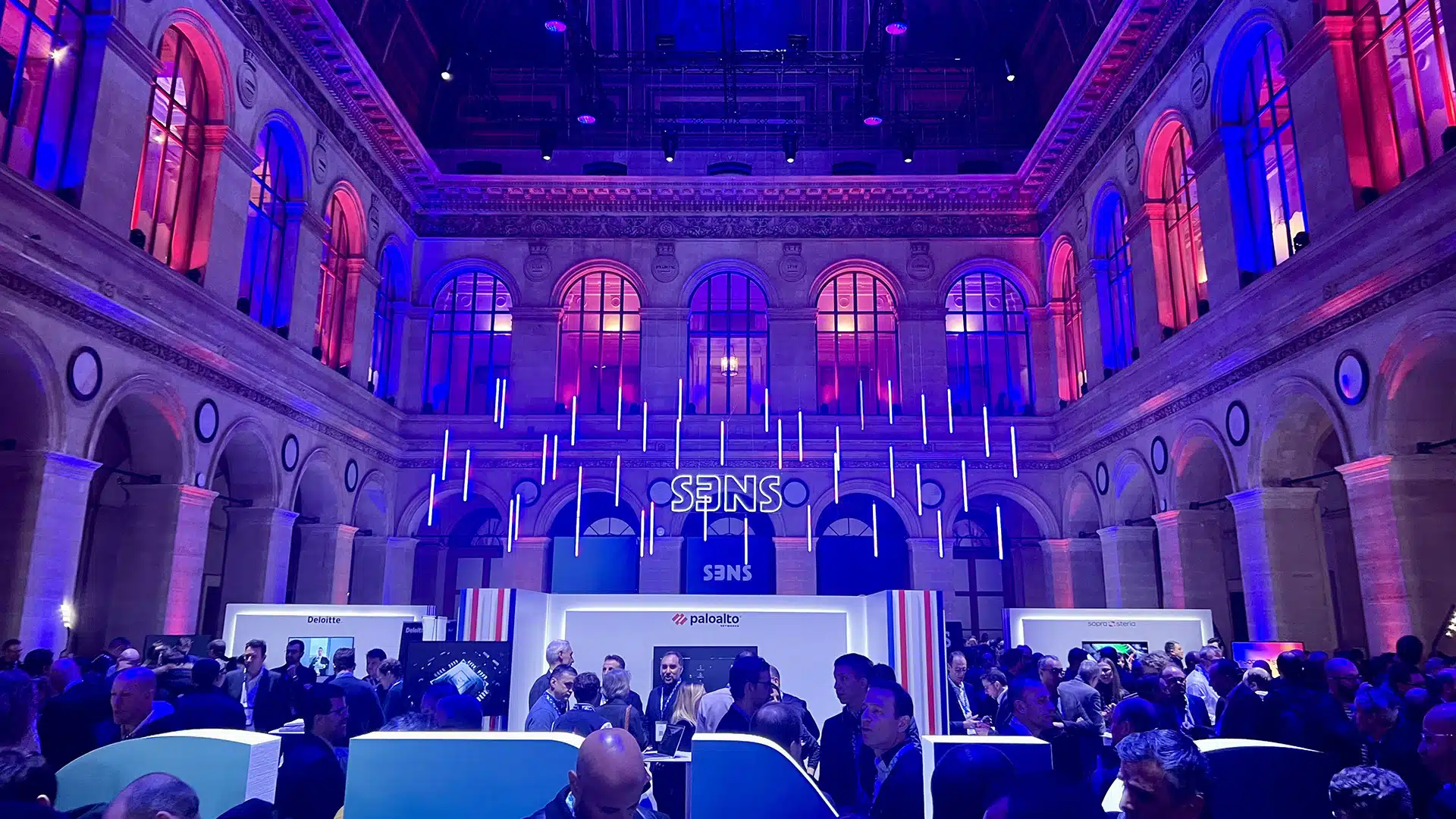
The Event – Major Themes & Vendor Moves: S3NS (pronounced ‘sens’ in French, meaning sense) is a joint venture between Thales – the majority shareholder – and Google Cloud that provides sovereign cloud services to European organizations. At a recent packed summit in Paris, executives from S3NS, Google and Thales – together with French politicians – laid out the case for S3NS as a model for AI sovereignty in Europe.
The summit had a noticeably more confident tone than prior iterations. S3NS passed its SecNumCloud 3.2 qualification on December 17, 2025, clearing a hurdle that had been the central question hanging over the venture since its inception. With qualification secured, the conversation shifted decisively toward commercial traction, service breadth, AI capabilities, and geographic expansion.
S3NS & Sovereignty: Can Thales-Google Venture Make AI Sovereignty Work at Scale?
Analyst Take: S3NS offers two tiers of sovereign cloud services built on Google Cloud technology. CRYPT3NS provides software-based encryption and data residency controls deployable across standard Google Cloud regions, while PREMI3NS – the company’s SecNumCloud-qualified flagship – runs on entirely separate, dedicated Google infrastructure operated exclusively by S3NS under European jurisdiction, with its own compute, storage, and networking stack independent of Google’s public cloud. Google personnel do not have access to the PREMI3NS environment, and S3NS (as a Thales-controlled entity subject to European law) operates it independently. S3NS is majority-owned by Thales, with Google thought to hold about 20% and S3NS is legally obligated only to European law. S3NS management said any extraterritorial data requests, for example, from the US government, would be rejected, and there is no technical mechanism for Google to access the data unilaterally.
The SecNumCloud 3.2 qualification is the most important milestone S3NS has reached to date. The framework comprises 276 requirements across 15 chapters, spanning operational security, cryptology, access control, network security, business continuity, and – critically – protection against extraterritorial laws. This last requirement is what distinguishes SecNumCloud from other European security certifications: it is not purely a cybersecurity standard but also addresses jurisdictional control over data.
S3NS CEO Cyprien Falque made a point of referencing a public statement from the head of ANSSI (France’s national cybersecurity agency) defending the qualification’s rigor, pushing back against market skepticism that SecNumCloud is a meaningful bar rather than a political label. The qualification is substantive. It requires demonstrable technical controls, operational isolation, and legal protections that go beyond what standard cloud certifications demand. Whether it is sufficient for every European regulatory context is a separate question, but achieving it is not trivial.
Service Catalog: Broad Enough to Be Useful, Gaps Remain
The current PREMI3NS catalog covers core compute (Compute Engine, Cloud GPUs with NVIDIA H100s), storage, networking (DNS, VPN, Load Balancing, Cloud Armor, Interconnect), data analytics (BigQuery Enterprise, Pub/Sub), containers (GKE Autopilot), databases (Cloud SQL Enterprise Plus), and operations tooling (Monitoring, Logging). A second wave of services is pending SecNumCloud qualification for later in H1 2026, adding Cloud Run, Cloud Build, Cloud Spanner, Cloud Bigtable, Dataproc, Cloud Composer, Confidential VMs, Filestore, and several security services, including Secret Manager and Admin Access Transparency.
S3NS operates a rolling 18-month roadmap updated every six months in coordination with Google’s product planning cycle, with services delivered quarterly. The release process involves a ‘turnup’ phase where Google delivers the service to S3NS infrastructure, followed by training, security assessment, ANSSI qualification, and then general availability. Falque noted that the time from Google delivering a service to S3NS making it available to customers has compressed from approximately six months to what they now expect to be on the order of one month, thanks to a more agile qualification pathway agreed with ANSSI.
AI Services: The Critical Gap Being Addressed
The AI roadmap was a key takeaway for S3NS. Today, PREMI3NS offers A3 hardware (NVIDIA H100 GPUs) and the ability to deploy AI models on GKE containers – functional, but limited. The roadmap shows that core Vertex AI Foundations will arrive in H2 2026, including Model Garden (open models), Model Registry, Workbench, and Online Inference.
We asked whether Gemini (Google’s closed foundation model) would be available through the sovereign Vertex AI deployment. While it won’t be available in the H2 2026 Model Garden – only open source models would be included initially – it will be at some point in the future. For organizations that need sovereign AI inference on frontier-class models, the availability of Google’s own models on PREMI3NS infrastructure will be a deciding factor. The distinction between open-weight models (which can be self-hosted) and API-accessed closed models (which require a different integration pattern) matters for sovereign use cases.
European Expansion: Ambition Meets Complexity
S3NS signaled clear European ambitions. CRYPT3NS already operates in France, Belgium, and the Netherlands. PREMI3NS, while operationally based in France, is not limited to French customers, and the company confirmed it already has customers outside France. Regarding further European expansion plans, all that can be said publicly is that Google confirmed a German Dedicated region is in development. The specific operating arrangements remain under discussion and are not yet announced.
Falque pushed back on the premise that SecNumCloud limits S3NS to the French market, noting that the SecNumCloud framework itself references Europe rather than France specifically and that S3NS considers it a superset of other European qualifications. Whether neighboring regulators and procurement frameworks agree with that assessment will determine how quickly S3NS can scale across borders without obtaining additional certifications.
Customer Perspective: Alice & Bob
The customer presentation from Alice & Bob, a French quantum computing hardware company, provided a practical case study. Alice & Bob chose S3NS for its SecNumCloud qualification (the company handles sensitive government-related data), compatibility with the public Google Cloud environment, H100 GPU performance, and a sufficient initial service catalog. Alice & Bob began evaluation in mid-2025, settled on S3NS before GA, and plan to complete cloud migration by early 2027. Four of its approximately 15 internal services are already running on S3NS in production.
The customer highlighted practical gaps, though, wanting more granular billing interfaces, smaller GPU allocations for lighter workloads (currently H100s come in groups of eight, which is expensive for small jobs), and the AI-oriented services announced for H2 2026. But the company said its engineers, who already knew Google Cloud, found the transition to S3NS pretty easy.
What to Watch:
- Vertex AI delivery timeline and Gemini availability. Delivery of the core Vertex AI Foundations is the most commercially significant milestone on the S3NS roadmap. Whether Gemini or only open-weight models are available on PREMI3NS will materially affect S3NS’s positioning for enterprise AI workloads. But competitors such as OVHcloud and Scaleway do not offer comparable managed AI platform services at the SecNumCloud level, which gives S3NS a window if it can deliver.
- German region announcement and operating model. The structure of a potential German Google Cloud Dedicated region – whether S3NS operates it, whether a local German partner is involved, and which certification it targets (C5, EUCS, or something else) – will signal how scalable the dedicated model is beyond France. AWS and Oracle have been active in the German sovereign cloud conversation, and Microsoft has its own arrangements through SAP and other partners.
- ANSSI qualification velocity. S3NS claims the service qualification cycle is compressing from six months to approximately one month. If sustained, this fundamentally changes the service parity gap with standard Google Cloud. If it reverts to longer timelines as more complex services (particularly AI) go through qualification, the catalog gap could widen again.
- Local SaaS ecosystem maturation. The ISV operating model on PREMI3NS is still nascent. Tracking which major ISVs actually deploy sovereign versions of their software – and whether customers adopt them – will indicate whether S3NS can move beyond infrastructure into the application layer, where the real European AI value opportunity sits.
- EUCS and regulatory convergence. The EU Cybersecurity Certification Scheme (EUCS) remains unresolved. If EUCS ultimately includes sovereignty-level requirements similar to SecNumCloud, S3NS’s first-mover position strengthens considerably. If EUCS settles on a lower bar without extraterritorial protections, the competitive dynamics shift, as hyperscalers could potentially meet EU-level certification without the dedicated operating model that S3NS provides.
Read more about S3NS, its offerings, and the Paris summit on the S3NS website.
Disclosure: Futurum is a research and advisory firm that engages or has engaged in research, analysis, and advisory services with many technology companies, including those mentioned in this article. The author does not hold any equity positions with any company mentioned in this article.
Analysis and opinions expressed herein are specific to the analyst individually and data and other information that might have been provided for validation, not those of Futurum as a whole.
Other Insights from Futurum:
Sovereign AI: What Nations Want (And What They’ll Actually Get) – Report Summary
AWS European Sovereign Cloud Debuts with Independent EU Infrastructure
AI Cloud Platforms – Futurum Signal
Author Information

Nick Patience is VP and Practice Lead for AI Platforms at The Futurum Group. Nick is a thought leader on AI development, deployment, and adoption - an area he has researched for 25 years. Before Futurum, Nick was a Managing Analyst with S&P Global Market Intelligence, responsible for 451 Research’s coverage of Data, AI, Analytics, Information Security, and Risk. Nick became part of S&P Global through its 2019 acquisition of 451 Research, a pioneering analyst firm that Nick co-founded in 1999. He is a sought-after speaker and advisor, known for his expertise in the drivers of AI adoption, industry use cases, and the infrastructure behind its development and deployment. Nick also spent three years as a product marketing lead at Recommind (now part of OpenText), a machine learning-driven eDiscovery software company. Nick is based in London.