The News: As part of the much publicized Gemini launch, Google also announced the latest iteration of its Tensor Processing Unit (TPU). For more information, see the company’s blog post.
Google TPU v5p and AI Hypercomputer: A New Era in AI Processing
Analyst Take: The custom silicon market is witnessing a dynamic shift as major tech giants invest in proprietary hardware to enhance AI and cloud computing capabilities. Microsoft Azure’s Maia chip focuses on AI inference, competing with Amazon Web Services (AWS) Inferentia and Trainium chips, designed for high-performance machine learning (ML) inference and training tasks, respectively, alongside its Graviton processors that optimize general cloud workloads. Google’s TPU, specifically engineered for ML, further intensifies this competitive landscape, showcasing the growing trend of custom silicon solutions tailored for specific computational needs in the tech industry.
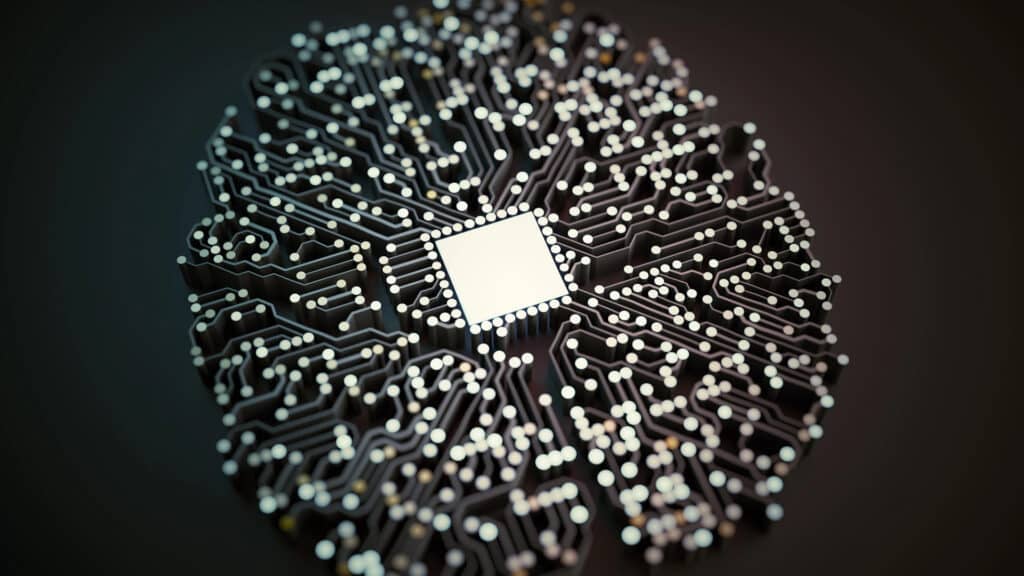
In the wake of its headline-grabbing Gemini launch, Google has also unveiled significant advancements in its AI hardware with the latest generation of its TPU, the TPU v5p, and the introduction of the AI Hypercomputer. This launch marks a new chapter in AI processing, showcasing Google’s commitment to leading the AI revolution.
The Evolution of Google’s TPUs
Google’s journey in AI hardware has taken a significant leap with the Cloud TPU v5p. This new TPU, an upgrade from the previous v5e and v4 models, is specifically designed to handle the increasing demands of generative AI models. With a tenfold increase in parameters annually over the past 5 years, as noted by Amin Vahdat, Google’s engineering fellow and VP, the need for more robust AI accelerators has never been greater.
The TPU v5p stands out with its impressive 459 teraFLOPS of bfloat16 performance, backed by 95 GB of high bandwidth memory, enabling data transfers at 2.76 TB/s. This architecture allows for significant scalability, with the potential to link up to 8,960 accelerators in a single pod. It promises up to 2.8 times faster training for large models such as OpenAI’s GPT3, shifting the benchmark for AI model training and serving.
Cost vs. Performance: The TPU v5p Dilemma
However, this leap in performance comes with a higher price tag. The TPU v5p, while offering unparalleled performance, is more expensive than its predecessors, posing a cost-benefit consideration for developers and enterprises. For those not requiring immediate, high-intensity training, the more cost-efficient v5e model remains a viable and attractive option.
Introducing the AI Hypercomputer
Complementing the TPU v5p is Google’s innovative AI Hypercomputer concept. This integrated system combines performance-optimized hardware, open software, ML frameworks, and flexible consumption models. According to the company, this holistic approach is aimed at enhancing productivity and efficiency in AI training, tuning, and serving. The AI Hypercomputer, utilizing Google’s Jupiter data center network technology, appears to represent a systems-level codesign strategy, addressing inefficiencies in traditional AI workload management.
Google’s open software approach in the AI Hypercomputer offers extensive support for popular ML frameworks such as JAX, PyTorch, and TensorFlow. This move toward open software, especially in the wake of the AI Alliance launch by Meta and IBM, highlights Google’s strategy in fostering a more collaborative and accessible AI development environment.
Gemini: A Testament to Google’s AI Ambitions
Accompanying these hardware advancements is the introduction of Gemini, Google’s “largest and most capable” AI model. Set to be integrated into products such as Bard and the Pixel 8 Pro, Gemini comes in three variants: Pro, Ultra, and Nano. This rollout signifies Google’s ambition to embed advanced AI capabilities across its product spectrum, further embedding AI into the everyday user experience (UX).
The Future of AI Hardware and Software Synergy
Google’s latest hardware and software innovations underscore the importance of a synergistic approach in AI development. The TPU v5p and AI Hypercomputer not only represent technological milestones but also reflect Google’s vision for a more efficient, accessible, and powerful AI future. These advancements promise to set new standards in AI processing, offering developers and enterprises the tools to harness the full potential of AI technologies.
Looking Ahead
Google’s TPU v5p and the AI Hypercomputer are not just incremental upgrades; they are pivotal developments that redefine the boundaries of AI processing. As the AI landscape continues to evolve rapidly, these tools position Google at the forefront of this transformation, driving innovation and opening new possibilities in the realm of AI. Game on Microsoft, IBM, and AWS! With these advancements, Google continues to cement its position as a leader in AI technology, setting the stage for the next generation of AI applications.
Disclosure: The Futurum Group is a research and advisory firm that engages or has engaged in research, analysis, and advisory services with many technology companies, including those mentioned in this article. The author does not hold any equity positions with any company mentioned in this article.
Analysis and opinions expressed herein are specific to the analyst individually and data and other information that might have been provided for validation, not those of The Futurum Group as a whole.
Other insights from The Futurum Group:
Google Cloud Next: A Deep Dive Into AI and Modern Infrastructure
Previewing Google Cloud Next ’23 – Six Five On the Road
Author Information

Steven engages with the world’s largest technology brands to explore new operating models and how they drive innovation and competitive edge.