Analyst(s): Mitch Ashley
Publication Date: April 16, 2025
Microsoft put its muscle behind Azure Kubernetes Service (AKS) at KubeCon + CloudNativeCon Europe 2025. AKS announcements for running artificial intelligence (AI) workloads, improved usability, operations, visibility, and cost efficiency bolster Microsoft’s managed Kubernetes service offering. Microsoft addresses Kubernetes complexity with the Headlamp open-source contribution to the CNCF.
What is Covered in this Article:
- Open-source Kubernetes AI Toolchain Operator (KAITO) running on Microsoft’s Azure Kubernetes Service (AKS) integrates Retrieval-Augmented Generation (RAG) for advanced search with less setup and lower costs.
- Inferencing defaults to vLLM with AI Toolchain Operator Add-on for faster inference processing and the ability to use OpenAI-compatible APIs, and DeepSeek R1 model. (In Preview).
- Azure Kubernetes Fleet Manager multi-cluster auto-upgrade is now generally available for the management and updating of multiple AKS clusters. Using Azure Advisor, AKS provides cost recommendations for specific cluster configurations to optimize spending.
- Microsoft contributed open-source Headlamp to the CNCF as a sandbox-level project. Headlamp adds a graphical user interface to Kubernetes to address the complexities of operating Kubernetes.
- Microsoft made multiple AKS networking and security announcements for network-isolated clusters, load balancing, and container networking security auditing, and performance analysis.
The News: During KubeCon + CloudNativeCon Europe 2025, Microsoft announcements focused on Azure Kubernetes Service (AKS) integration of Retrieval-Augmented Generation (RAG) in the Kubernetes AI Toolchain Operator (KAITO), the preview of vLLM inference for faster processing and model compatibility, and support for custom GPU driver configurations to enhance AI performance.
Microsoft addresses Kubernetes complexity by contributing Headlamp open-source to the CNCF as a sandbox project. Headlamp’s user interface helps address Kubernetes complexity and steep learning curve.
Microsoft announced several AKS operational improvements, including a multi-cluster auto-upgrade feature in Azure Kubernetes Fleet Manager, a preview of auto-instrumentation with Azure Monitor Application Insights for monitoring of Java and Node microservices, cost recommendations via Azure Advisor, and other AKS networking and security enhancements.
Azure Kubernetes Services (AKS) Powers AI Workloads And Addresses Complexity
Analyst Take: If you aren’t fully immersed in the Microsoft ecosystem, it would be easy to underestimate Microsoft’s sizable commitment to the Cloud Native Computing Foundation (CNCF), Kubernetes, and open-source. Many customers are familiar with Microsoft’s Azure Kubernetes Services (AKS) offering. They might be surprised to learn Microsoft also uses Kubernetes in their cloud services, including their own pivot to operating Office 365 on Kubernetes in 2022 after rapid growth during the COVID-19 pandemic.
A CNCF member since 2017, Microsoft is a substantial contributor to projects including Kubernetes, containerd, Istio, and Kubernetes AI Toolchain Operator (KAITO), and donated Helm (Kubernetes default package manager) after it was acquired by Microsoft.
Kubernetes – The Dominant Workload Platform
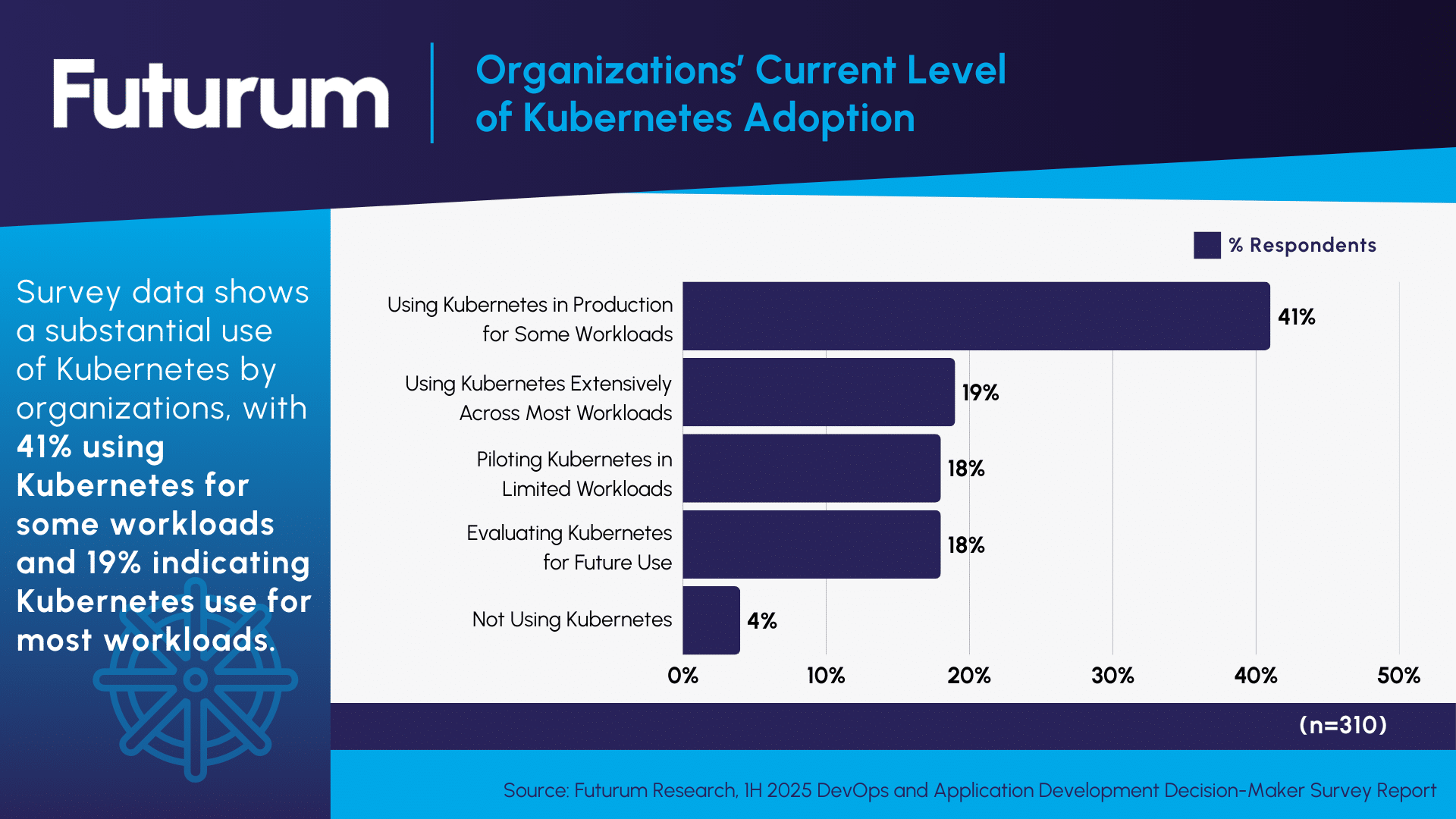
Futurum predicted 2025 the year of Kubernetes dominance as the workload platform. The technology vendor and IT communities are making this prediction come to fruition. Futurum Research’s 2025 decision-maker survey of organizations using cloud-native technologies shows a substantial use of Kubernetes by organizations, with 41% using Kubernetes for some workloads and 19% indicating Kubernetes use for most workloads.
Figure 1: Organizations’ Current Level of Kubernetes Adoption (n=310)
The types of workloads operating on Kubernetes have expanded far beyond its origins as a cloud-native platform for microservices-architected applications. Kubernetes supports containerized workloads within vendor products, online services, and as part of hyperconverged infrastructure solutions.
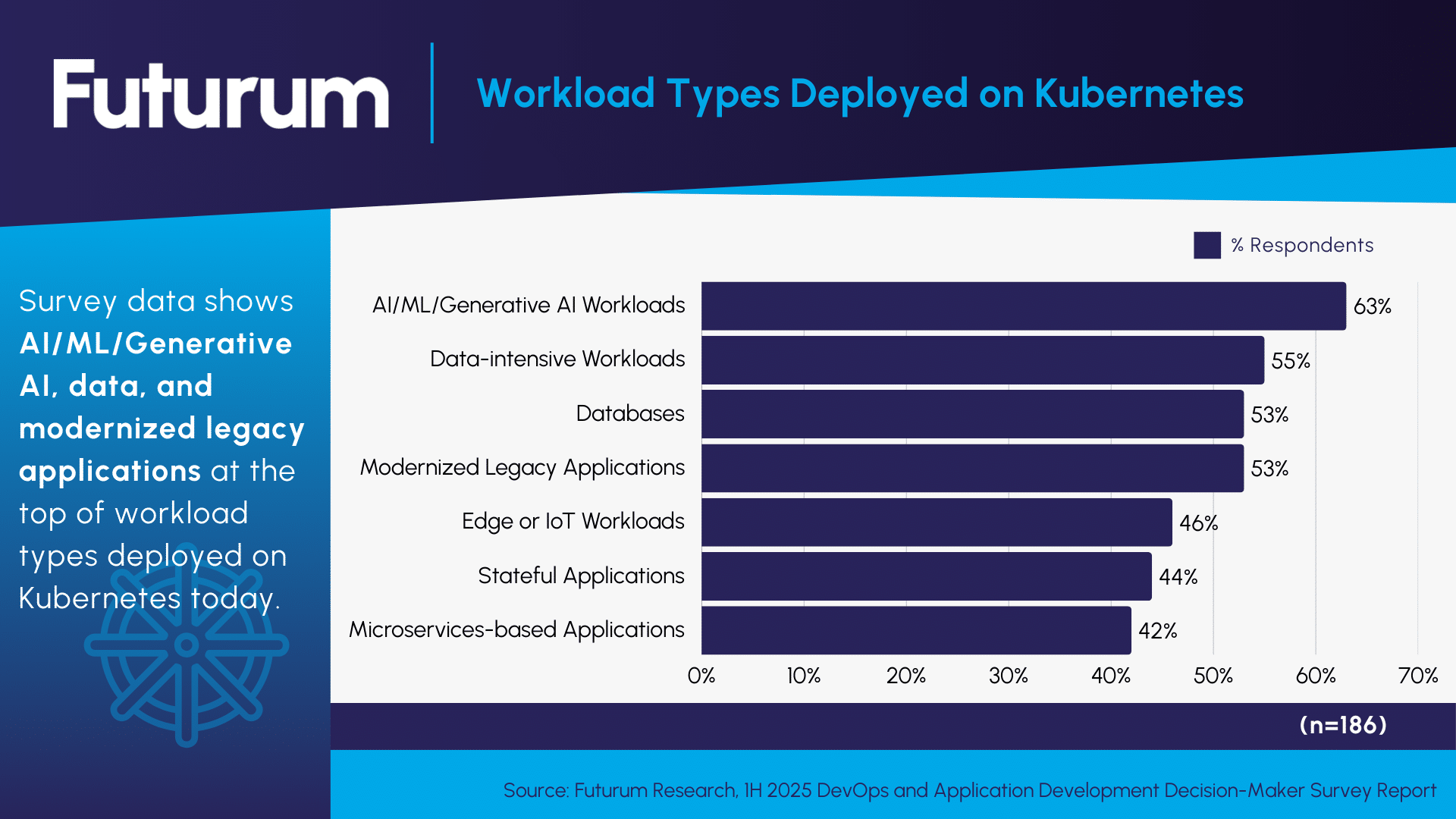
Microsoft’s move to support a wider variety of language models through vLLM, RAG with Kubernetes AI Toolchain Operator, and customized GPU driver support are strategically aligned with customers and the broader market are using Kubernetes. Futurum’s research shows AI/ML/Generative AI, data, and modernized legacy applications at the top of workloads deployed on Kubernetes today.
Figure 2: Workload Types Deployed on Kubernetes (n=186)
Complexity – Kubernetes Achilles’ Heel
If Kubernetes has an Achilles’ Heel to continue large-scale adoption, complexity wins the day. Kubernetes has succeeded to this point despite the criticism about its learning curve and complexity, particularly for very large multi-cluster, multi-cloud installations. Microsoft made what may be a substantial contribution to addressing this complexity with the contribution of their open-source Headlamp to the CNCF, a sandbox project under the Kubernetes SIG-UI.
Respected open source lead and Microsoft Principal Product Manager Andrew Randall introduced Headlamp at KubeCon + CloudNativeCon Europe 2025 during his keynote, Evolving the Kubernetes User Experience. Andrew described what is needed to continue Kunberete’s growth to the next 10 million users: an In-cluster web portal, a unified management UI for multiple remote clusters, and a local Kubernetes Desktop experience.
Figures 3 & 4: Headlamp User Interface for Workloads and Event Management
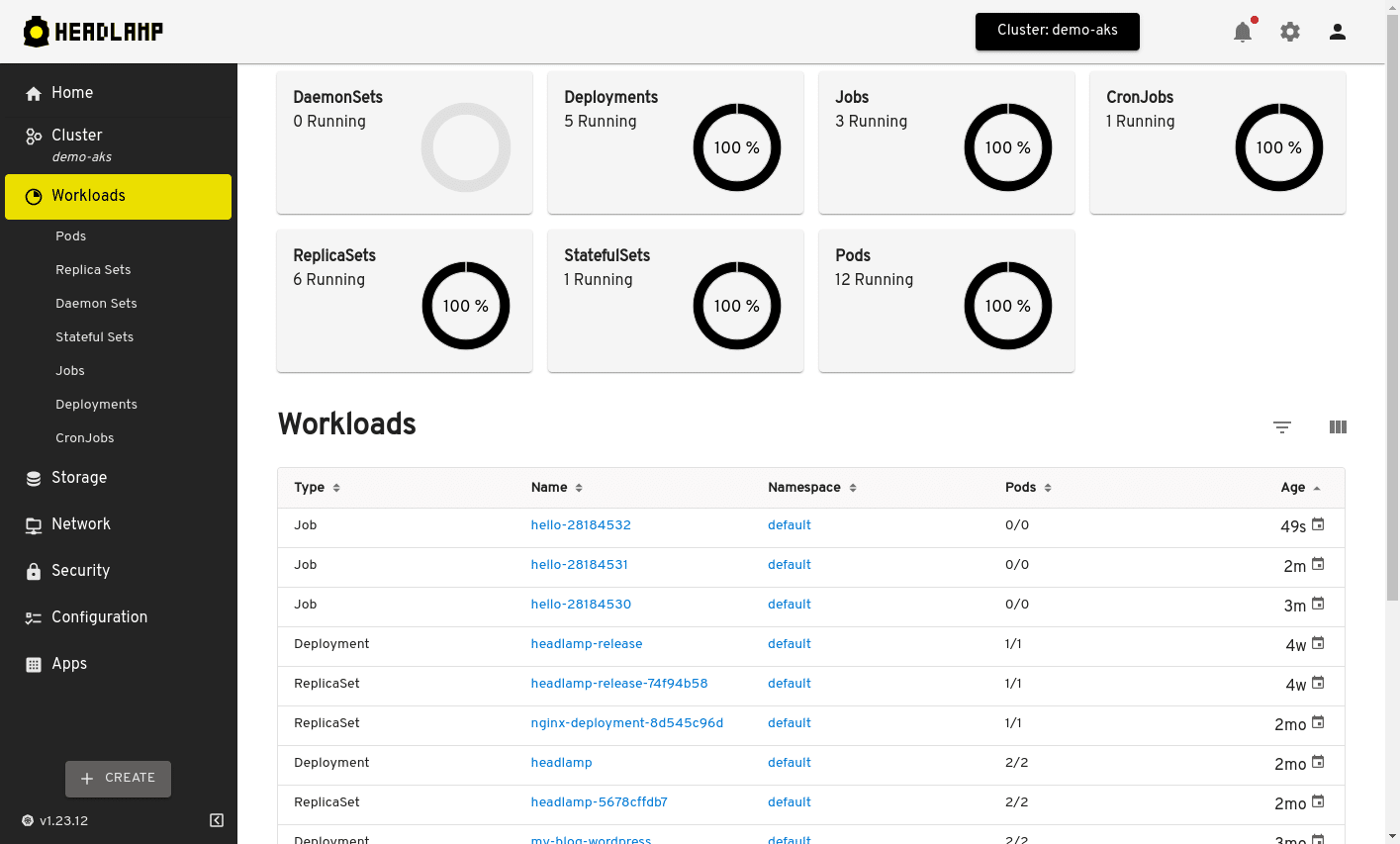
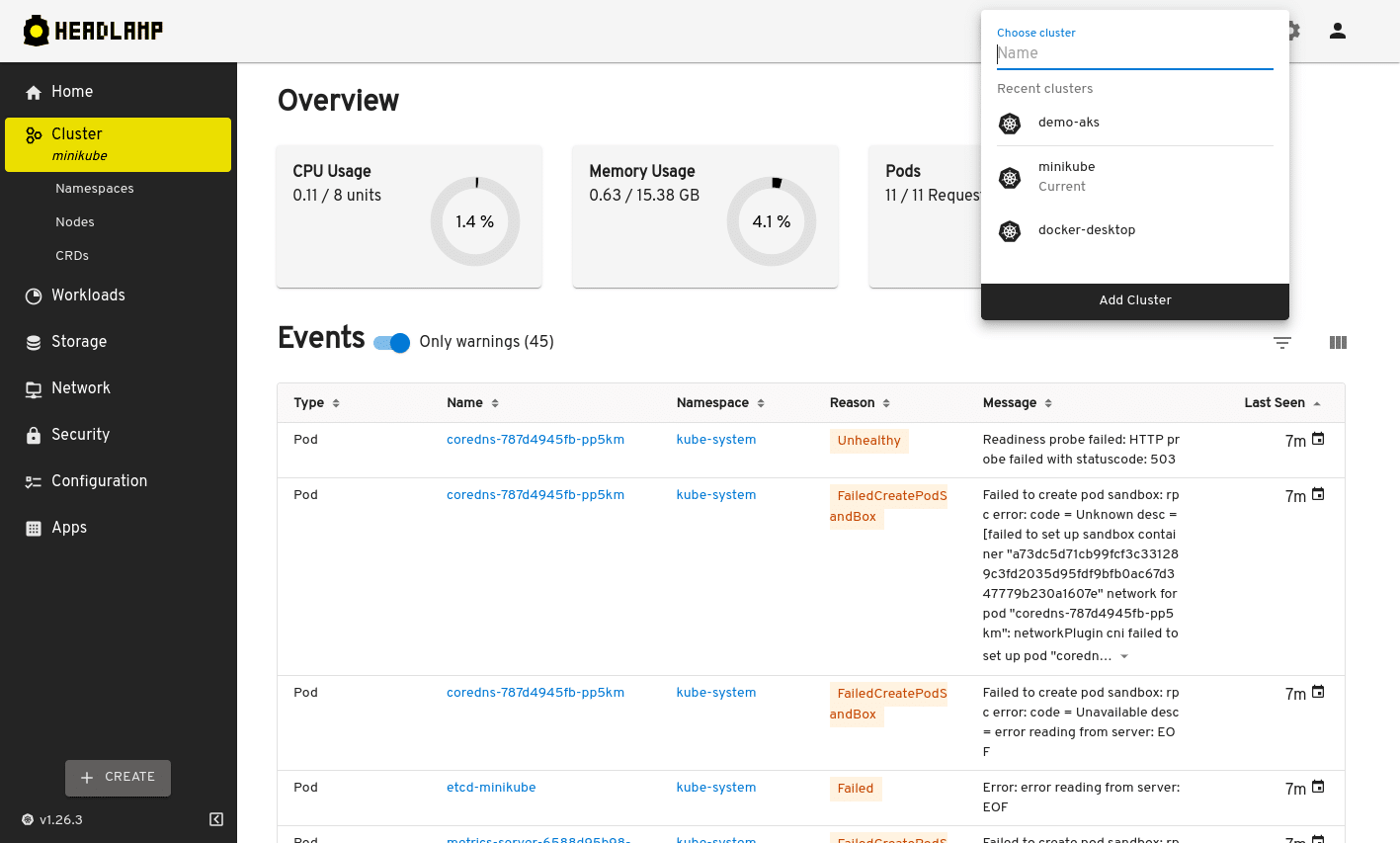
While Headlamp is early as an open-source project, Futurum Research predicts a bright future for Headlamp, addressing many of the complexity challenges associated with Kubernetes. Headlamp, as it exists today, delivers well on Andrew’s three ingredients for improving the Kubernetes user experience. Headlamp’s ultimate success will equally rely upon these seven “under the hood” attributes:
- Streamlined out-of-the-box Day 1 experience,
- Multi-cluster management across cloud providers,
- Customizability through an extensible plugin architecture,
- Consistent cross-platform accessibility (web, desktop, mobile),
- Enterprise-grade role-based access controls
- Integration with other CNCF open-source projects,
- Maintaining simplicity and accessibility
It’s not too difficult to imagine future versions of Headlamp providing AI-driven analysis and insights, troubleshooting, operational efficiencies, and agentic responses to events.
What to Watch:
- Headlamp community adoption, continued evolution, and its ability to manage large, complex multi-cluster, multi-cloud Kubernetes implementations.
- Growth in containerized AI workloads moving to Azure Kubernetes Service.
- Experimentation results in May 2025 of transitioning to alternative runtime WebAssembly System Interface (WASI).
- AI and agentic agents applied to AKS configuration, operations, efficiency, and cost management.
Headlamp open-source software is available on GitHub. See Microsoft’s blog post What’s new with Microsoft in open-source and Kubernetes at KubeCon + CloudNativeCon Europe 2025, by Brendan Burns, Corporate Vice President, Azure OSS and Cloud Native, Microsoft.
Disclosure: The Futurum Group is a research and advisory firm that engages or has engaged in research, analysis, and advisory services with many technology companies, including those mentioned in this article. The author does not hold any equity positions with any company mentioned in this article.
Analysis and opinions expressed herein are specific to the analyst individually and data and other information that might have been provided for validation, not those of The Futurum Group as a whole.
Other insights from The Futurum Group:
AI Agent and Hybrid Architecture: What It Means for Software Development
Who Wins The Agentic AI Software Development Race?
Kubernetes as The Platform for Financial Services Innovation
Author Information

Mitch Ashley is VP and Practice Lead for the CIO & Technology Buyers and Software Lifecycle Engineering practices at The Futurum Group. A multi-time CIO and CTO with 30+ years leading technical organizations, Mitch built and operated production systems spanning cybersecurity for the U.S. Department of Defense, PKI services for the broadband and 5G industries, SaaS platforms, large-scale telecom and banking systems, and a national broadband network. His work with AI began early, developing expert systems that diagnosed and repaired complex mainframe environments. That operator foundation grounds his analysis in operational consequence, covering the technology buyer's world of software engineering, cybersecurity, DevOps, cloud, and AI.