Analyst(s): Mitch Ashley
Publication Date: April 24, 2026
SUSE integrates Model Context Protocol across Rancher Prime, Multi-Linux Manager, SUSE Linux, and SUSE AI with AWS, Fsas Technologies, n8n, Revenium, and Stacklok, extending MCP into infrastructure operations.
What is Covered in This Article:
- SUSE announced MCP-based integrations with AWS, Fsas Technologies, n8n, Revenium, and Stacklok at SUSECON 2026, with MCP access to the SUSE portfolio generally available today.
- The announcement extends MCP into infrastructure operations, where agents act on running production systems through a governed protocol.
- SUSE’s strategy of partnering for agent governance and FinOps capabilities, rather than building them in-house, validates MCP as connective tissue between specialized vendors.
- Stacklok’s registry of vetted MCP servers establishes a governance and supply chain control point that will shape which agents reach enterprise environments.
- Revenium introduces machine-speed financial guardrails for agent actions, surfacing agent debt as a new FinOps category that token metering misses.
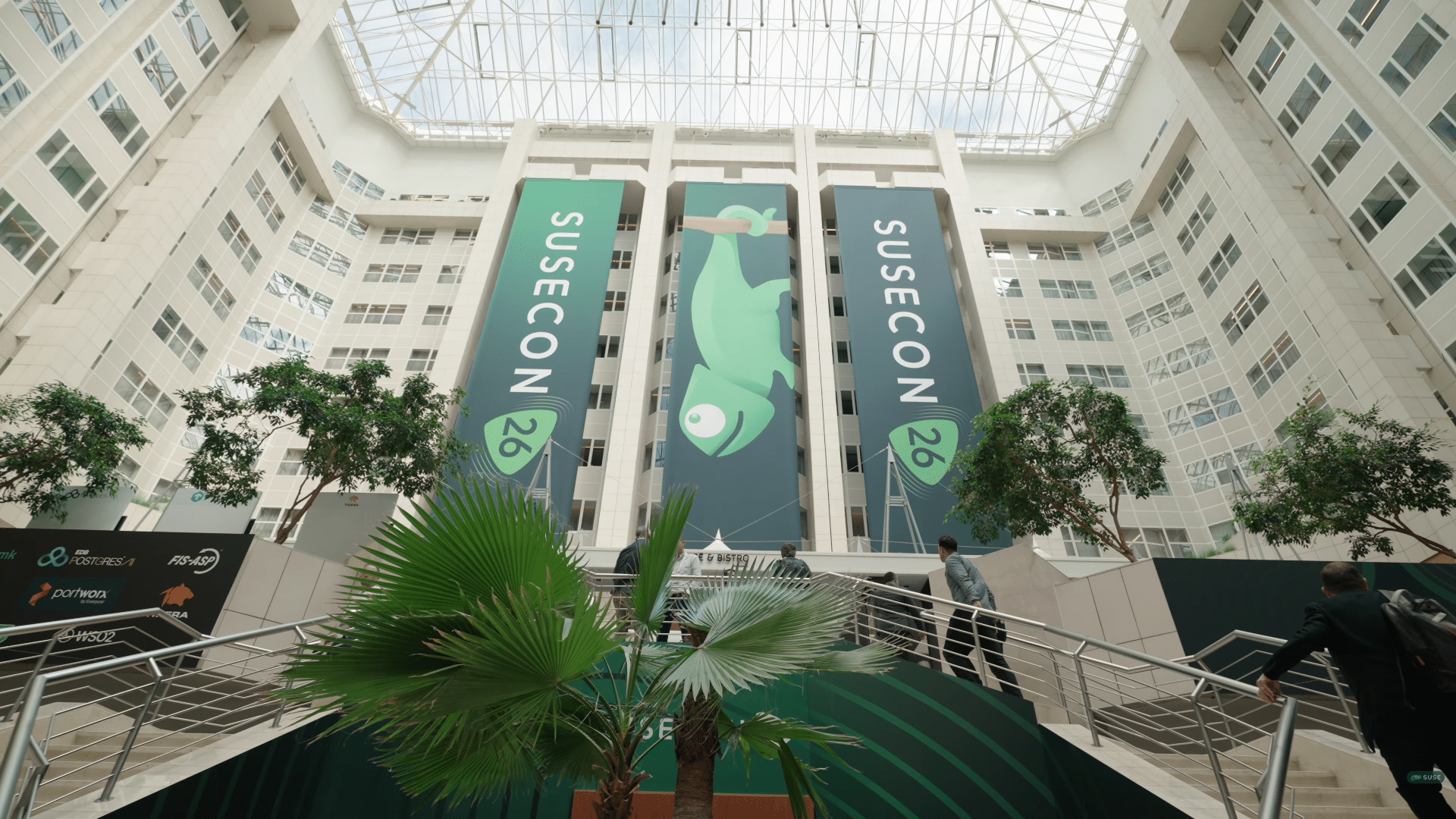
The Event — Major Themes & Vendor Moves: SUSE announced at SUSECON 2026 in Prague Model Context Protocol (MCP) integrations with AWS, Fsas Technologies (a Fujitsu company), n8n, Revenium, and Stacklok. The integrations let AI agents securely interact with SUSE Rancher Prime, SUSE Multi-Linux Manager, SUSE Linux, and SUSE AI across any Linux or Kubernetes distribution.
Through MCP, agents can identify faults in clusters or servers, correlate with logs, submit pull requests for patches, restart services, and apply updates within a governed environment. Stacklok contributes a registry of vetted MCP servers that includes SUSE Multi-Linux Manager. Revenium enforces financial guardrails on agent-driven infrastructure actions. Fsas Technologies pairs the integration with its Mamoru autonomous remediation engine. SUSE named Spanish retailer Grupo Eroski as a deploying customer. MCP access to the SUSE portfolio is generally available today. Read SUSE’s full announcement on agentic AI for infrastructure management.
SUSECON 2026 – Big Bet On MCP and Partners for Infrastructure AI Operations
Analyst Take — MCP for Infrastructure Operations Becomes Real: SUSE is extending MCP into infrastructure operations. The protocol, an open standard for connecting AI models to external data sources, tools, and systems, now serves as the interface through which agents act on production servers and clusters. Agents query cluster state, correlate logs, file pull requests for patches, and apply updates against Rancher Prime and Multi-Linux Manager. SUSE is betting that MCP becomes the agent-to-infrastructure standard before hyperscaler-native alternatives lock in. That bet is reasonable; MCP has the open standard posture and ecosystem momentum that proprietary protocols lack.
Partnering Beats Building for Agent Governance and FinOps
SUSE could have built financial guardrails, governance registries, and workflow orchestration in-house. SUSE chose otherwise. Revenium handles FinOps controls, Stacklok handles MCP server vetting, n8n handles workflow composition, and Fsas Technologies handles autonomous remediation. That choice validates MCP as a partnering strategy.
The protocol acts as the connective tissue, letting SUSE assemble specialized capabilities from vendors that already lead their categories. Building governance, FinOps, and orchestration internally would have cost SUSE quarters of execution time and produced weaker components in each area. The partnering approach gives enterprise buyers integrated capability now, with the option to swap any partner as the agent ecosystem matures. Vendors weighing how to enter agentic markets should study this assembly pattern; the alternative is an integration sprawl that few customers will tolerate.
The Stacklok Registry Is the Quiet Governance Story
A registry of vetted MCP servers acts as a trust and supply chain control point for the entire MCP ecosystem. Whoever operates the authoritative registry shapes which agents reach enterprise environments. Stacklok is positioning to become that source. SUSE’s inclusion, with Multi-Linux Manager listed as a vetted server, gives the registry a tier-one anchor. Vendors building MCP servers should expect registry inclusion to become a procurement requirement, and enterprise security teams should expect registry attestation to become an audit artifact.
Revenium Surfaces Agent Debt as a New FinOps Category
Token metering reports what an agent costs to run. The agent’s downstream actions, infrastructure provisioned, services restarted, and applications deployed are a separate cost surface that token counts miss. Revenium enforces financial guardrails at machine speed against those actions. That category, call it agent debt or agent-driven cost governance, is distinct from inference cost management. SUSE pulling Revenium into the integration set makes the distinction operational rather than theoretical. Enterprise buyers should expect FinOps tooling to bifurcate into two tracks: one for inference economics and another for agent-driven infrastructure spend.
One Customer, Real Signal
Grupo Eroski is named with a clear adoption rationale: MCP standardization enables the team to select the most appropriate LLM for each use case rather than committing to a single model. One named deployment counts as an early signal, well short of category acceptance. It does demonstrate that the standardization argument resonates with enterprises pursuing multi-LLM strategies. Two to four additional named customers within two quarters would validate the value claim; their absence would expose it as forward-looking marketing.
What to Watch:
- Red Hat and Canonical responses on MCP for infrastructure operations. Both have agent strategies; neither has positioned MCP as the ops protocol. Their next move sets the pace for the rest of the Linux and Kubernetes ecosystem.
- Stacklok registry adoption as the de facto trust source for enterprise MCP server selection. Watch for hyperscaler responses with competing registries or attempts to operate a neutral one through a foundation.
- Revenium’s FinOps category traction beyond SUSE. If Datadog, Dynatrace, or hyperscaler cost management tools add agent-action accounting within two quarters, the category becomes real and competitive.
- Customer evidence beyond Grupo Eroski. Two to four named regulated-industry references by year-end would validate the agentic infrastructure story; absence would expose it as forward-looking marketing.
- AWS’s depth of involvement. Today’s framing positions AWS as one of several integration partners. A shift to co-engineering or AWS-operated MCP server registry participation would signal hyperscaler validation of MCP for operations.
See SUSE’s website for complete announcement details.
Disclosure: Futurum is a research and advisory firm that engages or has engaged in research, analysis, and advisory services with many technology companies, including those mentioned in this article. The author does not hold any equity positions with any company mentioned in this article.
Analysis and opinions expressed herein are specific to the analyst individually and data and other information that might have been provided for validation, not those of Futurum as a whole.
Other Insights from Futurum:
Futurum Agent Control Plane Framework: A Reference Model for Production AI Agents
MCP: Security Community Pariah or Indispensable AI Standard?
Salesforce Agent API Signals the Next Control Plane Battleground for AI Agents
MCP Dev Summit 2026: AAIF Sets A Clear Direction With Disciplined Guardrails
Image Credit: SUSE
Author Information

Mitch Ashley is VP and Practice Lead for the CIO & Technology Buyers and Software Lifecycle Engineering practices at The Futurum Group. A multi-time CIO and CTO with 30+ years leading technical organizations, Mitch built and operated production systems spanning cybersecurity for the U.S. Department of Defense, PKI services for the broadband and 5G industries, SaaS platforms, large-scale telecom and banking systems, and a national broadband network. His work with AI began early, developing expert systems that diagnosed and repaired complex mainframe environments. That operator foundation grounds his analysis in operational consequence, covering the technology buyer's world of software engineering, cybersecurity, DevOps, cloud, and AI.