Analyst(s): Ray Wang, Daniel Newman
Publication Date: July 28, 2025
Intel delivered strength across core segments in Q2 FY 2025, but one-time charges and margin pressure held back profitability. The company is pushing forward with cost cuts, operational discipline, a measured foundry reset, and overall organizational reform.
What is Covered in this Article:
- Intel’s Q2 FY 2025 financial results
- Cost cuts and strategic foundry reset
- 18A and Panther Lake ramps are crucial for competitiveness
- Data Centre growth mixed amid product resets
- Q3 FY 2025 outlook, tariff-driven pull-ins flagged
The News: Intel Corp. (NASDAQ: INTC) reported its Q2 FY 2025 financial results with revenue of $12.9 billion, flat year-on-year (YoY) but 7.9% above consensus estimates. Client Computing Group (CCG) revenue declined 3% YoY to $7.9 billion, while Data Center and AI (DCAI) revenue grew 4% YoY to $3.9 billion. Intel Products revenue declined 1% YoY to $11.8 billion, Intel Foundry rose 3% YoY to $4.4 billion, and All Other revenue grew 20% YoY to $1.1 billion. Non-GAAP gross margin contracted 900 basis points (bps) YoY to 29.7%, and non-GAAP operating loss stood at $503 million versus a $24 million profit in Q2 FY 2024.
“Our operating performance demonstrates the initial progress we are making to improve our execution and drive greater efficiency,” said Lip-Bu Tan, CEO of Intel. “We are laser-focused on strengthening our core product portfolio and our AI roadmap to better serve customers. We are also taking the actions needed to build a more financially disciplined foundry. It’s going to take time, but we see clear opportunities to enhance our competitive position, improve our profitability, and create long-term shareholder value.”
Intel Q2 FY 2025 Results Beat on Revenue, Margin Hit by One-Time Charges
Analyst Take: Intel’s Q2 FY 2025 results were mixed. Revenue held strong across core segments, but margins came under pressure due to restructuring costs and a shift in strategic priorities. Under CEO Lip-Bu Tan, the company focuses more on financial discipline and organizational-wide reform than aggressive growth—cutting capital expenditure (CAPEX), reducing headcount, and canceling certain factory projects considered unnecessary. The foundry business is being realigned with tighter cost controls, firm customer commitments, and milestone-based execution. While not headline-grabbing, this reset reflects the more grounded and cautious approach investors have been expecting.
Cost Discipline and Foundry Restructuring Take Priority
Intel’s focus on operational discipline stood out in Q2 FY 2025. Leadership is targeting $17 billion in non-GAAP OpEx for this year and $16 billion for FY 2026. Most planned job reductions are complete, with a goal to end the year at around 75,000 employees and cut management layers by half. These efforts brought $1.9 billion in restructuring charges and impairments, reducing non-GAAP EPS by $0.20.
The foundry strategy is also shifting: Intel dropped expansion plans in Germany and Poland and slowed Ohio development to better match future capacity with actual customer demand. This is a key strategic shift from Intel under the leadership of former CEO Pat Gelsinger, who took a more ambitious approach to establishing Intel’s chip fabrication presence globally. As CEO Lip-Bu Tan made clear, Intel 14A will not move forward without confirmed external orders. The future of 14A will hinge on whether the firm can secure enough external customers.
“As part of this new financial discipline, we have decided not to continue manufacturing projects in Germany and Poland. We also plan to consolidate our assembly and test operations in Costa Rica into larger existing sites in Vietnam and Malaysia. And we will further slow the pace of construction in Ohio to ensure our spending is aligned with market demand,” said CEO Lip-Bu Tan.
18A and Panther Lake Ramp Critical to Product and Foundry Credibility
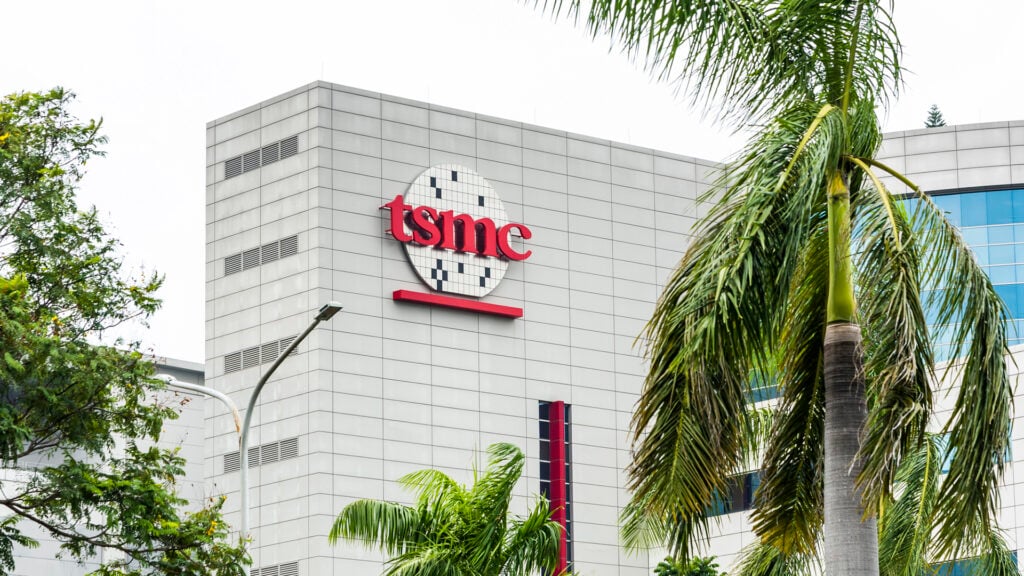
Intel’s 18A node hit a milestone with production wafers now running in Arizona. It is the foundation for the next three generations of client and server products. Panther Lake remains on track to launch later this year and is key to Intel’s client roadmap and internal foundry progress. Given the 18A’s use for the next three generations, we now expect the 14A will likely appear around 2028 and 2029 if the management decides to move forward with 14A nodes. Such a timeline is aligned with the competitive landscape against TSMC, which will roll out its 1.4nm (A14) process technology around the same period. Yet, the management also raises caution regarding 14A, underscoring the need for sufficient external customers for 14A.
CEO Lip-Bu Tan said, “Our external foundry strategy has always been rooted in the economic reality of semiconductor manufacturing. Up to and through Intel 18A, we could generate a reasonable return on our investments with only Intel Products. The increase in capital cost at Intel 14A makes it clear that we need both Intel products and a meaningful external customer to drive acceptable returns on our deployed capital, and I will only invest when I’m confident those returns exist.”
Leadership reiterated that a smooth, high-volume internal ramp is essential before scaling external foundry business. However, early production costs are putting pressure on margins – non-GAAP gross margin dropped to 29.7%, down up to 900 bps YoY from last year. This inevitably poses some concerns for Intel’s investors and analysts. These pressures are likely to continue through the H2 FY 2025 but could ease in FY 2026 as output increases. Panther Lake execution and 18A yield improvement, and the “economics” behind it, will be major investor focus areas in the coming quarters.
Data Centre Performance Remains Mixed Amid Strategic Reset
The Data Centre and AI Group (DCAI) posted 4% revenue growth YoY but declined 5% from Q1 FY 2025, highlighting ongoing fluctuations in hyperscale demand. Still, the segment outperformed internal expectations, helped by strong demand for host CPUs designed for AI servers and storage-heavy applications, partly due to some pull-in effect. The ramp of Xeon 6 “Granite Rapids” is ahead of schedule, with key wins including NVIDIA’s DGX B300 systems and Imperial College London’s supercomputing infrastructure. CEO Tan acknowledged challenges around market share and past decisions in threading capabilities, but noted steps are underway, including new leadership in the firm’s data center division, streamlined product lines, and a sharper focus on performance-per-watt. We expect the near-term competition to continue to put pressure on Intel’s market share. Whether Intel can fend off such competitive pressure remains to be seen through new data points and signals in the coming quarters of 2025 and beyond.
Guidance and Final Thoughts
For Q3 FY 2025, Intel is guiding revenue between $12.6 billion and $13.6 billion, with a non-GAAP gross margin of 36% and breakeven EPS. Management noted that recent revenue strength may have been boosted by inventory stocking ahead of tariffs, and warned that demand may remain soft through H2 FY 2025. Foundry revenue is expected to dip slightly due to Intel 7 capacity limits, though client computing strength should continue.
Despite ongoing margin pressures and data center share loss, Intel is taking steps to reform operations, align spending with demand, and rebuild credibility across its product and foundry segments. However, this will still take time. Investors will stay focused on 18A execution, the company’s AI roadmap, and efforts to return to profitability in FY 2026.
See the complete press release on Intel’s fiscal Q2 FY 2025 financial results on the Intel website.
Disclosure: Futurum is a research and advisory firm that engages or has engaged in research, analysis, and advisory services with many technology companies, including those mentioned in this article. The author does not hold any equity positions with any company mentioned in this article.
Analysis and opinions expressed herein are specific to the analyst individually and data and other information that might have been provided for validation, not those of Futurum as a whole.
Other insights from Futurum:
Can Intel and HP Finally Make AI PCs a Must-Have for Business?
Intel Delivers Flat Q1 FY 2025 Revenue Amid Ongoing Turnaround Efforts
Intel Vision 2025: Why Physical AI Beckons for Intel
Author Information

Ray Wang is the Research Director for Semiconductors, Supply Chain, and Emerging Technology at Futurum. His coverage focuses on the global semiconductor industry and frontier technologies. He also advises clients on global compute distribution, deployment, and supply chain. In addition to his main coverage and expertise, Wang also specializes in global technology policy, supply chain dynamics, and U.S.-China relations.
He has been quoted or interviewed regularly by leading media outlets across the globe, including CNBC, CNN, MarketWatch, Nikkei Asia, South China Morning Post, Business Insider, Science, Al Jazeera, Fast Company, and TaiwanPlus.
Prior to joining Futurum, Wang worked as an independent semiconductor and technology analyst, advising technology firms and institutional investors on industry development, regulations, and geopolitics. He also held positions at leading consulting firms and think tanks in Washington, D.C., including DGA–Albright Stonebridge Group, the Center for Strategic and International Studies (CSIS), and the Carnegie Endowment for International Peace.

Daniel is the CEO of The Futurum Group. Living his life at the intersection of people and technology, Daniel works with the world’s largest technology brands exploring Digital Transformation and how it is influencing the enterprise.
From the leading edge of AI to global technology policy, Daniel makes the connections between business, people and tech that are required for companies to benefit most from their technology investments. Daniel is a top 5 globally ranked industry analyst and his ideas are regularly cited or shared in television appearances by CNBC, Bloomberg, Wall Street Journal and hundreds of other sites around the world.
A 7x Best-Selling Author including his most recent book “Human/Machine.” Daniel is also a Forbes and MarketWatch (Dow Jones) contributor.
An MBA and Former Graduate Adjunct Faculty, Daniel is an Austin Texas transplant after 40 years in Chicago. His speaking takes him around the world each year as he shares his vision of the role technology will play in our future.