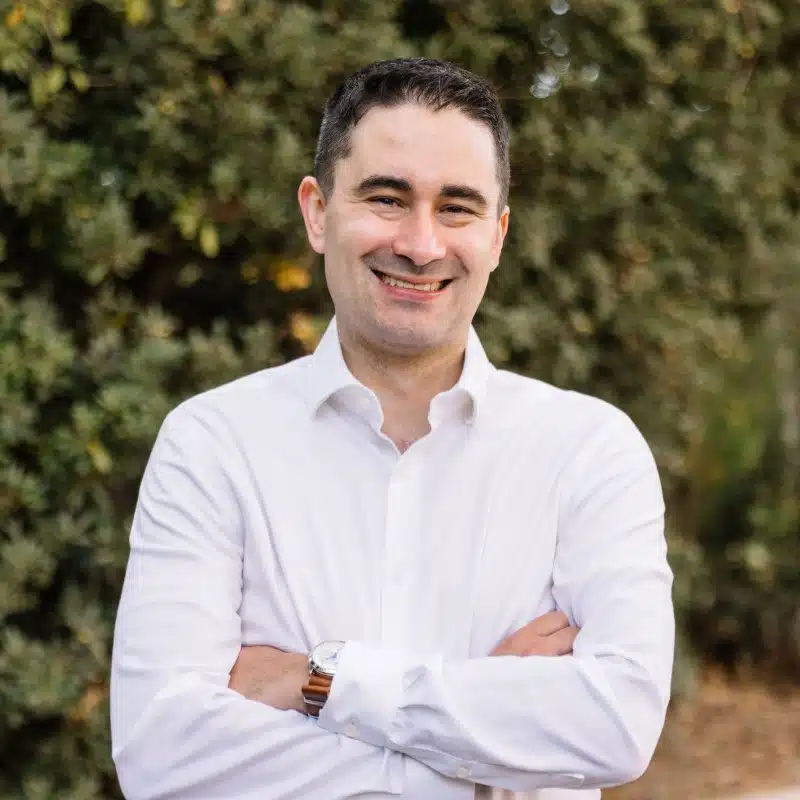
In this Making Markets quick take, host Daniel Newman and Honeywell CEO Darius Adamczyk talk about Honeywell’s outlook for 2022 in terms of supply chain, the economy, and the potential impact of inflation.
You can grab the video here and subscribe to our YouTube channel if you’ve not yet done so.
You can also listen below or stream the audio on your favorite podcast platform — and if you’ve not yet subscribed, let’s fix that!
Disclaimer: The Making Markets podcast is for information and entertainment purposes only. Over the course of this podcast, we may talk about companies that are publicly traded and we may even reference that fact and their equity share price, but please do not take anything that we say as a recommendation about what you should do with your investment dollars. We are not investment advisors and we do not ask that you treat us as such.
Transcript:
Daniel Newman: But, speaking of all, things playing out, I’d love to get some of those macro perspectives from you. You mentioned a series of different things that are impacting the economy right now, and Honeywell’s such a beacon. It’s a bellwether of so many of these things. You mentioned, the supply chain, you mentioned inflation, you talked a little bit about climate and some of the things that are going on there, but just starting with the supply chain. Well, you’re not purely in semiconductors, much of what you do, is hyper dependent upon them. What are you seeing on the supply chain? Are we seeing some relief through the lens of Honeywell?
Darius Adamczyk: Yeah, we are seeing some promise. For us, is we look at our 2022 needs, we have something like 90% of the supply that we need committed for our ’22, what we think our ’22 demand will look like. So, that’s promising, that’s actually extraordinary. That’s the good news, but we still have that additional 10% we’ve got to work on, but actually we’re in a little bit of a better place than I thought we would be at this point. So, I think that, that’s very encouraging from a Honeywell perspective. We’re getting ahead of it. And we do think that some of these challenges we will subside as we get deeper into 2022. The economies remain robust. I am optimistic both US, Europe, China, all these economies look poised for continued growth in ’22. And I think particularly, as COVID subsides, that that growth will probably accelerate.
We are a bit concerned about inflation and we’re supportive of some of the tapering that’s taking place, interest rates. The thing that we have to be very cautious about, is that we don’t want to see the other side of rollercoaster. Meaning that, inflation goes up and we have to be very thoughtful about not tapering it down too fast, too hard, because we don’t want to see a recessionary environment either. There’s nothing that says that will happen, but I have some level of concern that, if we go too far, too fast, that we could see the other side and hopefully that won’t happen. But, so far so good. I mean our demand profile that we saw in Q2, Q3 and Q4 looks extraordinarily strong and things look optimistic for us, for next year.
Daniel Newman: Yeah. Powell’s comments at the last Fed meeting, I think, took a lot of the on uncertainty out. It seems that to your point, that the market is pretty committed, that the leadership, the Fed is pretty committed to doing things at a pace that doesn’t pop the balloon per se. But, I think we are all nervous with the amount of debt with some of the programs and some of the bills that are in Congress. If they were to pass trillions of dollars for these programs and interest rates, of course, if they go up, it’s not only going to affect consumers that are buying goods, it’s going to affect businesses that are buying goods. But, moreover, our government has quite a bit of debt-
Darius Adamczyk: Right.
Daniel Newman: That they’re going to have to situate.
Darius Adamczyk: Sure. I mean, obviously, it’s a service debt, is going to get more expensive that’s the drawback. I think for us, because our balance sheet is strong and to some extent from an M&A perspective, I mean we probably welcome slightly higher interest rates, because we have plenty of capacity and we’ll probably cool off the M&A environment a little bit. So, that’s probably not the worst thing, at least from a Honeywell perspective, that others may disagree from that point of view. So, we’re encouraged by some of the steps that are being taken. We are very supportive of gradual adjustments upwards, of the rates. And then, I think that’s going to have the right impact on the global, not just the US, but really the potentially global economies. Although, different countries are in very different places in terms of what they’re doing. And China, is probably on the other side of this thing.
But, overall, I think ’22, especially from the markets that we play in, whether it’s aviation, whether it’s energy, which is automation, controls, buildings and we talk about buildings, everybody thinks we’re talking about office buildings, but stadiums are buildings. Data centers are buildings, hospitals are buildings, daycare centers are buildings. So, we think the utilization of buildings overall, is going to improve. And then, you combine that with some of our healthy building solutions, because I think people are always going to be much more aware of the air they breathe, the environment that they’re in, social distancing and so on. I think that, that will stay with us for a number of years. And I think those solutions that we brought to the world, will help people re-assimilate back into various types of buildings.
Author Information

Daniel is the CEO of The Futurum Group. Living his life at the intersection of people and technology, Daniel works with the world’s largest technology brands exploring Digital Transformation and how it is influencing the enterprise.
From the leading edge of AI to global technology policy, Daniel makes the connections between business, people and tech that are required for companies to benefit most from their technology investments. Daniel is a top 5 globally ranked industry analyst and his ideas are regularly cited or shared in television appearances by CNBC, Bloomberg, Wall Street Journal and hundreds of other sites around the world.
A 7x Best-Selling Author including his most recent book “Human/Machine.” Daniel is also a Forbes and MarketWatch (Dow Jones) contributor.
An MBA and Former Graduate Adjunct Faculty, Daniel is an Austin Texas transplant after 40 years in Chicago. His speaking takes him around the world each year as he shares his vision of the role technology will play in our future.