Analyst(s): Brendan Burke
Publication Date: April 15, 2026
Synopsys has announced its role supporting NASA’s Artemis program, using electromagnetic simulation and digital twin technologies to validate spacesuit charging risks and lunar cellular network performance. The collaboration positions Synopsys’ engineering simulation portfolio as a reference toolchain for mission-critical space infrastructure, extending the company’s reach well beyond its traditional semiconductor design roots.
What is Covered in This Article:
- Synopsys’ simulation role in NASA’s Artemis spacesuit and communications programs
- How digital twin technology supports lunar RF network validation
- The strategic significance of Synopsys’ post-Ansys portfolio in aerospace applications
- Physics-based simulation as a risk-reduction layer for sustained lunar operations
- Implications for commercial simulation vendors in government-funded space programs
The News: Synopsys announced on April 14, 2026, that NASA has selected Synopsys and Electro Magnetic Applications, Inc. (EMA) to research charging levels on Artemis spacesuits resulting from exposure to the lunar plasma environment. The work focuses on reducing electrostatic discharge (ESD) risks to extravehicular activity (EVA) systems using Ansys Charge Plus, described as the only commercially available software capable of computing space-charging problems in full 3D across complex, multi-material systems. Simulation workflows will be paired with ground-based testing at EMA’s Space Environment and Radiation Effects (SERE) Laboratory in Pittsfield, Massachusetts.
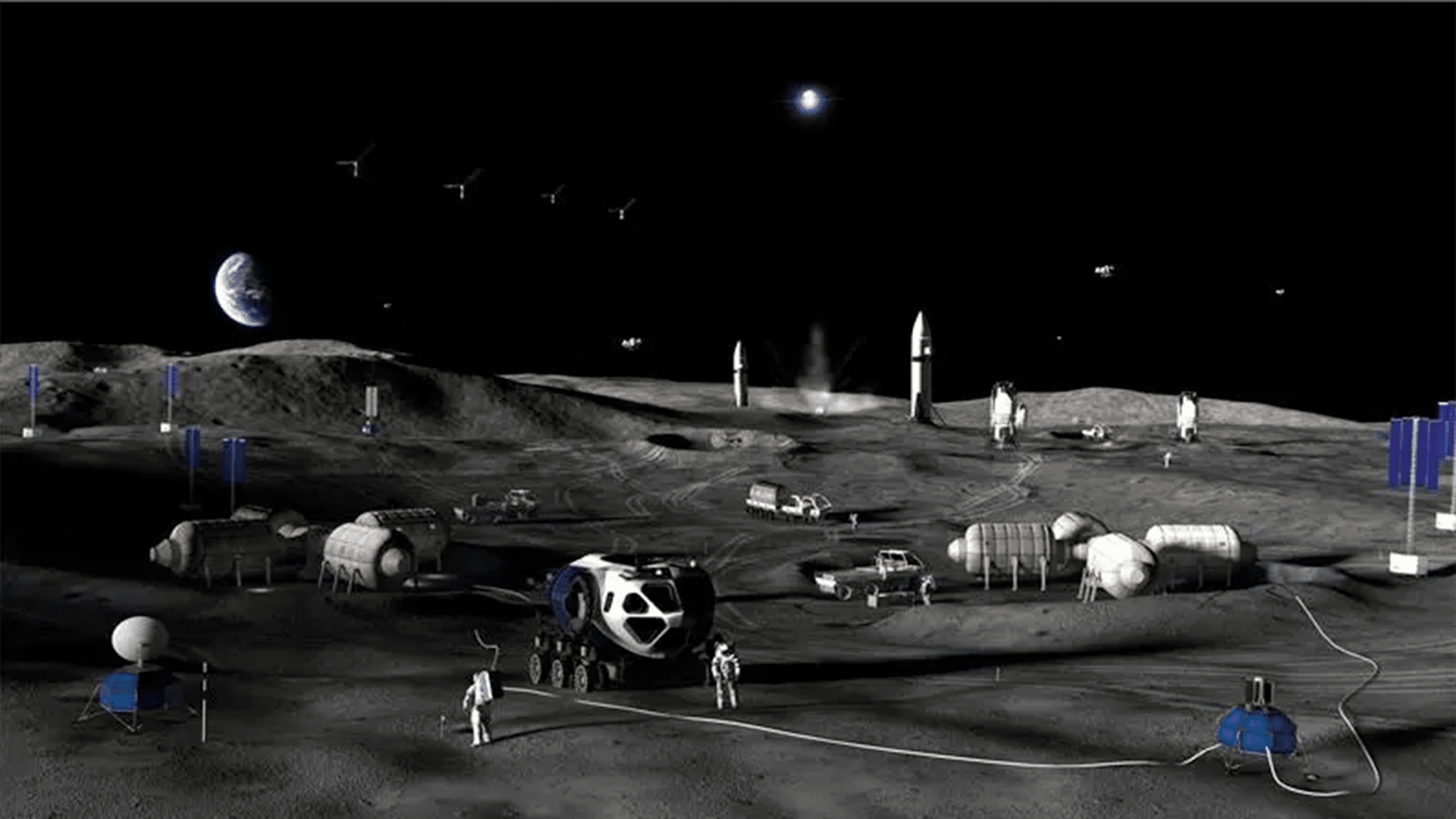
Separately, Synopsys is collaborating with Cesium, part of Bentley Systems, and NASA’s Glenn Research Center to support the Lunar Third Generation Partnership Project (Lunar 3GPP), which aims to establish cellular network coverage on the Moon. Cesium provides high-fidelity 3D lunar topography data integrated into Synopsys’ digital mission engineering environment, where Ansys RF Channel Modeler and Ansys HFSS software analyze radio frequency (RF) signal propagation and antenna performance across simulated lunar terrain.
“To build a lunar network, you must first build a digital moon,” said Patrick Cozzi, chief platform officer at Bentley Systems.
Synopsys Extends Simulation Reach to the Lunar Surface via Artemis Program
Synopsys Extends Simulation Reach to the Lunar Surface via Artemis Program
Analyst Take: Synopsys’ involvement in the Artemis program signals that the company’s post-Ansys acquisition identity is taking shape around mission-critical simulation far beyond its semiconductor design origins. The dual engagement spanning spacesuit ESD analysis and lunar cellular network planning places Synopsys’ simulation tools at the intersection of astronaut safety and communications infrastructure, two foundational pillars of NASA’s phased Moon Base strategy announced in March 2026. The physics-based workflows described here address problems where failure modes carry human-safety consequences, lending credibility to Synopsys’ positioning in aerospace and defense. With NASA targeting repeatable, modular lunar missions and landings every six months, the demand for pre-deployment virtual validation is set to increase materially. The central question is whether Synopsys’ lunar simulation work can establish a durable foothold in government space programs or whether it remains a high-visibility but narrowly scoped engagement.
Physics-Based Simulation as an Astronaut Safety Layer
The spacesuit charging analysis represents a use case where simulation is not an optimization tool but a safety prerequisite. Lunar regolith interactions and space plasma exposure create triboelectric and electrostatic charging conditions that can produce ESD events capable of damaging communications and life-support electronics embedded in Artemis suits. Ansys Charge Plus models the coupled physics of plasma interaction, surface charging, charge transport, and discharge across multi-layer material configurations, a capability Synopsys describes as commercially unique in full 3D.
EMA’s SERE Laboratory provides ground-truth validation data, creating a simulation-and-test feedback loop that strengthens confidence in worst-case scenario identification. This integrated approach reflects a broader industry shift where simulation is expected to reduce physical test cycles without sacrificing assurance levels, particularly in environments that cannot be fully replicated on Earth. Synopsys is positioning Ansys Charge Plus not merely as an analysis tool but as a gatekeeper for EVA system readiness in sustained lunar operations.
Digital Twins Become Infrastructure for Lunar Network Design
Cesium’s contribution of true-to-reality Moon topography data transforms Synopsys’ simulation environment into a geospatially accurate digital twin of the lunar surface. This is consequential because RF signal propagation on the Moon is shaped by craters, rock formations, and terrain features that create shadow zones invisible to flat-terrain models. By combining Cesium’s 3D spatial data with Ansys RF Channel Modeler and HFSS antenna simulation, the Lunar 3GPP team at NASA Glenn can visualize coverage gaps and optimize radio placement before any hardware is deployed.
The approach compresses what would otherwise be an iterative, hardware-dependent validation cycle into a software-first workflow that scales with mission complexity. This collaboration also highlights Bentley Systems’ strategy of extending Cesium’s geospatial platform into non-terrestrial domains, a move that could open adjacent markets in orbital and planetary infrastructure planning. Digital twin fidelity, not just simulation accuracy, is becoming the binding constraint for extraterrestrial communications architecture.
Synopsys’ Post-Ansys Portfolio Finds an Aerospace Proving Ground
The Artemis engagement is among the most visible demonstrations of Synopsys’ expanded simulation portfolio since completing its acquisition of Ansys. Where Synopsys was historically defined by electronic design automation (EDA) for semiconductor workflows, the Ansys integration adds structural, thermal, fluid, and electromagnetic simulation capabilities that address entirely different markets. Aerospace and defense represent a natural proving ground because the domain demands multi-physics analysis, high-consequence validation, and long program lifecycles that favor entrenched toolchains.
NASA’s selection of Synopsys-branded Ansys tools for both spacesuit analysis and communications modeling suggests the combined portfolio is being received as a coherent offering rather than a loosely bundled set of acquisitions. The risk, however, is that aerospace program timelines and procurement cycles are slow relative to Synopsys’ commercial software cadence, which could constrain revenue scale from these engagements in the near term. The Artemis program serves Synopsys as much as a strategic reference as a revenue source, validating the Ansys integration thesis as the space economy expands.
Sustained Lunar Presence Multiplies Demand for Virtual Validation
NASA’s March 2026 announcement of a phased Moon Base architecture, progressing from robotic deliveries through semi-habitable infrastructure to permanent human presence, fundamentally changes the scale of pre-deployment analysis required. Each phase introduces new hardware configurations, environmental exposures, and system interdependencies that must be validated before launch, creating recurring demand for simulation workflows rather than one-time engagements. The planned cadence of landings every six months, with potential acceleration, implies that simulation tools must support rapid iteration cycles aligned with mission timelines rather than multi-year development arcs.
Synopsys’ positioning across both safety-critical ESD analysis and communications network planning gives it visibility into two parallel workstreams that will intensify as the Moon Base program advances. The inclusion of international partner hardware from JAXA, ASI, and CSA further expands the interoperability validation surface that simulation must cover. The takeaway is that NASA’s commitment to sustained lunar operations converts simulation from a project-scoped deliverable into an ongoing infrastructure requirement, which favors vendors embedded early in the program architecture.
What to Watch:
- Whether Synopsys secures expanded Artemis program scope as NASA moves from Phase One robotic deliveries to Phase Two semi-habitable infrastructure.
- How Ansys Charge Plus adoption develops beyond NASA, particularly among commercial space companies designing EVA and surface systems.
- The degree to which Cesium’s lunar digital twin becomes a shared reference environment across multiple NASA contractors and international partners.
- Whether the Lunar 3GPP cellular standard gains traction as a foundation for commercial lunar communications, creating downstream demand for RF simulation.
- How Synopsys balances the visibility of aerospace engagements against the revenue concentration risk of long-cycle government programs.
See the full press release on Synopsys’ NASA Artemis program announcement on the Synopsys website.
Disclosure: Futurum is a research and advisory firm that engages or has engaged in research, analysis, and advisory services with many technology companies, including those mentioned in this article. The author does not hold any equity positions with any company mentioned in this article.
Analysis and opinions expressed herein are specific to the analyst individually and data and other information that might have been provided for validation, not those of Futurum as a whole.
Other Insights from Futurum:
Synopsys Converge – Is the New Synopsys Ready to Own Multi-Physics Design?
Synopsys Q1 FY 2026 Earnings Highlight EDA and Ansys Momentum
SiMa.ai and Synopsys Unveil Automotive AI SoC Blueprint. Is Pre-Silicon the New Baseline?
Image Credit: NASA
Author Information

Brendan is Research Director, Semiconductors, Supply Chain, and Emerging Tech. He advises clients on strategic initiatives and leads the Futurum Semiconductors Practice. He is an experienced tech industry analyst who has guided tech leaders in identifying market opportunities spanning edge processors, generative AI applications, and hyperscale data centers.
Before joining Futurum, Brendan consulted with global AI leaders and served as a Senior Analyst in Emerging Technology Research at PitchBook. At PitchBook, he developed market intelligence tools for AI, highlighted by one of the industry’s most comprehensive AI semiconductor market landscapes encompassing both public and private companies. He has advised Fortune 100 tech giants, growth-stage innovators, global investors, and leading market research firms. Before PitchBook, he led research teams in tech investment banking and market research.
Brendan is based in Seattle, Washington. He has a Bachelor of Arts Degree from Amherst College.