Analyst(s): Olivier Blanchard
Publication Date: March 4, 2026
MediaTek is strategically entering the optical communication market by developing a new Micro LED-based Active Optical Cable (AOC) solution, moving beyond its traditional consumer electronics focus. This technology is designed to address the “short-reach” bottleneck in AI data centers, supporting 800G and 1.6T speeds for in-rack interconnects under 100 meters. The move positions MediaTek in the lucrative AI infrastructure sector, offering a power-efficient alternative to copper cabling and competing with Silicon Photonics for data center dominance.
What is Covered in This Article:
- MediaTek’s new Micro LED AOC
- Addressing AI data center bottlenecks
- Micro LED vs. Silicon Photonics comparison
- Strategic market pivot to AI infrastructure
The News: MediaTek, a global leader in fabless semiconductor design, has announced its strategic entry into the optical communication market. Leveraging self-developed Micro LED light source technology, the company has developed a new Active Optical Cable (AOC) solution. This technology is designed to address the surging demand for high-speed, short-distance interconnects within AI data centers and server clusters. MediaTek plans to formally debut this solution at the Optical Fiber Communication Conference (OFC) this coming April.
Market News Coverage: MediaTek Expands into Micro LED Optical Communication
Analyst Take: MediaTek’s move into Micro LED-based optical interconnects represents a significant pivot from its traditional stronghold in consumer electronics (smartphones and IoT) toward the lucrative AI infrastructure market. By targeting the “short-reach” bottleneck in data centers, MediaTek is positioning itself to compete in a high-growth sector where traditional electrical cabling is hitting physical limits.
The shift is driven by a massive projected spike in demand: TrendForce estimates that shipments of 800G or higher optical transceiver modules will grow from 24 million units in 2025 to nearly 63 million units by 2026.
Key highlights of this strategic move include:
- Technology Diversification: Utilizing Micro LED for non-display applications. Micro LEDs offer superior power efficiency, higher data density, and better thermal stability compared to traditional light sources used in optical cables.
- Targeting the AI Bottleneck: As AI models require massive data exchange between GPU/server racks, high-speed interconnects have become the performance ceiling for data center scalability.
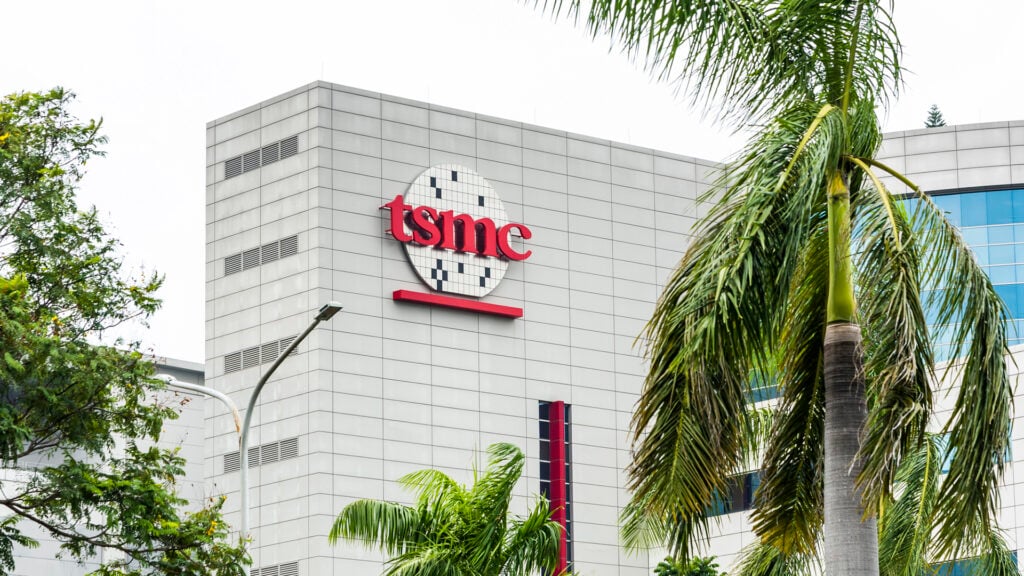
- Ecosystem Momentum: MediaTek joins other industry giants, including TSMC, Microsoft, and Apple (through various partnerships), in exploring Micro LED for optical data transmission.
- Supply Chain Integration: This shift is supported by a robust ecosystem, including chip makers such as Sanan Optoelectronics and packaging firms such as NationStar, signaling a coordinated industry push to replace Active Electrical Cables (AEC) with optical alternatives.
MediaTek’s Micro LED AOC
While MediaTek will reveal full performance benchmarks at OFC in April, current industry data and company disclosures highlight the following specifications for their Active Optical Cable (AOC):
- Target Bandwidth: Designed to support 800G and 1.6T transmission speeds to match next-generation AI cluster requirements.
- Light Source: Utilizes proprietary Micro LED arrays rather than traditional VCSELs (Vertical-Cavity Surface-Emitting Lasers).
- Form Factor: Optimized for short-reach (SR) interconnects, specifically targeting distances under 100 meters within server racks.
- Efficiency Gains: Expected to reduce power consumption by 20–30% compared to traditional electrical copper cabling (AEC) at similar distances.
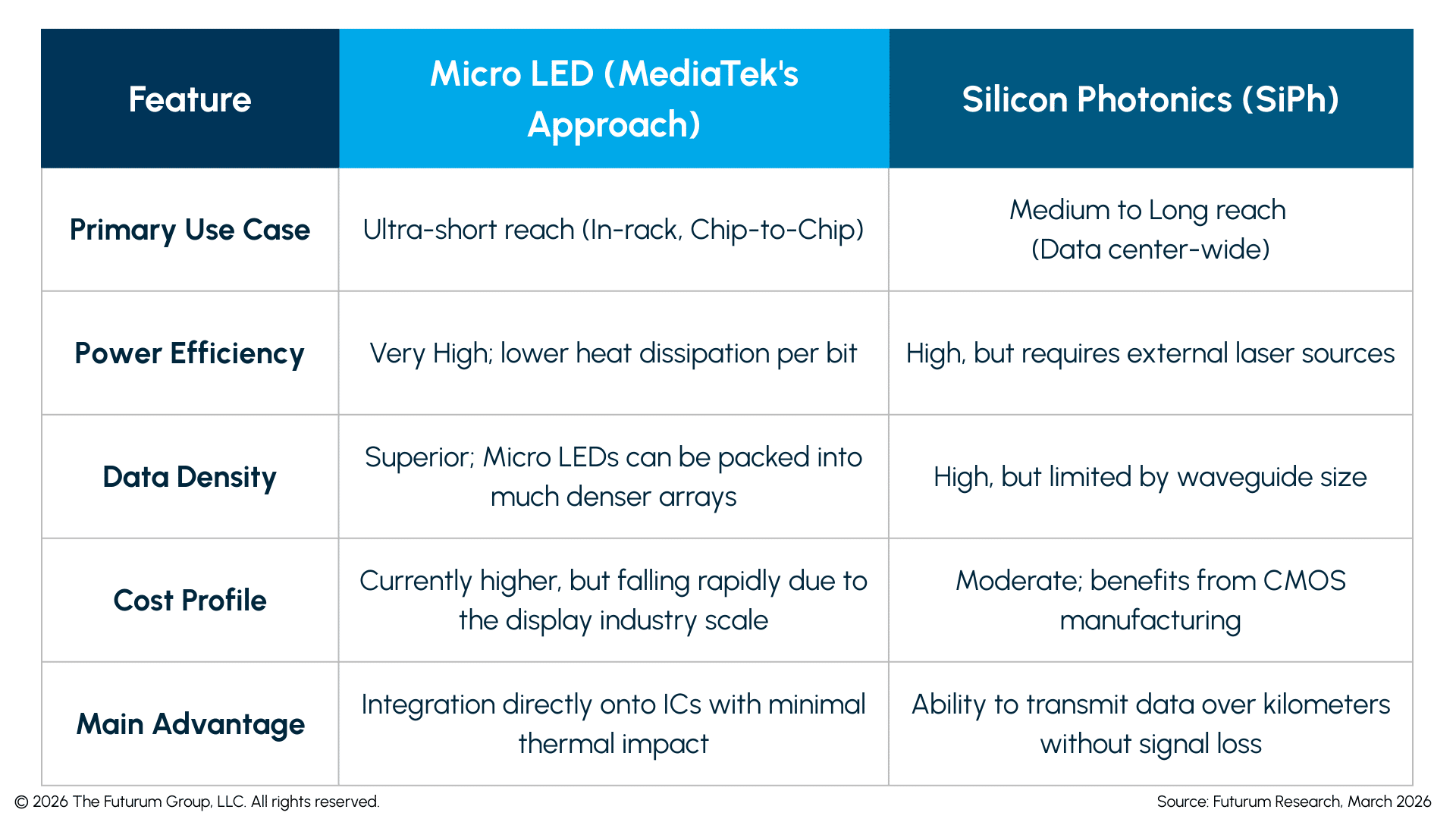
Micro LED vs. Silicon Photonics
As data centers move away from copper, two primary technologies are competing for dominance. MediaTek’s choice of Micro LED puts them in a specific niche compared to the broader Silicon Photonics (SiPh) movement.
What to Watch:
MediaTek is betting that the Micro LED ecosystem – supported by partners such as Sanan Optoelectronics and NationStar – will reach a tipping point in 2026. The expected >2.5x growth in 800G+ modules creates a significant opportunity for a more power-efficient alternative to copper.
MediaTek’s entry also validates Micro LED as a critical technology for the future of high-performance computing (HPC). By mastering in-house light-source technology, MediaTek reduces reliance on external component vendors and creates another vertically integrated solution for the AI era.
Read more on the company’s website.
Disclosure: Futurum is a research and advisory firm that engages or has engaged in research, analysis, and advisory services with many technology companies, including those mentioned in this article. The author does not hold any equity positions with any company mentioned in this article.
Analysis and opinions expressed herein are specific to the analyst individually and data and other information that might have been provided for validation, not those of Futurum as a whole.
Other Insights from Futurum:
Qualcomm Unveils Future of Intelligence at CES 2026, Pushes the Boundaries of On-Device AI
Voice-First AI Interfaces Are Quickly Expanding Beyond The Smart Speaker Segment
Google Debuts Pixel 10A Amidst Minimal Hardware Evolution
Author Information

Olivier Blanchard is Research Director, Intelligent Devices. He covers edge semiconductors and intelligent AI-capable devices for Futurum. In addition to having co-authored several books about digital transformation and AI with Futurum Group CEO Daniel Newman, Blanchard brings considerable experience demystifying new and emerging technologies, advising clients on how best to future-proof their organizations, and helping maximize the positive impacts of technology disruption while mitigating their potentially negative effects. Follow his extended analysis on X and LinkedIn.