
Analyst(s): Mitch Ashley
Publication Date: February 18, 2025
Software teams are experiencing an invasion of AI tools and capabilities for use throughout the software development lifecycle. Over 80% of organizations plan to invest in AI tools for their software teams over the next 12-18 months. The benefits AI brings to software development also come with its disruptions. Tech leaders seek AI’s benefits while balancing multiple other technology priorities.
Key Points:
- New AI-driven capabilities are emerging at an unprecedented rate across the software development cycle from AWS, GitHub, Microsoft, Google, and many other vendors.
- A key finding of the most recent DORA 2024 report shows that developer productivity decreased, impacting release stability, as software developers adopt AI technologies.
- As they introduce AI into development, organizations must balance observability, application security, cloud-native, and software quality priorities.
Overview:
Fast Pace of AI In Development: The rapid pace of new AI innovations for software development continues to increase. In January alone, AWS announced Amazon Q real-time execution of AI-generated code, NVIDIA NIM API access to DeepSeek R1, DeepSeek support for DeepSeek in AWS, Azure, and Google AI cloud platform offerings, and Perforce AI adaptive software testing, moreover, Harness added AI capabilities to its chaos testing, and GitHub reached 150 million users and offered a Copilot free tier for Visual Studio, Visual Studio Code, and JetBrains IDE. Cursor added several capabilities, including users’ ability to write several repository-level rules to disk, and Postman announced their API-savvy AI Agent Builder offering. We could easily list many more announcements.
AI Impacting Software Delivery Stability: The DORA 2024 report identified a drop in developer productivity, with a decrease in delivery stability, at a time when AI technologies are increasingly introduced for codebase analysis, code generation, test case generation, and more.
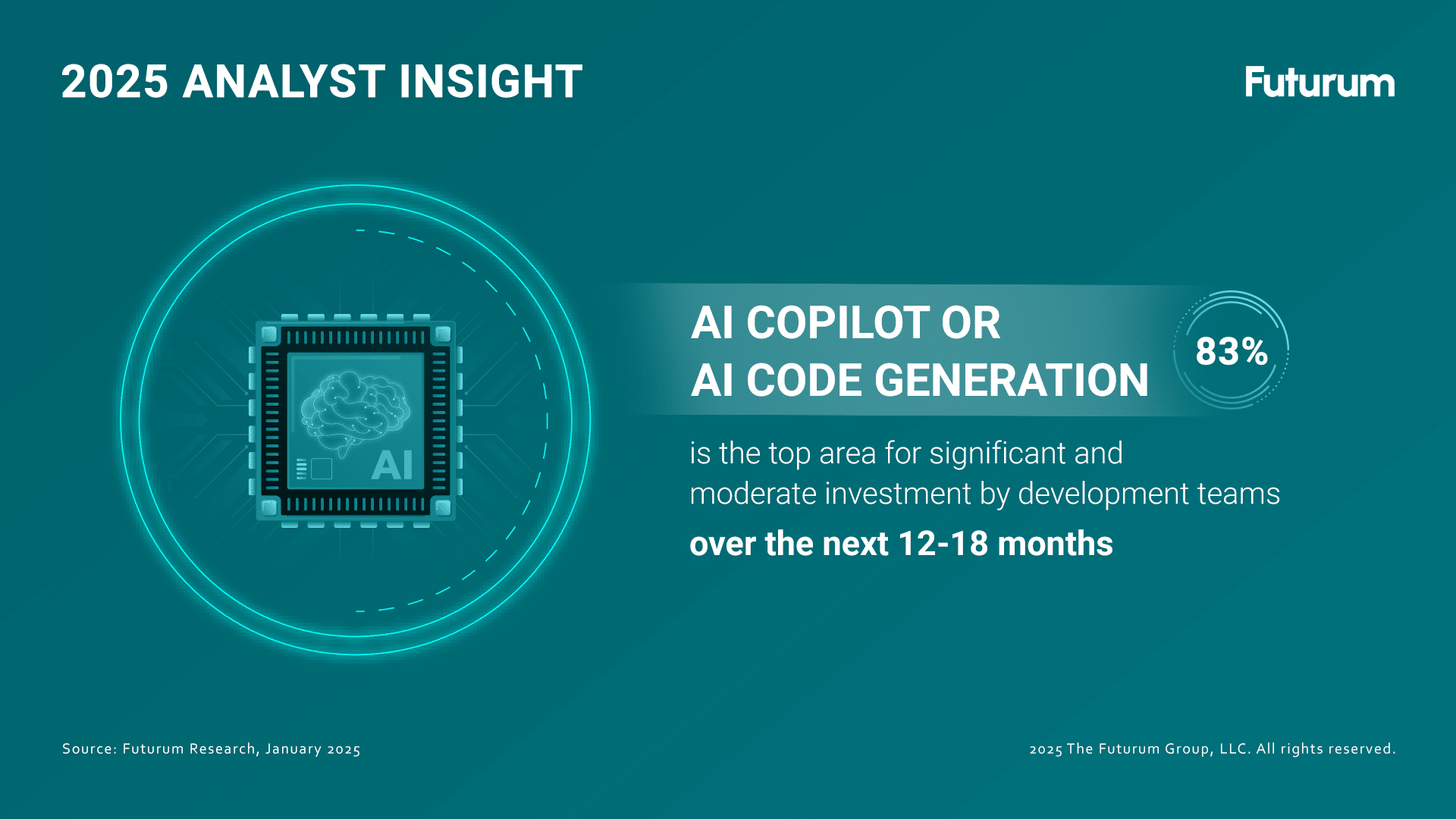
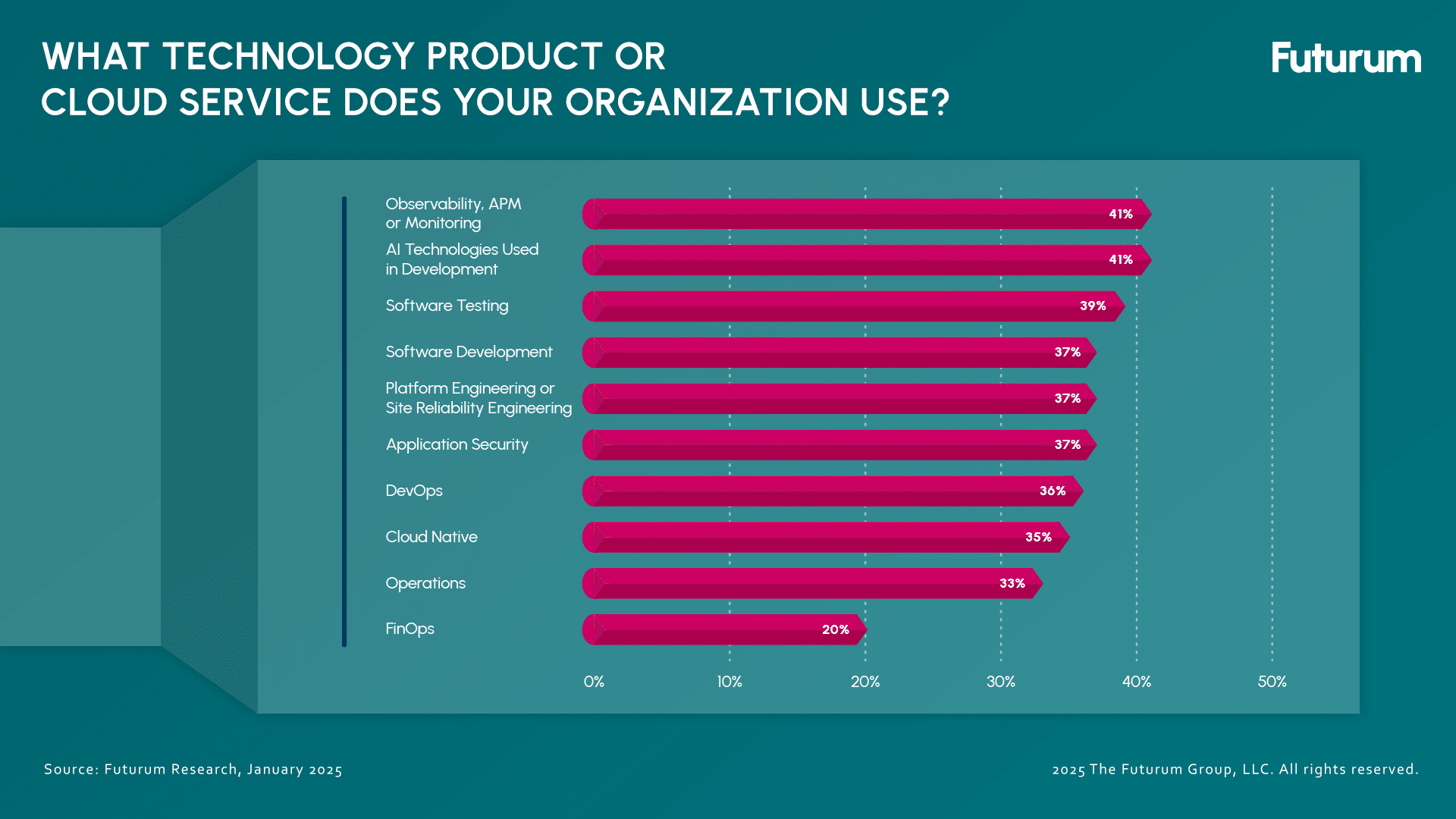
AI Is One of Multiple Top Technology Priorities: AI Copilot or AI Code Generation (83%) is the top area for significant and moderate investment by development teams over the next 12-18 months. At the same time, software teams have a broad range of technology priorities on their plate: software supply chain security, software testing, cloud-native, and platform engineering.
Figure 1: What technology product or cloud service does your organization use?
Conclusion: Futurum Research has developed Five Strategies for Blending AI Innovations and Top Priorities. Development organizations can balance technology priorities and increase AI wins by applying the DevOps and Agile concepts of short feedback loops, engineering discipline, interactive learning, and vendor alignment.
The full Analyst Insight Report, Can Developers Keep Pace With AI Innovations?, is available via subscription to Futurum Intelligence’s DevOps and Application Development IQ service. Click here for inquiry and access.
Futurum clients can read more about it in the DevOps & Application Development Portal, and nonclients can learn more here: DevOps & Application Development Practice.
About the Futurum DevOps & Application Development Practice
The Futurum DevOps & Application Development Practice provides actionable, objective insights for market leaders and their teams so they can respond to emerging opportunities and innovate. Public access to our coverage can be seen here. Follow news and updates from the Futurum Practice on LinkedIn and X. Visit the Futurum Newsroom for more information and insights.
Author Information

Mitch Ashley is VP and Practice Lead for the CIO & Technology Buyers and Software Lifecycle Engineering practices at The Futurum Group. A multi-time CIO and CTO with 30+ years leading technical organizations, Mitch built and operated production systems spanning cybersecurity for the U.S. Department of Defense, PKI services for the broadband and 5G industries, SaaS platforms, large-scale telecom and banking systems, and a national broadband network. His work with AI began early, developing expert systems that diagnosed and repaired complex mainframe environments. That operator foundation grounds his analysis in operational consequence, covering the technology buyer's world of software engineering, cybersecurity, DevOps, cloud, and AI.

