Analyst(s): Olivier Blanchard
Publication Date: February 4, 2026
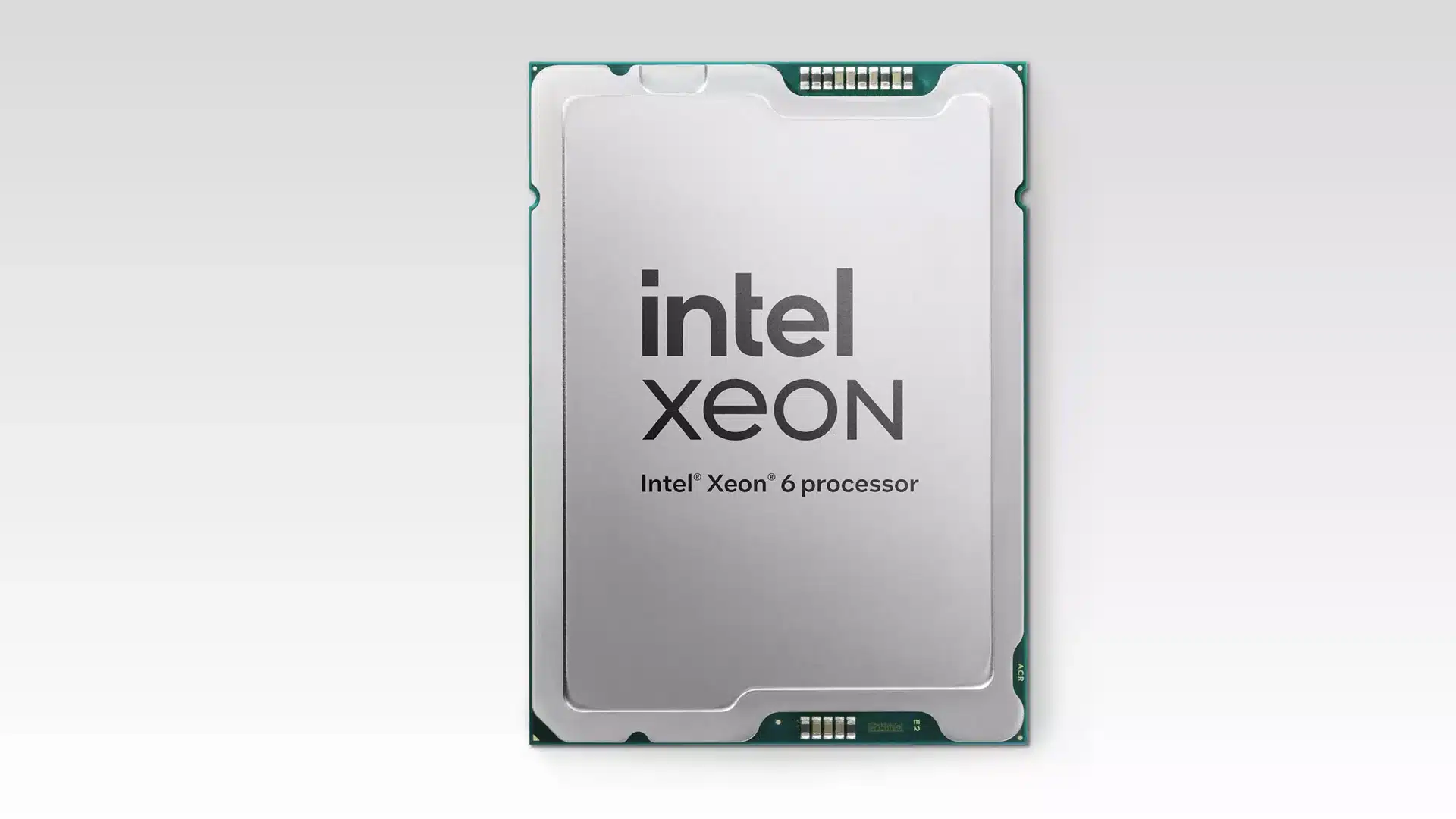
Intel has introduced its Xeon 6 workstation processors, expanding core counts, memory bandwidth, and platform capabilities for professional workloads. This launch reignites the debate around whether CPU-led performance gains can reclaim relevance in AI-assisted and creator-centric workstation environments.
What is Covered in this Article:
- Intel’s launch of Xeon 6 workstation processors with P-core architecture
- Performance claims across single-threaded, multi-threaded, and AI-assisted workloads
- Memory, I/O, and platform upgrades including DDR5 RDIMM and MRDIMM support
- Implications for professional workstation positioning versus GPU-centric configurations
The News: Intel announced the launch of its Xeon 6 workstation processors, expanding its professional CPU portfolio with higher core counts, expanded memory bandwidth, and updated platform features. The processors support up to 88 PCIe 5.0 lanes, DDR5 RDIMM memory up to 6,400 MT/s, and MRDIMM support reaching up to 8,000 MT/s, targeting demanding workstation workloads.
Intel reports performance improvements of up to 9% in single-threaded workloads, 61% in multi-threaded workloads, and 17% in AI and machine learning tasks compared with the prior-generation Xeon W-3400 series. Intel stated that the processors will be available starting in late March 2026 across boxed and OEM configurations, built on the W890 chipset and LGA 4710-2 socket.
Xeon 6 Arrives for Workstations. Is Intel Reframing CPU Value?
Analyst Take: Intel’s Xeon 6 for workstations launch reflects a deliberate effort to reposition the CPU as a primary performance driver in professional systems, even as GPU acceleration currently dominates many AI and content workflows. For this launch, Intel prioritized core density, memory bandwidth, and I/O scalability rather than radical architectural shifts. Most importantly, performance specs, which span traditional compute, AI-assisted workloads, and creator applications, provide a fairly clear peek into Intel’s general theory of evolving workstation demands. Intel is clearly targeting environments where CPU versatility and platform balance remain critical, reigniting the debate over whether CPU-led gains alone can reshape workstation buying priorities.
Core Density and Multi-Threaded Performance Gains
Intel highlighted significant gains in multi-threaded workloads, citing up to 61% improvement over the prior Xeon W-3400 generation. This uplift is tied to higher core counts and architectural refinements rather than specialized accelerators. Benchmarks referenced by Intel include Blender, where performance reportedly improved by up to 74%, and Topaz Labs workloads, which showed gains of up to 29%. These results position Xeon 6 as a strong fit for heavily parallelized tasks such as rendering and simulation. However, the emphasis on multi-thread scaling reinforces that Xeon 6 is optimized for sustained CPU-bound workloads rather than displacing GPU-centric compute paths.
You will have no doubt noticed that Xeon 6 also doubles as a competitive option against AMD’s Threadripper Pro 9000 series, especially given its 61% gen-over-gen improvement in handling multi-threaded workloads. However, given Xeon 6 series specs, it appears that its advantage over Threadripper will be in environments where AI inference is likely to be prioritized over raw multithread horsepower. In other words, Intel’s bet here is that, moving forward, while multithread performance will continue to be critical to workstation users, AI inference will become the new performance priority.
Memory Bandwidth and Platform Scaling
To that end, a key differentiator in the Xeon 6 workstation platform is its expanded memory support, which includes DDR5 RDIMM speeds up to 6,400 MT/s, and MRDIMM support up to 8,000 MT/s. Intel also addresses platform scalability with up to 88 PCIe 5.0 lanes, enabling dense configurations of GPUs, storage, and high-speed peripherals. This combination directly targets memory-bound and I/O-heavy professional workloads, where bottlenecks often limit real-world performance. The W890 chipset and LGA 4710-2 socket provide a consistent foundation for these enhancements. Collectively, the platform updates suggest Intel is also prioritizing balanced system throughput – a sort of goldilocks zone of performance – rather than peak compute metrics alone. This is a theme we keep bumping into across its portfolio of PC-focused solutions, and feel that it is Intel’s competitive sweet spot to maintain its market share advantage.
AI-Assisted and Mixed Workload Positioning
Intel reported up to 17% performance gains in AI and machine learning workloads, framing Xeon 6 as capable of supporting AI-assisted tasks alongside traditional workstation applications. The company also highlighted improvements of up to 9% in single-threaded performance, maintaining relevance for lightly threaded professional software. This positioning acknowledges that many workstation users operate in hybrid environments where AI features augment, rather than replace, CPU-centric workflows. Intel’s messaging does not claim CPU supremacy over GPUs for AI training or inference at scale. Instead, Xeon 6 appears aimed at ensuring CPUs remain relevant as orchestration and execution engines in mixed workloads. Again, Intel’s middle-ground approach highlights its focus on scalability across a plethora of use cases, environments, and price points, which is the right approach if Intel is trying to not only reverse recent market share softness but build a foundation for its next period of market share growth.
Overclocking, Stability, and Professional Differentiation
Intel emphasized workstation-specific features, such as overclocking support, stability validation, and record-setting results in HWBot benchmarks. These elements are intended to appeal to power users and system builders seeking deterministic performance and tuning flexibility. Support for Wi-Fi 6E, Wi-Fi 7, and Intel vPro features further aligns the platform with enterprise and professional deployment requirements. While these additions do not redefine workstation capabilities, they reinforce Intel’s focus on reliability and configurability. Ultimately, the Xeon 6 launch underscores a strategy of incremental but broad-based improvements rather than a single disruptive performance leap.
What to Watch:
- Adoption of MRDIMM configurations and whether memory bandwidth becomes a key purchasing criterion
- OEM workstation designs that fully utilize 88 PCIe 5.0 lanes for dense accelerator and storage setups
- The extent to which CPU-led gains influence mixed CPU-GPU workload balancing
- Price-to-performance comparisons against prior-generation Xeon workstation systems
See the complete announcement on Intel’s launch of Xeon 6 workstation processors on the Intel website.
Declaration of generative AI and AI-assisted technologies in the writing process: This content has been generated with the support of artificial intelligence technologies. Due to the fast pace of content creation and the continuous evolution of data and information, The Futurum Group and its analysts strive to ensure the accuracy and factual integrity of the information presented. However, the opinions and interpretations expressed in this content reflect those of the individual author/analyst. The Futurum Group makes no guarantees regarding the completeness, accuracy, or reliability of any information contained herein. Readers are encouraged to verify facts independently and consult relevant sources for further clarification.
Disclosure: Futurum is a research and advisory firm that engages or has engaged in research, analysis, and advisory services with many technology companies, including those mentioned in this article. The author does not hold any equity positions with any company mentioned in this article.
Analysis and opinions expressed herein are specific to the analyst individually and data and other information that might have been provided for validation, not those of Futurum as a whole.
Other insights from Futurum:
Intel Q4 FY 2025: AI PC Ramp Meets Supply Constraints
Can Intel’s Panther Lake and 18A Process Reset the Chipmaker’s Competitive Position?
America’s Bet on Intel: Why This Investment Is Existential for National Security and Tech Leadership
Image Credit: Intel
Author Information

Olivier Blanchard is Research Director, Intelligent Devices. He covers edge semiconductors and intelligent AI-capable devices for Futurum. In addition to having co-authored several books about digital transformation and AI with Futurum Group CEO Daniel Newman, Blanchard brings considerable experience demystifying new and emerging technologies, advising clients on how best to future-proof their organizations, and helping maximize the positive impacts of technology disruption while mitigating their potentially negative effects. Follow his extended analysis on X and LinkedIn.