Analyst(s): Brendan Burke
Publication Date: February 5, 2026
Supermicro’s Q2 FY2026 earnings delivered record net sales of $12.7B as data center builders prioritized power-efficient, rack-scale AI infrastructure. With NVIDIA GB300 systems and liquid-cooled data center building solutions shipping at volume, the company guided to at least $12.3B in Q3 net sales and reaffirmed a $40B FY26 revenue outlook.
What is Covered in this Article:
- Supermicro’s Q2 FY2026 financial results and FY26 outlook
- Power- and cost-optimized rack-scale deployment support via Data Center Building Block Solutions (DCBBS)
- NVIDIA GB300 NVL72 systems deployed at scale for marquee AI customers, with xAI momentum signals
- Outlook for margin expansion
The News: Super Micro Computer (SMCI) reported a record-breaking second quarter for fiscal year 2026, delivering net sales of $12.68B, a 123% year-over-year increase that far exceeded analyst expectations of $10.23B. Driven by the rapid volume deployment of NVIDIA GB300 NVL72 and AMD MI355 platforms, the company’s revenue surged 153% sequentially as major AI factories, including xAI’s Colossus 2, reached operational status. While GAAP gross margins tightened to 6.3% due to the initial ramp-up costs of complex liquid-cooled (DLC) architectures, the company posted a strong non-GAAP EPS of $0.69, beating the $0.46 consensus. Management expressed confidence in a path to margin recovery through its Data Center Building Block Solutions (DCBBS) and raised its full-year 2026 revenue guidance to over $40B.
Supermicro Q2 FY2026 Delivers Breakout AI GPU Platform Revenue
Analyst Take: Supermicro Q2 FY2026 earnings underscore a pivot from component-led to solution-led AI infrastructure, with record $12.7B in net sales driven by customers racing to deploy power- and cost-optimized AI capacity at scale. The through-line this quarter is power availability and build-cost management: data center builders are increasingly selecting pre-integrated racks with power management solutions to tame power constraints. With guidance of at least $12.3B in Q3 and a floor of $40B for FY26, Supermicro is positioning as a primary contractor for AI factory rollouts, not just a server OEM.
Why power and TCO define Supermicro Q2 FY2026 earnings
Power density is now the gating factor for AI clusters. Supermicro’s recently launched Data Center Building Block Solutions (DCBBS) portfolio spans cooling systems, generators, power shelves, battery racks, networking fabrics, and SuperCloud software for operational workflows. These solutions address the installation challenges of 150kW racks shipping in volume today, supporting 6,000 total racks per month capacity by FY26 year-end. This solutions-based model delivers faster buildouts and lower site-level complexity, which is central to why Supermicro Q2 FY2026 earnings scaled so sharply even as gross margin compressed.
GB300 at scale and signals from xAI
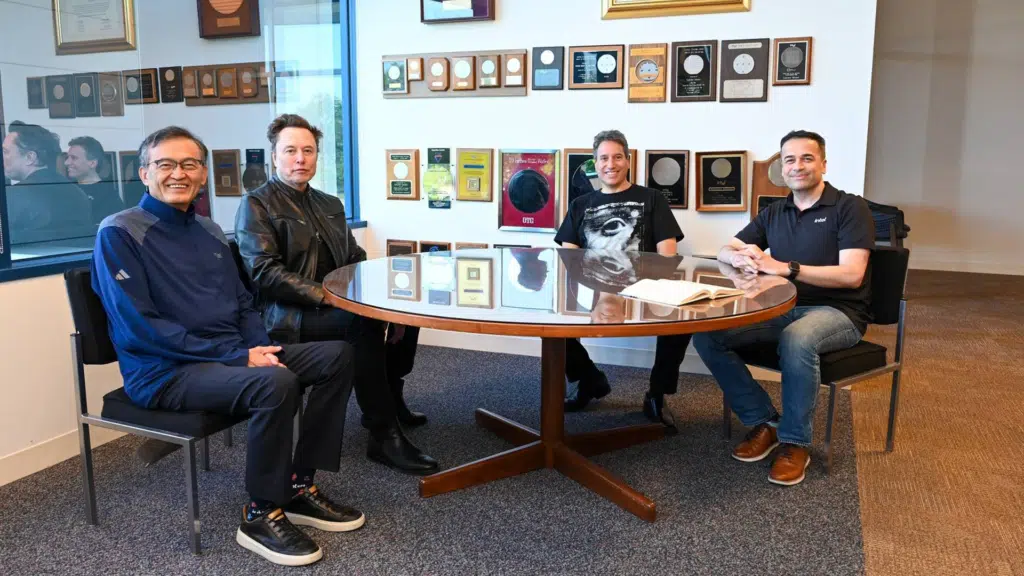
On the system side, volume deliveries of NVIDIA GB300 NVL72 and HGX B300 platforms, alongside AMD MI350/355, reinforce Supermicro’s status as a first-wave integrator for cutting-edge AI compute. Supermicro is a primary server vendor to AI hyperscaler xAI, which has the first coherent gigawatt-scale training cluster, Colossus 2, now operational. xAI plans to upgrade Colossus 2 to 1.5 GW by April 2026, according to Elon Musk, creating headroom for GB300 shipments.
Margin reality and the path to leverage
Gross margin landed at 6.3% GAAP. The Q3 guide keeps revenue elevated while leaving room for operational tuning. If product mix improves towards DCBBS, there may be a path to modest GM recovery without sacrificing velocity. While base server margins are tight, integrated DCBBS solutions carry margins targeted at 20%+. Liquid cooling attach rate is a meaningful margin driver, as is the share of large customers that value factory-level performance. Select buyers seeking rapid AI capacity should expect continued tight execution windows, along with increasing standardization that lowers per-MW install costs over time.
Final Thoughts
Supermicro Q2 FY2026 earnings confirm a decisive shift to solution‑led, power‑efficient AI infrastructure at unprecedented scale. If the company executes on DCBBS capacity, liquid cooling throughput, and global integration while steadily improving mix and operating efficiency, it can remain a primary enabler of AI data centers in a market where megawatts are the gating factor. Continued strength in NVIDIA and AMD rack deployments, along with disciplined working capital and margin management, are the key variables to watch into the back half of FY26. With a massive $13B backlog for Blackwell Ultra, the company’s primary risks are execution and working capital management, not demand.
See the complete press release on Supermicro’s investor relations site.
Disclosure: Futurum is a research and advisory firm that engages or has engaged in research, analysis, and advisory services with many technology companies, including those mentioned in this article. The author does not hold any equity positions with any company mentioned in this article.
Analysis and opinions expressed herein are specific to the analyst individually and data and other information that might have been provided for validation, not those of Futurum as a whole.
Other insights from Futurum:
SpaceX Acquires xAI: Rockets, Starlink, and AI Under One Roof
Can Dell PowerScale’s Flexible Architecture Outpace Flash Costs in the AI Era?
At CES, NVIDIA Rubin and AMD “Helios” Made Memory the Future of AI
Author Information

Brendan is Research Director, Semiconductors, Supply Chain, and Emerging Tech. He advises clients on strategic initiatives and leads the Futurum Semiconductors Practice. He is an experienced tech industry analyst who has guided tech leaders in identifying market opportunities spanning edge processors, generative AI applications, and hyperscale data centers.
Before joining Futurum, Brendan consulted with global AI leaders and served as a Senior Analyst in Emerging Technology Research at PitchBook. At PitchBook, he developed market intelligence tools for AI, highlighted by one of the industry’s most comprehensive AI semiconductor market landscapes encompassing both public and private companies. He has advised Fortune 100 tech giants, growth-stage innovators, global investors, and leading market research firms. Before PitchBook, he led research teams in tech investment banking and market research.
Brendan is based in Seattle, Washington. He has a Bachelor of Arts Degree from Amherst College.