Analyst(s): Nick Patience
Publication Date: December 16, 2025
NVIDIA debuted the open Nemotron 3 model family, designed for efficient multi-agent AI, and acquired SchedMD, developers of the critical open-source Slurm workload manager, significantly expanding its footprint in open AI and HPC ecosystems.
What is Covered in this Article:
- NVIDIA introduced the Nemotron 3 open model family (Nano, Super, Ultra) featuring a hybrid latent mixture-of-experts (MoE) architecture for efficient agentic AI applications
- The Nemotron 3 Nano delivers significant efficiency gains, including up to 4x higher token throughput than its predecessor, a 1-million-token context window, and is optimized for low inference costs.
- Separately, NVIDIA acquired SchedMD, the developer of Slurm, an open-source, vendor-neutral workload management system crucial for High-Performance Computing (HPC) and AI clusters.
- NVIDIA committed to maintaining Slurm as open-source while leveraging the acquisition to optimize workloads across its accelerated computing platform.
- The combined moves solidify NVIDIA’s focus on providing transparent models, data, and tools to accelerate the development of highly accurate, cost-efficient, and specialized AI agents.
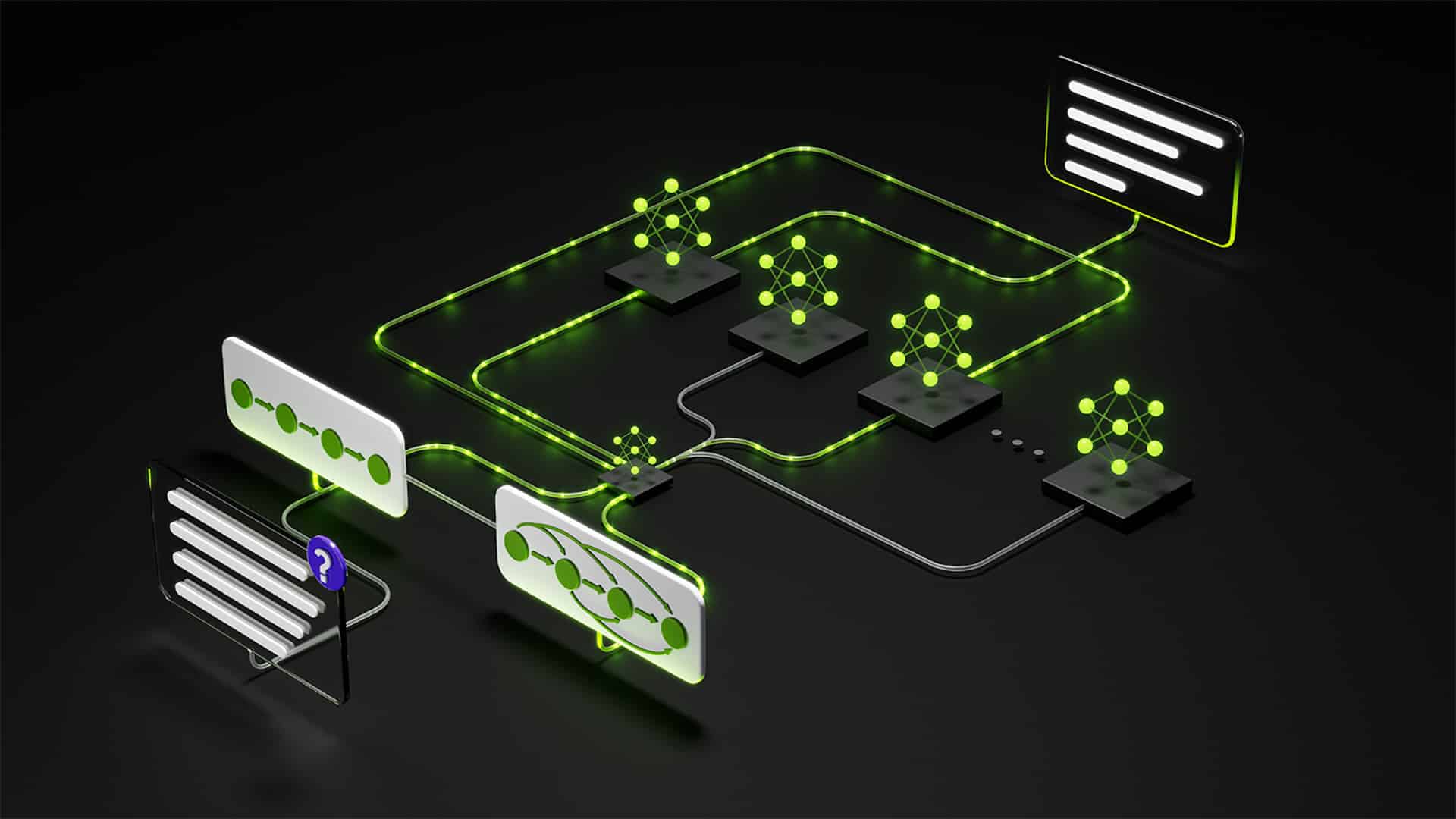
The News: NVIDIA recently announced two major moves that reinforce its commitment to the open source AI and High-Performance Computing (HPC) ecosystems: the debut of the Nemotron 3 family of open models and the acquisition of SchedMD, the leading developer of the Slurm workload management system. The Nemotron 3 models, available in Nano, Super, and Ultra sizes, utilize a hybrid latent mixture-of-experts (MoE) architecture designed to power transparent, efficient, and specialized agentic AI development. These models aim to address the mounting challenges in multi-agent AI systems, such as communication overhead and high inference costs. The smallest model, Nemotron 3 Nano, is available today and is very compute-cost-efficient, delivering up to 4x higher token throughput compared to Nemotron 2 Nano, the company claims, and reducing reasoning-token generation by up to 60%, thereby significantly lowering inference costs.
Separately, the acquisition of SchedMD focuses on strengthening the open source software ecosystem for HPC and AI. Slurm is an open-source workload manager and job scheduler utilized in more than half of the top 10 and top 100 systems in the TOP500 list of supercomputers and is critical infrastructure for generative AI model training and inference. NVIDIA said it will continue to develop and distribute Slurm as open source, vendor-neutral software, supporting a diverse hardware and software ecosystem. This move will enable users of NVIDIA’s accelerated computing platform to optimize workloads across their entire compute infrastructure.
NVIDIA Bolsters AI/HPC Ecosystem with Nemotron 3 Models and SchedMD Buy
Analyst Take: These concurrent announcements solidify NVIDIA’s strategic move to not only provide the foundational hardware for AI and HPC but also to aggressively strengthen the essential open software layers that govern how these systems are built, run, and scaled. NVIDIA is positioning itself as the central authority for building transparent, efficient, and specialized agentic systems through what it terms the NVIDIA open platform. While this commitment to open innovation is presented as the foundation of AI progress, it also acts as a powerful strategic mechanism to solidify the company’s market leadership.
The debut of the Nemotron 3 family of open models provides developers with the transparency needed to trust models and the efficiency required for large-scale multi-agent systems. These models offer genuine, immediate benefits: the Nemotron 3 Nano, for instance, delivers up to 4x higher token throughput compared to its predecessor and reduces inference costs by up to 60%, making it highly compute-cost-efficient. However, this ‘open’ optimization is intrinsically linked to NVIDIA’s hardware. The high-accuracy Nemotron 3 Super and Ultra models, expected in the first half of 2026, are optimized using the ultra-efficient 4-bit NVFP4 training format, which is specifically suited for the NVIDIA Blackwell architecture. By offering these high-performance open models, NVIDIA ensures that the most efficient and low-cost pathway for specialized AI agents runs optimally on its accelerated computing platform.
Openness as a Strategy for Accelerated Platform Dominance
The acquisition of SchedMD reinforces this full-stack dominance at the infrastructure layer. Slurm is the leading open source workload manager, essential for allocating computational resources in massive HPC and AI clusters. NVIDIA has committed to maintaining Slurm as open source and vendor-neutral, supporting a diverse hardware ecosystem. Yet, by controlling the developer team behind this critical software, NVIDIA gains the unique ability to accelerate Slurm’s development and tightly integrate optimizations with the NVIDIA accelerated computing platform. This ensures that organizations utilizing the NVIDIA open platform for their large-scale, complex workloads, which require optimized queuing, scheduling, and resource allocation, will find that NVIDIA hardware provides the most seamless and efficient operational experience.
In essence, NVIDIA’s strategy is to supply the most optimized open-source software and critical infrastructure management tools, thereby making its integrated stack the most performant, cost-effective, and appealing choice. This approach reinforces NVIDIA’s presence in the operational fabric of nearly every major AI and HPC organization, embedding the NVIDIA open platform deeply into critical workflows. This ensures that competitors face an increasingly optimized barrier when attempting to integrate non-NVIDIA hardware.
What to Watch:
- Competitors must accelerate their own open source software integration efforts to prevent NVIDIA’s control of the Slurm scheduler from creating an optimized, proprietary barrier for non-NVIDIA hardware in major HPC/AI installations.
- Widespread adoption of the Nemotron 3 Ultra and Super models will depend heavily on their successful launch and performance when they become available in the first half of 2026.
- The success of Nemotron 3 in promoting agentic AI will be measured by how quickly early adopters, such as Accenture and Perplexity, integrate these models into complex, mission-critical workflows.
- NVIDIA must ensure its commitment to the vendor-neutral nature of Slurm remains absolute, as any attempt to bias the open-source software could lead to community fragmentation or backlash from other hardware vendors.
See the complete press release on the acquisition of SchedMD and the debut of the Nemotron 3 family of open models on the NVIDIA Newsroom.
Disclosure: Futurum is a research and advisory firm that engages or has engaged in research, analysis, and advisory services with many technology companies, including those mentioned in this article. The author does not hold any equity positions with any company mentioned in this article.
Analysis and opinions expressed herein are specific to the analyst individually and data and other information that might have been provided for validation, not those of Futurum as a whole.
Other insights from Futurum:
How Intel–NVIDIA Partnership Could Reshape the Semiconductor Supply Chain – Report Summary
NVIDIA’s European AI Sovereignty Push: Infrastructure, Partnerships, and Policy—Report Summary
Open Source vs. Proprietary AI: Revolution or Just Another Market Split? – Report Summary
Image Credit: NVIDIA
Author Information

Nick Patience is VP and Practice Lead for AI Platforms at The Futurum Group. Nick is a thought leader on AI development, deployment, and adoption - an area he has researched for 25 years. Before Futurum, Nick was a Managing Analyst with S&P Global Market Intelligence, responsible for 451 Research’s coverage of Data, AI, Analytics, Information Security, and Risk. Nick became part of S&P Global through its 2019 acquisition of 451 Research, a pioneering analyst firm that Nick co-founded in 1999. He is a sought-after speaker and advisor, known for his expertise in the drivers of AI adoption, industry use cases, and the infrastructure behind its development and deployment. Nick also spent three years as a product marketing lead at Recommind (now part of OpenText), a machine learning-driven eDiscovery software company. Nick is based in London.