Analyst(s): Olivier Blanchard
Publication Date: October 1, 2025
Qualcomm unveiled Snapdragon X2 Elite Extreme and Snapdragon X2 Elite for Windows PCs, combining up to 18 CPU cores, 80 TOPS of AI processing, redesigned GPUs, and advanced connectivity with multi-day battery ambitions and availability targeted for H1 FY 2026.
What is Covered in this Article:
- Launch of Snapdragon X2 Elite Extreme and X2 Elite for premium Windows 11 PCs.
- CPU, GPU, and NPU specifications, including 18 cores and 80 TOPS AI processing.
- Reported benchmark performance across CPU, GPU, and AI workloads.
- Platform features such as 3nm process, Wi-Fi 7, Snapdragon Guardian, and 5G.
- Expected device availability in H1 FY 2026
The News: At its annual Snapdragon Summit in Maui, Qualcomm unveiled the Snapdragon X2 Elite Extreme and Snapdragon X2 Elite chips, the company’s most advanced Windows 11 AI PCs yet. While the X2 Elite Extreme brings 18 cores, boost speeds up to 5.0 GHz, and an 80 TOPS NPU to Copilot+ class AI PCs, the X2 Elite focuses on balanced performance and efficiency, offering up to 31% faster processing at the same power and 43% less power draw than the original Snapdragon X platform.
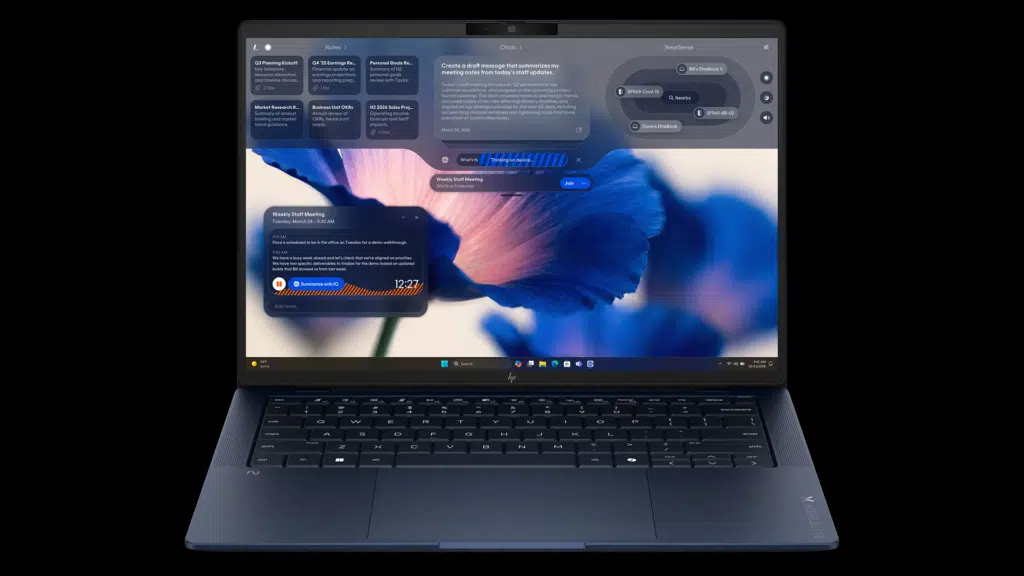
Windows 11 laptops powered by Snapdragon X2 Elite are expected in H1 FY 2026.
Snapdragon X2 Elite Pushes AI-PC Performance to New Heights
Analyst Take: The X2 Elite Extreme and X2 Elite represent a major step in Qualcomm’s aggressive push into the PC segment, and more specifically into the Copilot+ AI PC ecosystem. Built on Qualcomm’s proprietary 3nm Oryon CPU, redesigned Adreno GPU, and capable of delivering up to 80 TOPS on the NPU, they combine multi-core scale, strong AI performance, and high efficiency in thin-and-light systems. Benchmarks show gains across CPU, GPU, and NPU tests, though real-world performance in finished products will depend on how OEMs choose to implement the platforms.
CPU Advancements and Multi-Core Scaling
The X2 Elite Extreme packs 18 cores – 12 Prime cores running up to 4.4 GHz with boost up to 5.0 GHz simultaneously on two cores, plus six Performance cores at 3.6 GHz.
Early benchmarks report single-core scores above 4,000 and multi-core scores over 23,000 in Geekbench 6.5, representing an impressive 50% generation-over-generation (GoG) jump over previous Snapdragon X chips. Cinebench 2024 testing confirmed similar strength in multi-threaded tasks. With a 53 MB cache and 3nm design, Snapdragon X2 is much better positioned to go head-to-head with top x86 laptop processors and MacBooks.
NPU Throughput and AI Performance
AI performance takes center stage with the new 80 TOPS Hexagon NPU: Qualcomm claims a 78% GoG performance boost. To wit, tests showed Procyon AI Computer Vision scores above 4,100 and Geekbench AI over 88,000, significantly ahead of rival NPUs. Qualcomm’s new NPU can also handle concurrent AI workloads, including Copilot+ features, helping it scale across content creation, multimodal tasks, and on-device large language models. With nearly double the performance of older designs, Snapdragon X2 could help move AI on laptops from experimental to legitimate everyday use – assuming that more on-device AI applications finally start hitting the market soon. ISV pacing aside, this hardware is on-device AI-ready, and the Gog performance improvements are rightfully impressive.
GPU Redesign and Graphics Metrics
The updated Adreno GPU focuses on both efficiency and flagship visual experiences, delivering 2.3x better performance-per-watt than the previous generation. case in point: In 3DMark Solar Bay ray tracing, scores topped 90 – an 80% leap from the prior Snapdragon X, and up to 61% faster than some competitors. Steel Nomad Light results showed more than a 2x improvement over the first-gen X Elite. These gains point to stronger integrated graphics for gaming and creative workloads, especially with the Extreme model’s wider memory bandwidth.
While only time will tell if Qualcomm has completely resolved the Snapdragon X platform’s vulnerability when it comes to gaming with this iteration of the platform, these improvements signal two things: the first is that the Snapdragon X product team is laser-focused on addressing both perception and performance issues when it comes to gaming on Snapdragon X PCs. The second is that Qualcomm clearly understands that it has to get this part right, as a miss in PC gaming performance (let alone compatibility) could seriously damage the platform’s adoption on-ramp both in the short term and the long term. Perhaps less important but nowhere close to trivial: given Snapdragon’s lock on delivering flagship-tier gaming on Mobile devices, delivering the same level of compatibility and performance on PC is a matter of pride. Qualcomm doesn’t only need to achieve parity with its x86 competitors; it has to ensure that Snapdragon X delivers something better or unique on this front in order to have a good competitive PC gaming story.
A final thought about the GPU: Despite Qualcomm’s early challenges with gaming (and let’s remember that the Snapdragon X platform is barely a year old), the Snapdragon X2 Elite platform’s focus on both creators and heavy consumers of digital media is evident in the GPU’s extraordinary performance, which has been tuned for both.
Platform Features and Availability
On top of performance, Snapdragon X2 Elite brings Wi-Fi 7 with FastConnect 7800, 5G through the X75 Modem-RF system (up to 10 Gbps), and Snapdragon Guardian Technology for secure remote management.
Display support covers up to three 5K monitors at 60 Hz or three 4K monitors at 144 Hz, along with USB4 at 40 Gbps. Reference units showed 48 GB of LPDDR5X on a 192-bit bus, hinting at serious memory throughput.
With devices expected in H1 FY 2026, the timing gap between launch and availability could be a challenge as rivals advance during the same period, but I feel that as things stand now with the AI Pc refresh, Snapdragon X2 Elite and X2 Elite Extreme Edition slot Qualcomm extremely well against Intel, AMD, and Apple silicon.
What to Watch:
- Delivery of multi-day battery performance under mixed productivity, gaming, and AI workloads.
- Scaling of AI workloads beyond benchmarks into sustained enterprise and consumer applications.
- Graphics outcomes across mainstream gaming titles compared with synthetic benchmarks.
- System performance variability tied to OEM thermal design, memory bus width, and configurations.
- Price tiers for X2 Elite Extreme compared with standard X2 Elite systems and x86 alternatives.
See the complete press release on the Snapdragon X2 Elite announcement on the Qualcomm website.
Disclosure: Futurum is a research and advisory firm that engages or has engaged in research, analysis, and advisory services with many technology companies, including those mentioned in this article. The author does not hold any equity positions with any company mentioned in this article.
Analysis and opinions expressed herein are specific to the analyst individually and data and other information that might have been provided for validation, not those of Futurum as a whole.
Other insights from Futurum:
Qualcomm Q3 FY 2025 Earnings Beats Estimates, Driven by Auto and IoT Gains
Will MediaTek’s 2nm SoC Challenge Qualcomm and Samsung in Flagship Chips?
Qualcomm Debuts First Processor With Fully Integrated RFID Functionality
Image Credit: Qualcomm
Author Information

Olivier Blanchard is Research Director, Intelligent Devices. He covers edge semiconductors and intelligent AI-capable devices for Futurum. In addition to having co-authored several books about digital transformation and AI with Futurum Group CEO Daniel Newman, Blanchard brings considerable experience demystifying new and emerging technologies, advising clients on how best to future-proof their organizations, and helping maximize the positive impacts of technology disruption while mitigating their potentially negative effects. Follow his extended analysis on X and LinkedIn.