Analyst(s): Olivier Blanchard
Publication Date: January 16, 2026
Qualcomm’s presence at CES 2026 highlighted its commitment to pervasive intelligence, showcasing significant advancements across its Snapdragon platforms in mobile, PC, and automotive. The company emphasized a future in which AI processing is predominantly handled on-device, leading to faster, more secure, and more personalized user experiences. Key announcements focused on a new generation of neural processing units (NPUs) and a broadened ecosystem for its Snapdragon Digital Chassis, signaling a decisive shift toward smart, connected, and autonomous systems.
What is Covered in this Article:
- Qualcomm’s newest generation of Snapdragon Compute Platform for PCs, with massive leaps in AI performance.
- Expansion of the Snapdragon Digital Chassis into new vehicle tiers and commercial applications.
- Demos of next-generation generative AI models running entirely on-device, showcasing the power of the new Hexagon NPU.
- Strategic partnerships announced in the XR and IoT spaces to drive the development of the “Intelligence of Everything.”
The News: Qualcomm kicked off CES 2026 conversations around on-device AI with the unveiling of its next-generation flagship Snapdragon platform, designed to power premium smartphones and next-gen AI PCs. The new platform boasts a massively improved Hexagon NPU, capable of running sophisticated generative AI models, such as large language models (LLMs) and image generators, locally and efficiently. This marks a significant move away from cloud-centric AI, promising immediate response times, enhanced privacy, and lower operating costs for AI-powered services. The core message was clear: the device itself is becoming the primary AI engine, making intelligence a standard, ubiquitous feature rather than a premium service.
Complementing its mobile and computing announcements, Qualcomm dramatically expanded the scope of its Snapdragon Digital Chassis portfolio. The company introduced new solutions tailored for entry-level and mid-range vehicles, accelerating the adoption of connected and autonomous driving features across all vehicle segments. Furthermore, new collaborations with major automakers and Tier 1 suppliers were detailed, focusing on software-defined vehicles (SDVs) that leverage the Digital Chassis for everything from cockpit experiences to advanced driver-assistance systems (ADAS) and integrated cloud connectivity. This automotive strategy cements Qualcomm’s role as an essential partner in the industry’s transformation.
Qualcomm Unveils Future of Intelligence at CES 2026, Pushes the Boundaries of On-Device AI
Analyst Take: Qualcomm’s CES 2026 announcements validate the company’s early investments and pivot towards the on-device AI race, and highlight the progress of its transition from a mobile-first chipmaker to helping build the foundation of the “Intelligence of Everything.” Its stronghold in the still-growing automotive sector could also position Qualcomm uniquely well to expand to the robotics market, which was the central focus of this year’s CES.
Below were Qualcomm’s three main announcements:
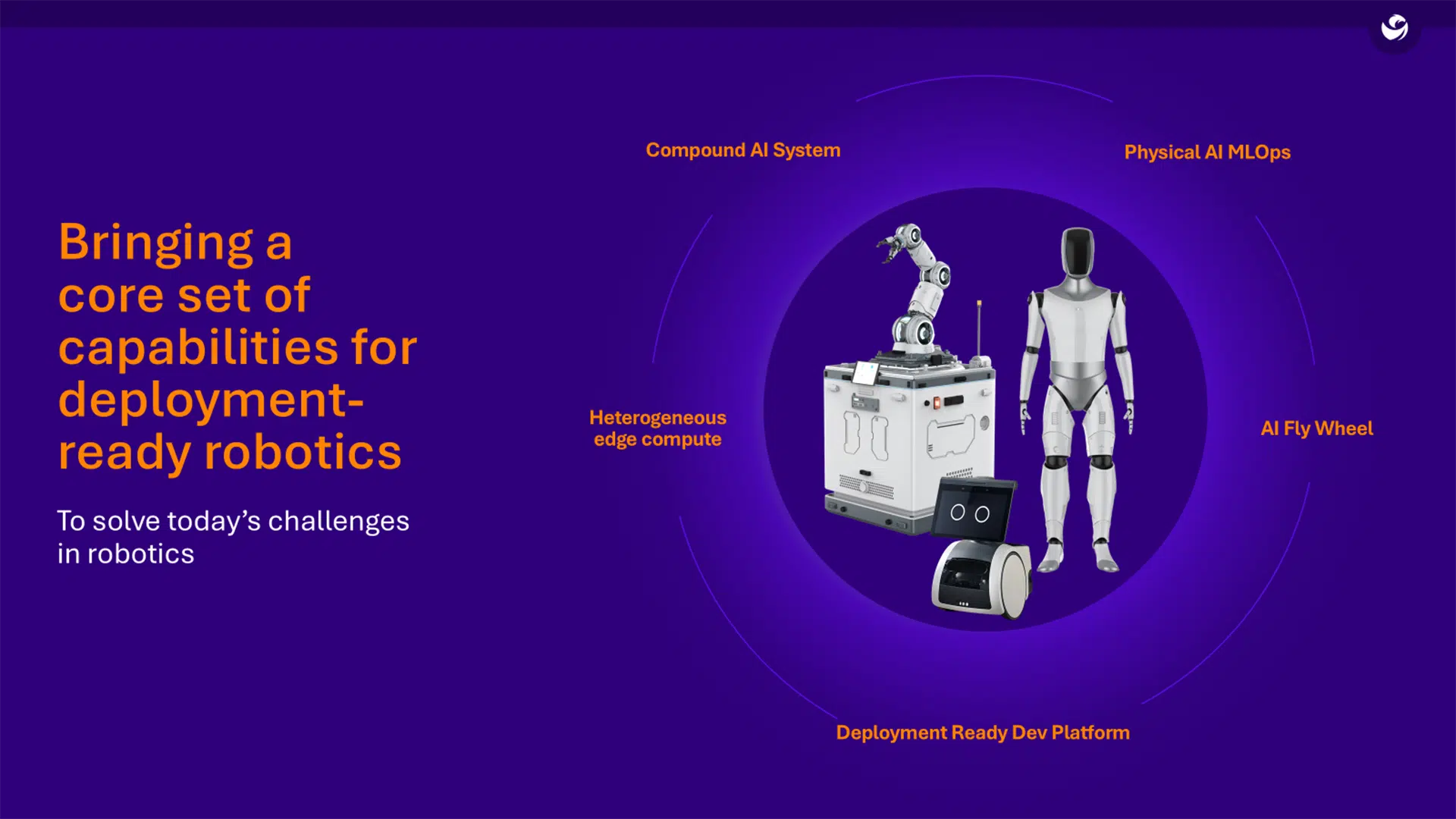
- Dragonwing IQ10 Series: A new 18-core CPU and full robotics stack designed for industrial AMRs and full-size humanoids. Partners like Figure are using this platform to power general-purpose humanoid robots.
- Snapdragon X2 Plus: A new PC chipset with an 80 TOPS NPU focused on “agentic” experiences where the PC can perform complex actions on behalf of the user.
- Snapdragon Digital Chassis: Expanded partnerships with Google and various automakers to bring Agentic AI to vehicles, allowing cars to proactively anticipate driver needs using generative AI.
AI PC Ecosystem Maturation
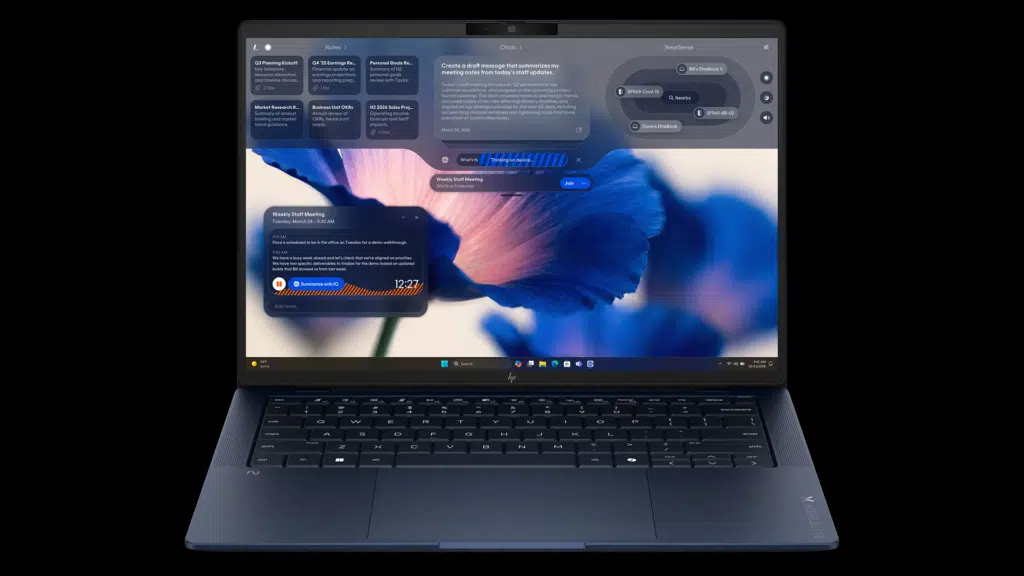
Qualcomm’s main announcement regarding the PC segment was Qualcomm Snapdragon X2 Plus. This new PC chipset features an 80 TOPS NPU (Trillions of Operations Per Second for the Neural Processing Unit), and is primarily focused on enabling agentic experiences – where the PC can perform complex, proactive actions on behalf of the user.
Snapdragon X2 Plus indicates the speed with which the AI PC SOC ecosystem is working its way towards maturity. With hardware capable of delivering increasingly impressive AI performance, developers can now build entirely new generations of productivity and creative software that relies on instantaneous, private, on-device AI. Qualcomm demonstrated a seamless workflow with popular creative applications, all benefiting from the massive NPU uplift, which will likely set the benchmark for the entire industry in 2026 and beyond.
Caveat: the software side of the industry has been relatively slow to jump on development for the NPU (and for Windows on Arm), particularly in the enterprise software segment, which continues to prioritize x86 architecture and GPU capabilities. Despite Qualcomm’s objectively impressive new SOCs and efforts to accelerate software development for Snapdragon X, Intel’s Core Ultra Series 3 (“Panther Lake”) at CES could take some of the wind out of Qualcomm’s sails, at least in the enterprise segment. While Snapdragon X2 Plus is designed to compete against Intel’s Core Ultra Series 3 (“Panther Lake”) and AMD’s Ryzen AI processors, and the X2 Plus leverages its battery life advantage and superior NPU TOPS rating (80 TOPS) to win over consumers – particularly as a hedge against Apple’s silicon, Intel’s Panther Lake specs look good enough to convince many enterprise IT decision-makers to stick with x86 for another year. In other words, the challenge for Qualcomm isn’t that Snapdragon X2 Plus isn’t enterprise-ready, and it certainly isn’t that Intel can match or even outperform X2 in battery efficiency; it is that, for many enterprise IT buyers, Panther Lake doesn’t have to be better than Snapdragon. It just has to come close. Why? Because the x86 ecosystem advantage, not raw performance, remains Qualcomm’s primary obstacle in the enterprise.
The Digital Chassis: A Foundational Layer for SDVs
Qualcomm focused its automotive announcements on “agentic AI” and the consolidation of vehicle architectures through the Snapdragon Digital Chassis. A primary highlight was the expansion of its decade-long collaboration with Google, with the stated aim of more deeply integrating Snapdragon platforms with Android Automotive OS (AAOS. The partnership focuses on creating a unified reference platform that leverages Gemini Nano to power proactive, voice-driven AI assistants.
To streamline development, Qualcomm introduced the Snapdragon vSoC (virtual System-on-Chip) on Google Cloud, which allows automakers to design and validate software-defined vehicles (SDVs) in a virtual environment before physical hardware is even available.
Qualcomm also showcased the real-world performance of its flagship Snapdragon Cockpit Elite and Snapdragon Ride Elite platforms. A major milestone was the debut of Leapmotor’s D19, the first mass-production vehicle to feature a central computer powered by dual Snapdragon Elite chips. This architecture unifies previously disparate domains—including the digital cockpit, ADAS, body control, and the vehicle gateway—into a single high-performance system. This shift toward “central compute” is designed to reduce system complexity and wiring costs while enabling the car to run complex multimodal AI models for both driver assistance and in-cabin experiences.
Qualcomm further asserted its market position by announcing new agreements with major global automakers and suppliers: The Volkswagen Group, for instance, signed a Letter of Intent to use the Snapdragon Digital Chassis as the primary tech provider for its future zonal SDV architecture. Qualcomm also highlighted its work with Sony Honda Mobility to power the Afeela prototype’s AI-driven interior and ADAS features.
With over 400 million vehicles already using Snapdragon solutions, these announcements signal Qualcomm’s evolution from a chip supplier to a comprehensive full-stack platform provider for the next generation of intelligent mobility.
Generative AI Demos on New Silicon
Qualcomm’s generative AI (GenAI) demonstrations at CES 2026 focused on the transition from “software-defined” to “AI-defined” vehicles. These demos highlighted how on-device AI can create more intuitive, proactive, and personalized in-cabin experiences.
- Proactive In-Cabin Assistants: Through a partnership with LG Electronics, Qualcomm demonstrated an AI Cabin Platform powered by Snapdragon Cockpit Elite. This system uses Vision Language Models (VLMs) to analyze the environment and the driver’s state. For example, if a car is merging and the driver is distracted, the AI can issue a specific voice alert: “A car is merging ahead. Please keep your eyes on the road”. The system can also use image generation models to create custom infotainment backgrounds based on real-world conditions. In one demo, if it’s snowing outside, the car generates a snowy-themed interface and suggests a “winter-themed” music playlist.
- Agentic AI and Natural Interactions: Collaborations with Google showcased “agentic AI” that handles complex, multi-step requests. A driver could ask to navigate to the office and stop for coffee and flowers along the way; the AI understands the intent and plans the entire route without needing specific addresses. Moving away from rigid voice commands, the new platforms also allow for natural dialogue. Drivers can simply say, “Hey, defrost my windscreen,” or have the car explain its own actions, such as, “I’m changing lanes now because I don’t want to sit behind this truck”.
- On-Device Processing: A major theme was performing these AI calculations on-device rather than in the cloud. This ensures that features like voice assistants and safety alerts remain functional even when the vehicle is offline (e.g., in a tunnel or remote area) while also keeping driver data private.
The Future of XR, IoT, and more
Qualcomm’s CES 2026 showcase for XR and IoT emphasized a shift from experimental prototypes to “Physical AI” and industrial-grade reliability. Leveraging recent acquisitions like Arduino and Edge Impulse, the company continues to position itself as a full-stack provider for the edge compute market (not merely a provider of silicon and SOCs, but a complete developer ecosystem as well).
Industrial and Embedded IoT (IE-IoT)
- Dragonwing Q-Series: Qualcomm launched the Dragonwing Q-8750 and Q-7790 processors, specifically designed for secure on-device AI in drones, smart cameras, and industrial vision systems. The Q-7790 delivers 24 TOPS of NPU performance, allowing devices like AI TVs and industrial sensors to perform complex inference without a cloud connection.
- Physical AI and Robotics: The new Dragonwing IQ10 was introduced as the “brain” for high-performance robotics, including humanoids and autonomous mobile robots (AMRs). It features an 18-core CPU and supports vision-language-action (VLA) models, enabling robots to understand natural human instructions and perform generalized tasks in logistics and manufacturing. (A deeper dive on this is coming.)
- Developer Accessibility: To lower the barrier for the “long-tail” IoT market, Qualcomm integrated Arduino and Edge Impulse into its workflow, providing streamlined MLOps and making high-end AI compute accessible to millions of independent developers.
Connectivity and Wi-Fi 8
- Reliability Over Speed: Qualcomm highlighted its early leadership in the Wi-Fi 8 (802.11bn) transition. Unlike previous generations focused on peak speeds, Wi-Fi 8 at CES 2026 was pitched as the “reliability generation,” prioritizing 25% lower latency and stable performance in dense environments like smart factories.
- 5G RedCap for Scaling: The company also introduced a new 5G RedCap modem (A10 5G) to help scale cellular connectivity across a wider range of lower-cost IoT and automotive devices, ensuring safety-critical systems remain connected.
Extended Reality (XR) and Computing
- Snapdragon X2 Plus: While not a dedicated headset chip, the newly announced Snapdragon X2 Plus for PCs features an 80 TOPS Hexagon NPU, which is critical for the AI-driven “agentic” experiences that bridge the gap between PCs and XR environments.
- Holographic Communications: Qualcomm showcased advancements in holographic communications through partnerships aimed at 6G-XR, focusing on low-latency, high-fidelity spatial interactions.
What to Watch:
- The immediate market adoption of the new Snapdragon Compute Platform by major PC OEMs and the resulting software innovation.
- Automaker commitments and product rollout timelines for the scaled Digital Chassis solutions.
- How quickly rival chipmakers can close the on-device AI performance gap demonstrated by Qualcomm’s latest NPU.
Declaration of generative AI and AI-assisted technologies in the writing process: This content has been generated with the support of artificial intelligence technologies. Due to the fast pace of content creation and the continuous evolution of data and information, The Futurum Group and its analysts strive to ensure the accuracy and factual integrity of the information presented. However, the opinions and interpretations expressed in this content reflect those of the individual author/analyst. The Futurum Group makes no guarantees regarding the completeness, accuracy, or reliability of any information contained herein. Readers are encouraged to verify facts independently and consult relevant sources for further clarification.
Disclosure: Futurum is a research and advisory firm that engages or has engaged in research, analysis, and advisory services with many technology companies, including those mentioned in this article. The author does not hold any equity positions with any company mentioned in this article.
Analysis and opinions expressed herein are specific to the analyst individually and data and other information that might have been provided for validation, not those of Futurum as a whole.
Other insights from Futurum:
At CES, NVIDIA Rubin and AMD “Helios” Made Memory the Future of AI
Executive Summary: Don’t Expect an Acceleration in the Rate of AI PC Adoption in 2026
Image Credit: Qualcomm
Author Information

Olivier Blanchard is Research Director, Intelligent Devices. He covers edge semiconductors and intelligent AI-capable devices for Futurum. In addition to having co-authored several books about digital transformation and AI with Futurum Group CEO Daniel Newman, Blanchard brings considerable experience demystifying new and emerging technologies, advising clients on how best to future-proof their organizations, and helping maximize the positive impacts of technology disruption while mitigating their potentially negative effects. Follow his extended analysis on X and LinkedIn.