Analyst(s): Ray Wang, Daniel Newman
Publication Date: August 1, 2025
Arm’s Q1 FY26 results show the firm’s record royalty growth and continuous expansion in cloud and edge.
What is Covered in this Article:
- Q1 FY 2026 financial results
- Arm’s continuous growth in cloud, data center, and AI
- Expanding Compute Subsystem (CSS) adoption is driving better growth
- Diversifying business portfolio to edge AI and automotive beyond smartphones
- Arm’s ambition for its silicon
- Outlook for Q2 FY 2026
The News: Arm Holdings reported first quarter fiscal 2026 revenue of $1.053 billion, up 12% YoY, marking its best Q1 ever and surpassing the midpoint of guidance. Royalty revenue set a first-quarter record at $585 million, up 25% from the prior year, reflecting strong adoption of Armv9 architectures, the ramp of CSS-based chips, and increasing use of Arm silicon in data centers, automotive, and IoT markets. License and other revenue were $468 million, down 1% YoY due to normal variability in timing and value of large license agreements.
Annualized contract value (ACV) climbed 28% YoY to $1.528 billion, buoyed by three new CSS deals and expanded custom design service agreements, including a major multiyear GPU commitment from a top-tier smartphone OEM and deeper collaboration with SoftBank. Remaining performance obligations (RPO) were flat sequentially at $2.23 billion, with 27% expected to be recognized as revenue in the coming 12 months.
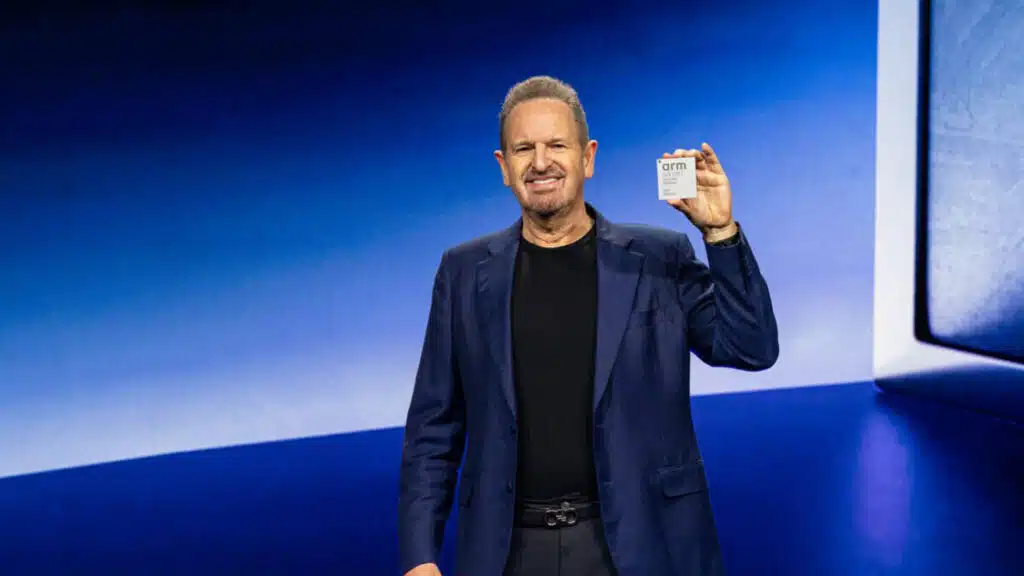
“Arm is powering AI workloads everywhere with unmatched performance and energy efficiency,” said Rene Haas, CEO. “Our Q1 FYE26 results exceeded $1 billion in revenue for the second straight quarter as royalties grew across all target end markets, demonstrating the strength of Arm as the AI platform of choice – from the cloud to the smallest edge devices.”
Arm Q1 FY26 Earnings: Revenue Surpasses $1B on Surging AI and Cloud Demand
Analyst Take: Arm delivered a solid start to fiscal 2026, with record-setting Q1 revenue and accelerating royalty growth underscoring the company’s critical role in powering the AI transformation across verticals. The company’s momentum is fueled by its broad ecosystem, deepening customer relationships, and the shift toward higher-value licensing and next-generation platform adoption.
The 25% increase in royalty revenue reflects expanded penetration of Armv9 and CSS platforms, especially in flagship smartphones and hyperscaler data centers. Arm’s success is also visible in its ability to command higher royalty rates, particularly as customers migrate to newer generations of its architecture and integrated solutions.
Licensing revenue was $468 million as companies continue to make Arm the AI platform of
choice. Custom silicon on Arm is driving AI scale in the cloud. According to management, now more than 70,000 enterprises run AI workloads on Arm Neoverse data center chips, a 40% increase year-on-year and a 14x surge since 2021. A key development will be covered below.
Management’s commentary also confirms that Arm’s addressable market continues to broaden, with new wins in cloud, automotive, and IoT building a robust, diversified revenue foundation. The company’s decision to double down on R&D investment signals confidence in the durability of demand for Arm-based compute in AI and custom silicon, as well as the firm’s market potential in the future.
Cloud, Data Center, and AI Demand Accelerate Revenue Growth
The quarter’s standout metric is the 25% YoY royalty revenue increase, dwarfing overall industry growth and propelled by the continued ramp of Armv9 in smartphones and cloud compute. Arm’s cloud presence is particularly significant: Neoverse CPUs are now expected to reach nearly 50% share at top hyperscalers in 2025, up from 18% a year ago. This is driven by increasing adoption of Arm architecture at AWS, Google, Microsoft, and NVIDIA. AI workloads—both inference and training—are increasingly shifting to Arm-based custom silicon. Arm-based silicon also demonstrates great energy efficiency compared to x86-based solutions from Intel or AMD, with NVIDIA Grace Blackwell cited as delivering 25x greater energy efficiency than prior x86-based systems.
NVIDIA in particular. Arm had no presence in the previous-generation Hopper GPUs, which relied on x86-based host systems. In the new Blackwell series, however, Arm’s Grace CPUs now command virtually the entire CPU share, powering Blackwell-series GPU, including NVIDIA’s most advanced officerings such as GB200 and GB300 platforms.
As energy efficiency is vital for silicon in AI hardware in data centers, the company is expected to continue the current momentum to capture the fast-growing data center market opportunities in the years to come, especially given the increasing adoption from leading hyperscalers and AI chip designers, outpacing the traditional competitors’ offer x86-based systematic offerings in the era of AI.
Next-Generation Compute Subsystems Drive Higher Value
Compute Subsystem (CSS) adoption is another major theme, representing both technical and commercial inflection. Arm signed three new CSS licenses in Q1, including next-generation upgrades from existing customers, and the CSS pipeline now totals 16 licenses with 10 companies. CSS-based designs deliver significantly higher royalty rates: compared to earlier generations, CSS rates now exceed 10% of ASP, double the prior Armv9 rates, and roughly quadruple legacy v8 rates. As complexity and time-to-market pressures grow, CSS is becoming the default for fast-moving customers, boosting both Arm’s royalty streams and ecosystem stickiness. The platform advantages of Arm are consolidating.
CEO Rene Haas: “Our first generation of CSS is now in the market with five customers and is delivering double the royalty of Armv9. We signed three additional CSS licenses this quarter with existing CSS customers, including 2 for the data center and 1 for PCs, more than doubling our CSS licenses from a year ago.”
Edge AI, Automotive, and Smartphone Innovation Expand TAM
Arm is capitalizing on new market opportunities as AI workloads proliferate to the edge and into verticals like automotive and IoT. The Ethos-U85 NPU and Scalable Matrix Extensions enable on-device AI for image recognition, chat, and advanced use cases, with leading OEMs committed to Arm architecture for multi-year innovation cycles. In automotive, the Zena CSS platform’s early wins underscore the urgency among OEMs to accelerate next-generation, AI-driven vehicle compute.
Meanwhile, mobile remains a pillar: new launches by Xiaomi’s Xring O1 SoC and Samsung’s Exyno 2500 and long-term GPU agreements reinforce Arm’s leadership in the premium smartphone market.
As Arm’s business beyond smartphones continues to improve, the firm’s portfolios are healthily diversifying in front of everyone, which should be a thing that investors would like to see and expand the firm’s growth potential, especially as we approach the era of “physical AI.”
Exploring its Own Silicon
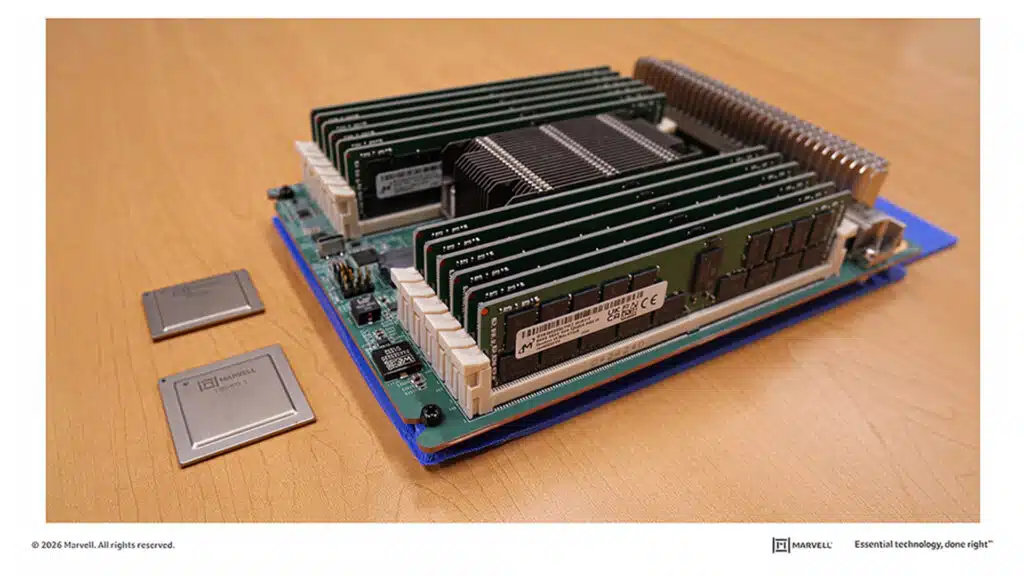
Another interesting thing to watch is that the management is implying the firm’s ambition to develop its own chip despite not yet providing many details. It is previously reported that Arm is looking to develop its own chip, which sparked some concerns about Arm’s relationship with any of its customers. While the concern is reasonable, we think that if Arm can develop competitive offerings and attract major customers tackling the right workloads, it will provide additional upside growth opportunities for the companies. This is a key development that we will continue to monitor closely and analyze in our future coverage on the company.
Some notable commentaries by the management regarding this issue during the call include:
“We are continuing to explore the possibility of moving beyond our current platform into additional compute subsystems, chiplets, and potentially full end solutions,” said CEO Rene Haas
“Inside the company, we have either insight or access to all the expertise and technologies we would need to design, implement, and have a chiplet, for example, manufactured,” Rene Haas added.
Guidance and Final Thoughts
Looking to Q2, Arm expects revenue between $1.01B and $1.11B, with YoY growth of roughly 25% at the midpoint. Management signaled flat sequential growth in royalties and licensing but reiterated high confidence in healthy development for the full year. The company will continue aggressive investment in R&D to support its expanding customer base and capitalize on the secular demand for AI compute across cloud, edge, and embedded markets.
Despite the firm’s high valuation, we continue to believe Arm is exceptionally well-positioned at the heart of the AI revolution. Combining a robust developer ecosystem, broadening customer pipeline, and the ability to deliver differentiated performance and energy efficiency across devices sets the stage for sustained revenue and margin expansion.
See the full press release on Arm’s Q1 FY26 financial results on the company website.
Declaration of generative AI and AI-assisted technologies in the writing process: During the preparation of this work, the author(s) used Futurum’s generative AI tool to summarize the earnings data and the earnings call transcript. After using this tool/service, the author(s) reviewed and edited the content as needed and take full responsibility for the publication’s content.
Disclosure: Futurum is a research and advisory firm that engages or has engaged in research, analysis, and advisory services with many technology companies, including those mentioned in this article. The author does not hold any equity positions with any company mentioned in this article.
Analysis and opinions expressed herein are specific to the analyst individually and data and other information that might have been provided for validation, not those of Futurum as a whole.
Other insights from Futurum:
TSMC Q2 FY 2025 Earnings: Too Impressive To Be True
ASML Q2 FY 2025 Earnings Reflect Strong Demand, but Outlook Clouded by Future Uncertainty
Author Information

Ray Wang is the Research Director for Semiconductors, Supply Chain, and Emerging Technology at Futurum. His coverage focuses on the global semiconductor industry and frontier technologies. He also advises clients on global compute distribution, deployment, and supply chain. In addition to his main coverage and expertise, Wang also specializes in global technology policy, supply chain dynamics, and U.S.-China relations.
He has been quoted or interviewed regularly by leading media outlets across the globe, including CNBC, CNN, MarketWatch, Nikkei Asia, South China Morning Post, Business Insider, Science, Al Jazeera, Fast Company, and TaiwanPlus.
Prior to joining Futurum, Wang worked as an independent semiconductor and technology analyst, advising technology firms and institutional investors on industry development, regulations, and geopolitics. He also held positions at leading consulting firms and think tanks in Washington, D.C., including DGA–Albright Stonebridge Group, the Center for Strategic and International Studies (CSIS), and the Carnegie Endowment for International Peace.

Daniel is the CEO of The Futurum Group. Living his life at the intersection of people and technology, Daniel works with the world’s largest technology brands exploring Digital Transformation and how it is influencing the enterprise.
From the leading edge of AI to global technology policy, Daniel makes the connections between business, people and tech that are required for companies to benefit most from their technology investments. Daniel is a top 5 globally ranked industry analyst and his ideas are regularly cited or shared in television appearances by CNBC, Bloomberg, Wall Street Journal and hundreds of other sites around the world.
A 7x Best-Selling Author including his most recent book “Human/Machine.” Daniel is also a Forbes and MarketWatch (Dow Jones) contributor.
An MBA and Former Graduate Adjunct Faculty, Daniel is an Austin Texas transplant after 40 years in Chicago. His speaking takes him around the world each year as he shares his vision of the role technology will play in our future.