Analyst(s): Brendan Burke
Publication Date: January 16, 2026
GlobalFoundries plans to acquire Synopsys’ ARC Processor IP business to expand its capabilities in specialized silicon for Physical AI. This realignment allows Synopsys to focus on its Silicon to Systems strategy, emphasizing foundation IP and AI-driven design engineering.
What is Covered in this Article:
- Strategic Divestiture: Synopsys exits the processor IP market to focus resources on its interface and foundation IP roadmaps.
- Portfolio Transfer: GlobalFoundries (GF) acquires the ARC Processor IP lines, along with ASIP Designer and Programmer tools.
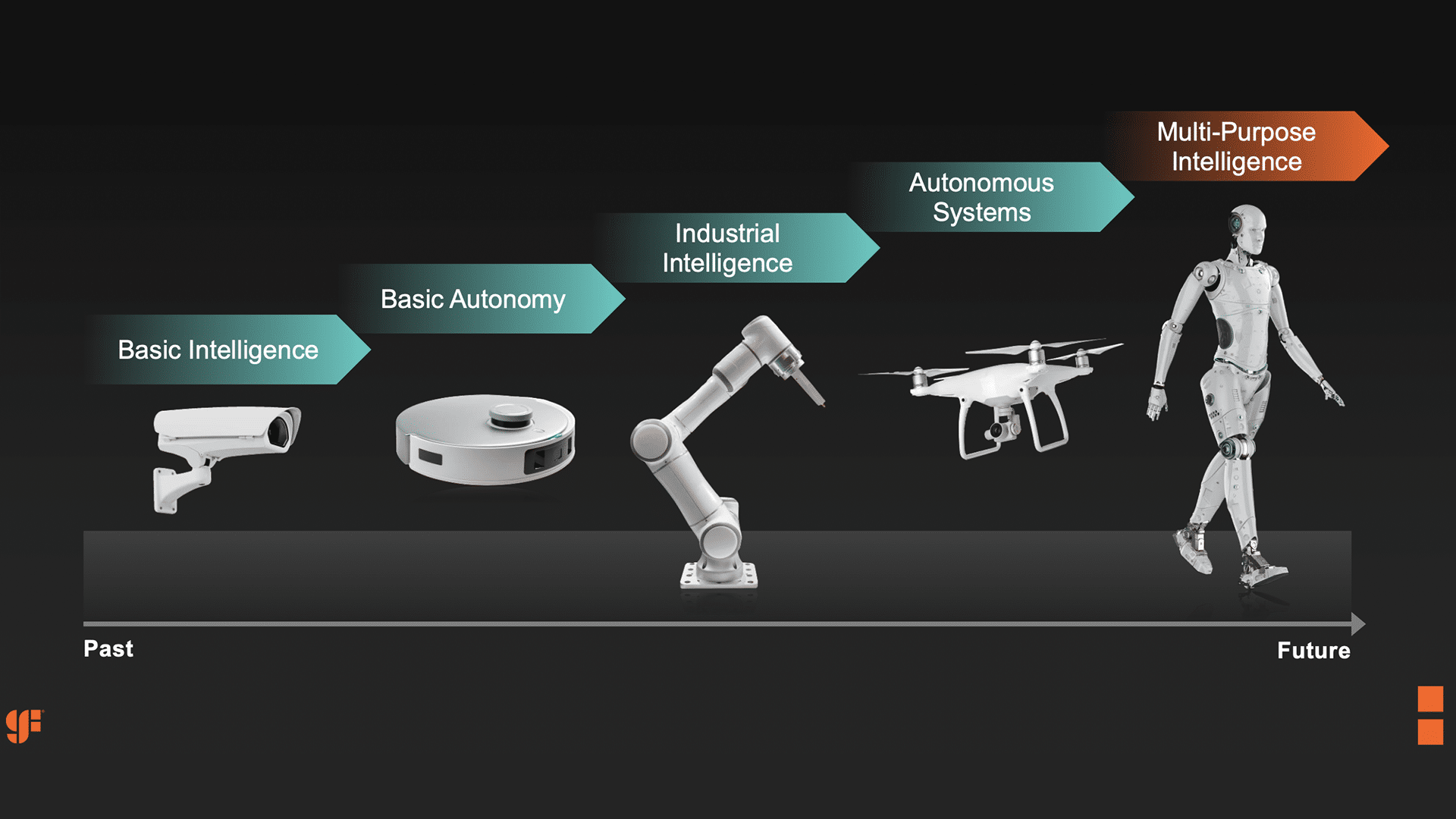
- Physical AI Roadmap: GF integrates these assets with its MIPS subsidiary to deliver a comprehensive IP suite tailored for event-driven applications like robotics and wearables.
- Specialized Silicon Growth: Why the unbundling of AI silicon is essential for the next decade of Physical AI performance.
The News: On January 14, 2026, Synopsys and GlobalFoundries (GF) announced a definitive agreement for GF to acquire Synopsys’ Processor IP Solutions business. The transaction includes Synopsys’ ARC processor portfolio covering ARC-V (RISC-V), ARC-Classic CPU, DSP, and Neural Network Processing Unit (NPU) IP, and associated software tools like ARC MetaWare Development Toolkits. GF will also acquire Synopsys’ ASIP Designer and ASIP Programmer tools, which automate the design of application-specific instruction-set processors. The transaction is expected to close in the second half of 2026.
Synopsys and GlobalFoundries Reshape Physical AI Through Processor IP Unbundling
Analyst Take: This acquisition is further evidence of the unbundling of AI silicon. As AI transitions from cloud-based chatbots into Physical AI machines, the industry is moving away from a one-size-fits-all processor approach. Success in the next decade of semiconductor growth will be defined by how efficiently a chip can handle specific frontier AI workloads rather than raw throughput.
Synopsys: Becoming the Connective Tissue of AI
Synopsys is refining its portfolio to focus on being the foundational platform for the entire semiconductor industry. By divesting its processor IP, the company removes a potential conflict of interest, transforming into a neutral partner that can provide EDA tools and interface IP for any processor ecosystem.
This move aligns with Synopsys’ ‘Silicon to Systems’ strategy, which has been significantly expanded by its acquisition of Ansys. Rather than competing in the processor core market, Synopsys is doubling down on the high-speed interface IP and foundation logic libraries required for complex multi-die and chiplet designs. This is critical as hyperscalers and OEMs increasingly design their own specialized silicon to bypass off-the-shelf limitations.
Beyond IP, Synopsys is deepening its ecosystem through strategic partnerships, most notably with NVIDIA. By integrating NVIDIA Omniverse technology into its simulation products, Synopsys is enabling the creation of advanced digital twins to accelerate the development of physical AI systems.
GlobalFoundries: A Foundry-Plus for Physical AI
For GlobalFoundries, this acquisition is a pivot toward becoming a comprehensive provider of Physical AI solutions. By merging the ARC and MIPS portfolios, GF can now offer customers a complete suite of processor IP that is pre-optimized for its own manufacturing processes. Complimenting MIPS’ success in automotive sensor fusion, ARC Processor IP serves a range of edge applications including low-power sensing, automotive safety, and embedded machine vision. The ARC NPU is optimized for both computer vision and LLMs and complies with functional safety standards, which is essential for automotive and industrial robotics.
The inclusion of Synopsys’ ASIP (Application-Specific Instruction-set Processor) tools is a critical component of this strategy. These tools allow designers to automate the creation of specialized silicon tailored to unique workloads, which is essential for achieving the performance and power efficiency required for real-time, event-driven applications. GF’s ‘foundry plus’ model lowers the barrier for entry for customers building next-generation AI-enabled devices, positioning GF to address the humanoid robotics market and capture a larger share of the $18B+ Physical AI market by 2030, according to the company’s estimates.
A Strategic Unbundling: Specialized Hardware Meets Neutral Software
The divestiture of Synopsys’ processor IP marks a definitive shift toward a specialized silicon market, characterized by the unbundling of processor architecture from design tools. This strategic separation allows Synopsys to serve as a neutral, system-level orchestrator while GlobalFoundries provides the hardware blueprints and manufacturing necessary for those systems to interact with the physical world. By pushing the market away from a one-size-fits-all model for AI computing, both companies are better positioned to support an ecosystem increasingly defined by workload-specific architectures rather than a single dominant CPU standard.
What to Watch:
- MIPS and ARC Integration: The success of GF’s strategy depends on how seamlessly it can integrate the ARC portfolio into its MIPS subsidiary and existing manufacturing flows.
- RISC-V Ecosystem Maturity: As ARC-V moves to GF, its adoption will serve as a bellwether for whether foundry-backed guardrails can make RISC-V a dominant force in specialized silicon.
- EDA Neutrality Gains: Look for whether Synopsys gains more traction with Tier 1 customers who previously viewed its processor IP as a competitive threat.
- ASIP Tooling Adoption: Watch the uptake of Synopsys’ ASIP Designer tools under GF. If GF successfully democratizes application-specific processor design, we will see a surge in niche specialized silicon for industrial sensors.
- Customer Reaction: Will established ARC customers follow the IP to GF, or will they seek out independent RISC-V providers to maintain foundry flexibility?
See the complete press release about GlobalFoundries’ acquisition of ARC Processor IP on the Synopsys website.
Disclosure: Futurum is a research and advisory firm that engages or has engaged in research, analysis, and advisory services with many technology companies, including those mentioned in this article. The author does not hold any equity positions with any company mentioned in this article.
Analysis and opinions expressed herein are specific to the analyst individually and data and other information that might have been provided for validation, not those of Futurum as a whole.
Other insights from Futurum:
SiMa.ai and Synopsys Unveil Automotive AI SoC Blueprint. Is Pre-Silicon the New Baseline?
Synopsys Wraps Up Ansys Acquisition, Targeting Integrated Design Solutions
GlobalFoundries Advances Energy Efficiency with Efficient Partnership
Image Credit: GlobalFoundries
Author Information

Brendan is Research Director, Semiconductors, Supply Chain, and Emerging Tech. He advises clients on strategic initiatives and leads the Futurum Semiconductors Practice. He is an experienced tech industry analyst who has guided tech leaders in identifying market opportunities spanning edge processors, generative AI applications, and hyperscale data centers.
Before joining Futurum, Brendan consulted with global AI leaders and served as a Senior Analyst in Emerging Technology Research at PitchBook. At PitchBook, he developed market intelligence tools for AI, highlighted by one of the industry’s most comprehensive AI semiconductor market landscapes encompassing both public and private companies. He has advised Fortune 100 tech giants, growth-stage innovators, global investors, and leading market research firms. Before PitchBook, he led research teams in tech investment banking and market research.
Brendan is based in Seattle, Washington. He has a Bachelor of Arts Degree from Amherst College.