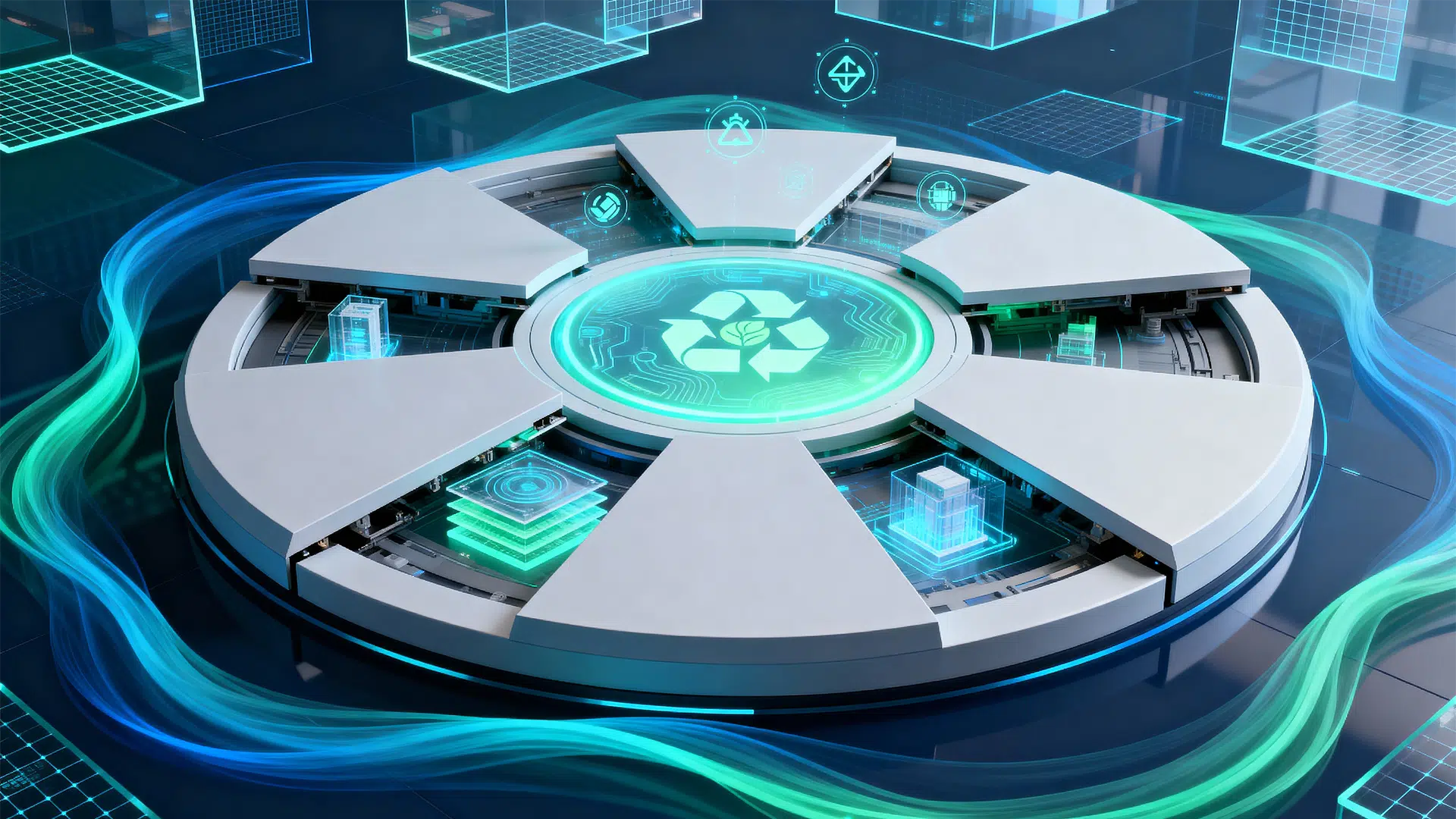
Enterprises are facing mounting pressure from both economic and environmental forces as traditional linear IT models—extract, manufacture, use, dispose—drive escalating costs, operational inefficiency, and growing e-waste burdens. Global e-waste is projected to exceed 80 million tons by 2030, and aging hardware fleets are compounding financial, regulatory, and security risks for organizations. To address these challenges, Dell Technologies is reshaping hardware lifecycle strategy with a focus on circularity, modularity, and serviceability, demonstrating how sustainable product design can meaningfully reduce TCO, improve productivity, and deliver measurable ROI.
To meet today’s operational, financial, and sustainability demands, organizations must adopt technologies and lifecycle models that simplify device management, extend hardware longevity, and reduce friction across repair, refresh, and recycling workflows. Dell’s Design for Serviceability (DfS) principles—rooted in modular components, simplified access, integrated telemetry, and tool-less repair—enable faster disassembly, lower support costs, and higher device uptime. Combined with offerings such as Dell APEX PC-as-a-Service (PCaaS), ProSupport, ProDeploy, and Lifecycle Hub, enterprises gain a unified path to enhanced performance, predictable costs, and verifiable circularity outcomes rooted in real business value.
In our latest market brief,
Dell’s Strategic Convergence: How Innovation in Sustainable Product Design Delivers Quantifiable ROI and Reduced TCO, completed in partnership with Dell Technologies, Futurum Research explores the accelerating shift toward circular IT models and highlights how design innovations—such as modular USB-C ports, reduced mainboard footprints, end-user-replaceable batteries, and advanced repair automation—directly strengthen operational efficiency and financial performance. The brief examines how Dell’s integrated services ecosystem, combined with PCaaS and robust sustainability commitments, equips enterprises with a scalable, compliant, and profitable roadmap for fleet modernization.
In this brief, you will learn:
- How linear IT economic models drive higher TCO, operational risk, and environmental impact
- Ways Dell’s Design for Serviceability (DfS) reduces repair complexity, downtime, and lifecycle support costs
- How modular and repairable PC designs—such as redesigned mainboards and serviceable I/O boards—extend product longevity and reduce e-waste
- Insights into Dell’s integrated lifecycle services, including Asset Recovery Services, Lifecycle Hub, ProSupport, and PCaaS
- How circular design and consumption models deliver quantifiable ROI, improved NPV, and reduced logistics costs over a three-year horizon
If you are interested in learning more, be sure to download your copy of
Dell’s Strategic Convergence: How Innovation in Sustainable Product Design Delivers Quantifiable ROI and Reduced TCO today.
Download Now