
Analyst(s): Olivier Blanchard
Publication Date: February 24, 2026
An analysis of Intel’s “Panther Lake” Core Ultra Series 3 processor, built on the 18A process node, and its strategic implications for restoring Intel’s leadership in the enterprise PC processor segment, particularly in the context of the emerging AI PC market.
Panther Lake, leveraging the advanced 18A process node, the powerful NPU 5 (50 TOPS), and Xe3 integrated graphics, successfully positions Intel to deliver a “best-of-both-worlds” value proposition for the enterprise. It achieves near-parity in power efficiency with leading ARM competitors while maintaining superior x86 compatibility, integrated gaming performance, and robust total system AI capabilities. This platform is a critical milestone for validating Intel’s manufacturing roadmap and halting market share erosion in the crucial thin-and-light segment.
Key Findings and Strategic Context
Validation of the 18A Process Node is a Critical Success: Panther Lake is the first high-volume client platform built on Intel’s cutting-edge 18A process, which features RibbonFET (Intel’s first GAA transistor) and PowerVia (backside power delivery). This architectural leap delivers up to a 15% improvement in performance per watt over Intel 3, a figure essential for closing the efficiency gap with ARM competitors. The successful execution and yield of 18A are not just product wins but fundamental validation of Intel’s aggressive “five nodes in four years” manufacturing strategy, crucial for attracting foundry customers and cementing long-term competitive positioning.
The Definitive x86 AI PC Platform: Panther Lake firmly establishes the standard for the x86 AI PC.
- NPU 5 Leadership: The third-generation NPU delivers 50 dedicated TOPS, meeting the strict Copilot+ PC requirements and enabling demanding, persistent AI workloads locally.
- Total System TOPS: The platform achieves up to 180 total system TOPS (CPU + GPU + NPU), making it one of the most versatile and thermally efficient platforms for AI.
- Agentic Workflows: This capability enables new features such as Windows Recall v2.0 (with a secure, local semantic index), bidirectional real-time translation, and, significantly, the ability to run 70-billion-parameter LLMs locally, facilitating complex, multi-step “Agentic” workflows in a private, secure environment.
Best-of-Both-Worlds Value Proposition for Enterprise: For IT decision-makers, Panther Lake provides the most compelling reason in years to commit to x86 in the mobile segment:
- Battery Life Parity: Reference designs demonstrate over 27 hours of video playback, effectively rendering moot the marginal battery life advantage held by ARM-based systems for the vast majority of users who prioritize 8–10 hours of active work.
- x86 Compatibility: The platform retains the universal software compatibility and deep enterprise-specific ecosystem support of x86, removing a significant adoption hurdle associated with ARM’s emulation layer.
Integrated Graphics and Media Subsystem Overhaul: The integrated Xe3 (Arc B-series) iGPU delivers a substantial performance boost, elevating integrated graphics from “competent” to a “performance competitor.”
- Gaming Performance: The flagship Arc B390 iGPU delivers performance comparable to a discrete NVIDIA RTX 4050 laptop GPU, achieving nearly double the frame rates of mainstream AMD competitors in some titles.
- AI-Enhanced Upscaling: Using XeSS 3 Multi-Frame Generation (3x frame generation) in tandem with the NPU provides a noticeable UX upgrade for AAA gaming on thin-and-light devices.
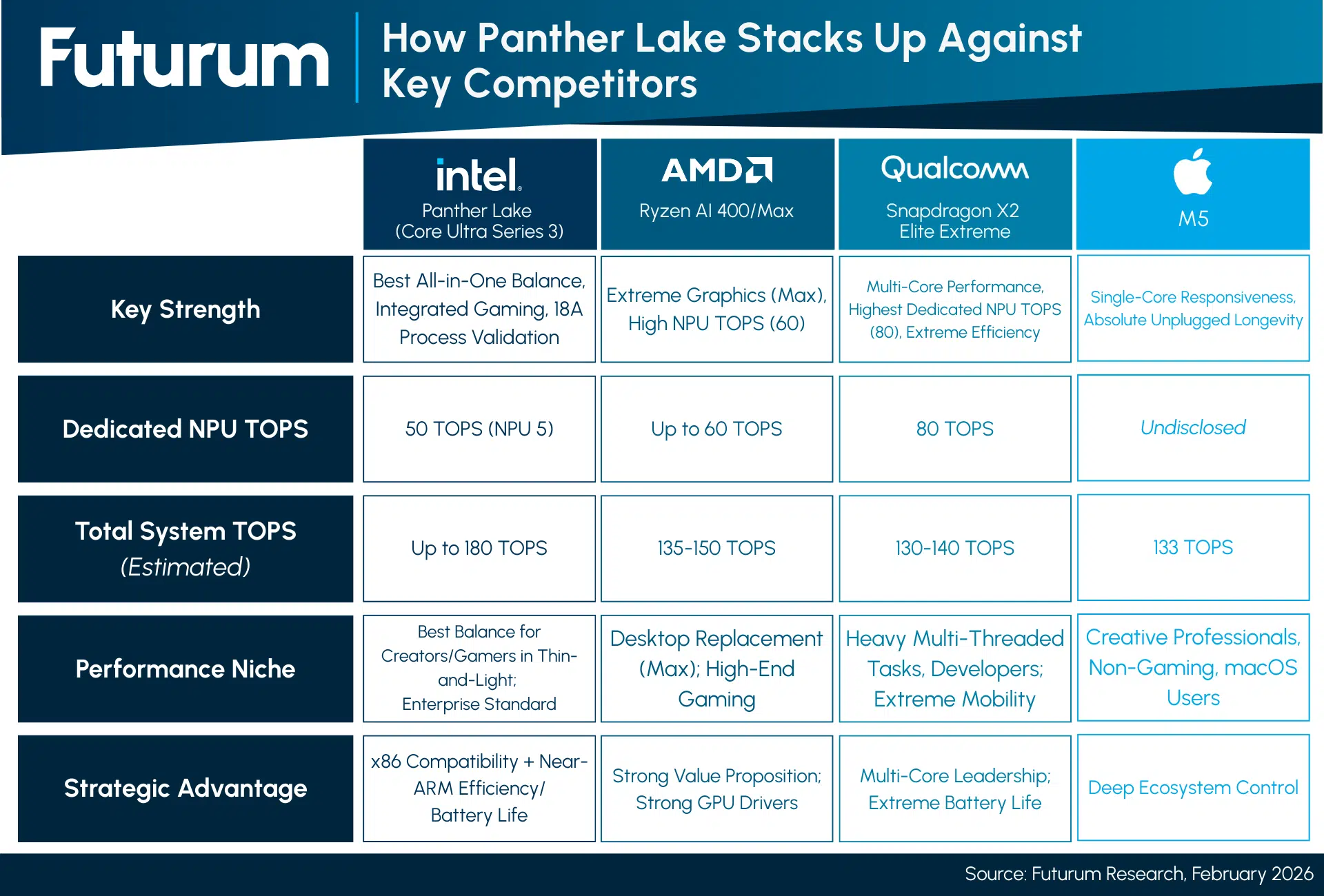
Figure 1: How Panther Lake Stacks Up Against Key Competitors
Conclusion on Competitiveness
Panther Lake provides the best “all-in-one” solution for the mainstream enterprise and premium consumer markets by balancing superior integrated gaming/creation with massive multi-core speed and near-parity battery life. While Qualcomm still leads in raw multi-core speed and dedicated NPU TOPS, AMD’s high-end chips offer faster extreme graphics, and Intel’s platform minimizes trade-offs while maintaining critical x86 software compatibility.
Challenges and Future Watch Items
Despite the platform’s strengths, Intel faces significant execution risks:
- 18A Execution Risk: Any slip in mass production yield or performance of the 18A node will directly impact product availability and competitiveness, threatening Intel’s reputational momentum.
- The AI Software Tipping Point: The utility of the 50 TOPS NPU depends entirely on widespread, daily use by developers. If NPU-aware application adoption remains slow, the high TOPS metric risks becoming an unutilized marketing number. Intel must dramatically accelerate its software engagement efforts.
- Sustaining Efficiency: While near-parity is a massive win, Intel must continuously demonstrate superior idle and light-load power consumption – a historical weak spot for x86 – to prevent ARM from regaining the narrative of absolute efficiency.
What to Watch:
- Process Node Yield: Monitor the successful, rapid ramp-up of the 18A node.
- Real-World Benchmarks: Independent reviews determining if Panther Lake’s battery life claims hold up against ARM competitors in mixed, real-world usage.
- NPU Software Utilization: The release rate of major productivity suites (e.g., Microsoft, Adobe) with explicit NPU offloading capabilities.
- OEM Adoption: The breadth and depth of Tier 1 OEM design wins, particularly in high-margin flagship commercial and consumer SKUs.
Futurum clients can read more in the Futurum Intelligence Platform, and non-clients can learn more here: Intelligence Devices Practice.
About the Futurum Intelligent Devices Practice
The Futurum Intelligent Devices Practice provides actionable, objective insights for market leaders and their teams so they can respond to emerging opportunities and innovate. Public access to our coverage can be seen here. Follow news and updates from the Futurum Practice on LinkedIn and X. Visit the Futurum Newsroom for more information and insights.
Author Information

Olivier Blanchard is Research Director, Intelligent Devices. He covers edge semiconductors and intelligent AI-capable devices for Futurum. In addition to having co-authored several books about digital transformation and AI with Futurum Group CEO Daniel Newman, Blanchard brings considerable experience demystifying new and emerging technologies, advising clients on how best to future-proof their organizations, and helping maximize the positive impacts of technology disruption while mitigating their potentially negative effects. Follow his extended analysis on X and LinkedIn.
