
Analyst(s): Brad Shimmin
Publication Date: December 22, 2025
Companies are exploring a critical shift of the semantic layer from a dashboard-centric tool to a foundational governance engine for AI agents. As enterprises race toward agentic workflows, the ability to decouple business logic from visualization is becoming the primary defense against AI hallucinations and the key to trusted data.
Key Points:
- The semantic layer has evolved into a vital reasoning engine that prevents AI agents from hallucinating by providing verified, deterministic business logic.
- With over half of organizations prioritizing agentic AI for 2025, success hinges on building AI-native architectures where governance is embedded directly into the data pipeline.
- Market leaders are decoupling logic from visualization tools, moving toward a metrics-as-code approach to ensure consistency for both human analysts and autonomous agents.
Overview:
The enterprise is witnessing a head-on collision between the hype of autonomous AI agents and the messy reality of fragmented corporate data. Although nearly all organizations are working with Generative AI, trust remains a massive hurdle. The traditional semantic layer (once just a tool to ensure the CFO and Sales VP agreed on revenue) is now the preferred solution to this trust gap. It acts as the translation engine that prevents Large Language Models (LLMs) from guessing at data definitions and hallucinating incorrect results.
Raw data is context-blind. A column labeled revenue doesn’t tell a bot if that includes returns or tax. By enriching data with synonyms and verified logic, the semantic layer bridges this gap. Major players are already pivoting: Snowflake is routing AI queries through Semantic Views; Salesforce is using Tableau Semantics to ground its Agentforce; and Microsoft is positioning Power BI models as the primary brain for Copilot.
Corresponding to this trend, we are seeing a massive architectural evolution toward Headless BI, where business logic is decoupled from the visualization layer. This allows a company to define a metric once (e.g., using a metrics-as-code approach with tools such as dbt or Looker) and have it serve both a human-readable dashboard and an autonomous AI agent. This consistency is non-negotiable for the agentic enterprise.
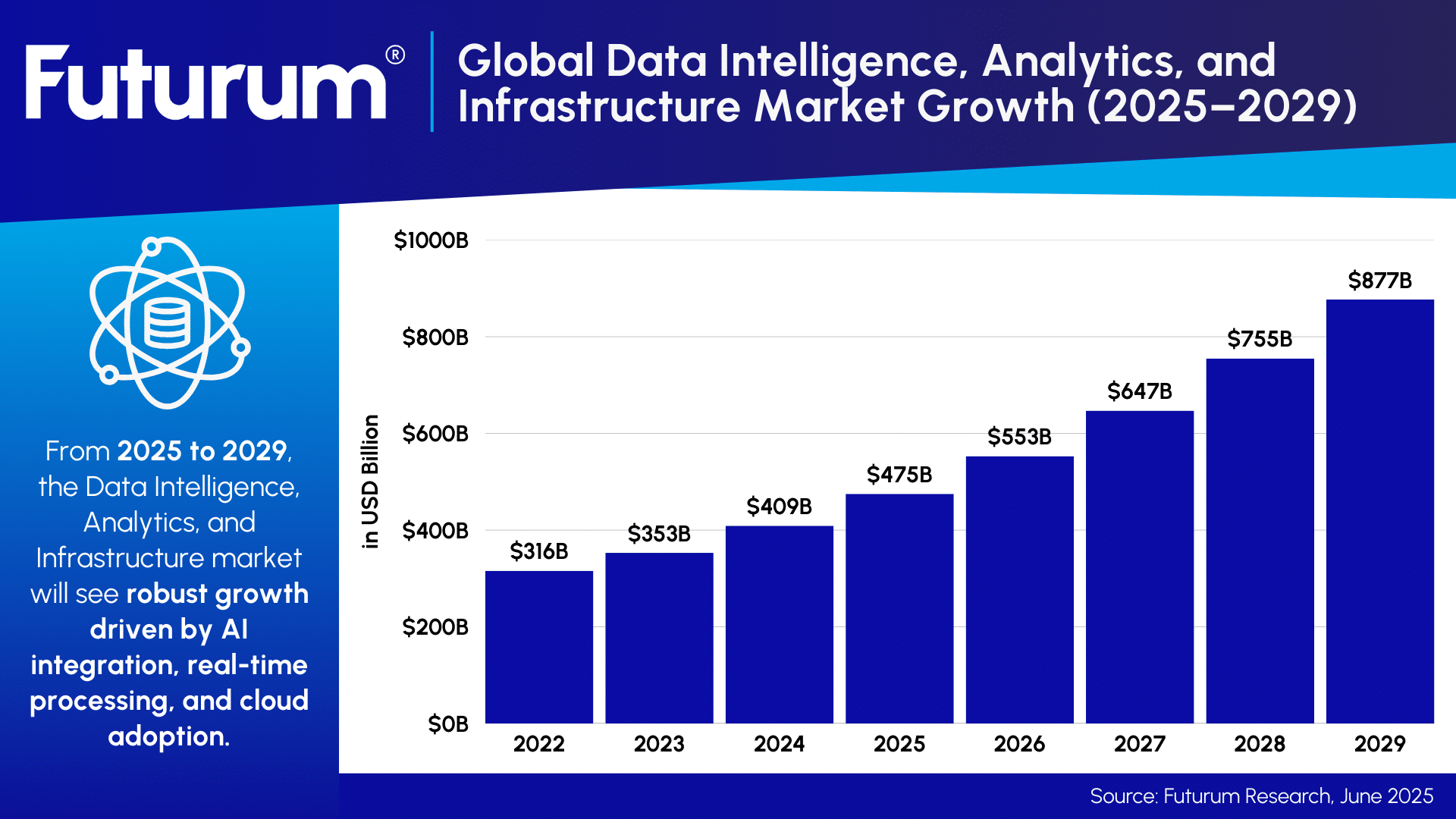
Figure 1: Global Data Intelligence, Analytics, and Infrastructure Market Growth (2025–2029)
How do these changes impact the day-to-day operations of data professionals? Futurum has noted that many data analysts are transitioning into roles that emphasize the application of AI within the context of business itself, creating new roles such as the AI Shepherd or the Insight Engineer. These roles are less about building charts and more about curating the corporate ontology, which can help define the relationships and metrics that constitute the AI’s worldview. The BI team is uniquely positioned for this because they are the only group that speaks both SQL and business fluently.
Ultimately, organizations must stop viewing BI as a factory for dashboards and start funding it as an AI reasoning engine. Bypassing this layer to feed raw data to agents doesn’t lead to innovation. Rather, it merely accumulates technical debt that will eventually be paid for in lost trust and failed audits.
The full report is available via subscription to Futurum Intelligence’s Data Intelligence, Analytics, and Infrastructure IQ service—click here for inquiry and access.
Learn more about how companies such as Salesforce and Microsoft are approaching semantic BI.
Futurum clients can read more in the Futurum Intelligence Platform, and non-clients can learn more here: Data Intelligence, Analytics, & Infrastructure Practice.
About the Futurum Data Intelligence, Analytics, & Infrastructure Practice
The Futurum Data Intelligence, Analytics, & Infrastructure Practice provides actionable, objective insights for market leaders and their teams so they can respond to emerging opportunities and innovate. Public access to our coverage can be seen here. Follow news and updates from the Futurum Practice on LinkedIn and X. Visit the Futurum Newsroom for more information and insights.
Author Information

Brad Shimmin is Vice President and Practice Lead, Data Intelligence, Analytics, & Infrastructure at Futurum. He provides strategic direction and market analysis to help organizations maximize their investments in data and analytics. Currently, Brad is focused on helping companies establish an AI-first data strategy.
With over 30 years of experience in enterprise IT and emerging technologies, Brad is a distinguished thought leader specializing in data, analytics, artificial intelligence, and enterprise software development. Consulting with Fortune 100 vendors, Brad specializes in industry thought leadership, worldwide market analysis, client development, and strategic advisory services.
Brad earned his Bachelor of Arts from Utah State University, where he graduated Magna Cum Laude. Brad lives in Longmeadow, MA, with his beautiful wife and far too many LEGO sets.

