
Analyst(s): Mitch Ashley
Publication Date: February 2, 2026
As AI systems shift from assistive tools to autonomous actors, transparency becomes a prerequisite for trust and adoption. In this new Analyst Insights Report, Futurum Research examines why observability is the mechanism that makes transparency real for AI-driven software delivery. The report outlines how practitioner audiences evaluate AI platforms through visible system behavior, operational consequences, and production readiness rather than capability claims.
Key Points:
- AI expands the builder audience, making observability the shared language across developers, platform engineers, security teams, and IT leaders.
- Transparency grounded in observability enables practitioners to evaluate how AI systems plan, decide, and act in production.
- Futurum Research data shows AI investments span development, automation, and operations, increasing the cost of opaque system behavior.
- As AI capability claims converge, transparency through observability becomes a key differentiator for trust and adoption velocity.
Overview:
AI-driven software delivery is entering a new phase where systems increasingly plan and act autonomously across the lifecycle. In this environment, transparency is no longer about disclosure or messaging. It is about whether practitioners can observe, understand, and evaluate how AI systems behave in production.
This Analyst Insights Report from Futurum Research argues that observability is the foundation that enables transparency at scale. As AI expands the builder identity to include testers, platform engineers, security teams, and IT leaders, these audiences assess vendors through implementation credibility rather than abstract claims. They want to see how systems behave under real-world conditions, what trade-offs were made, and how failures are detected and corrected.
Figure 1: Top 5 Drivers for Accelerating Software Delivery
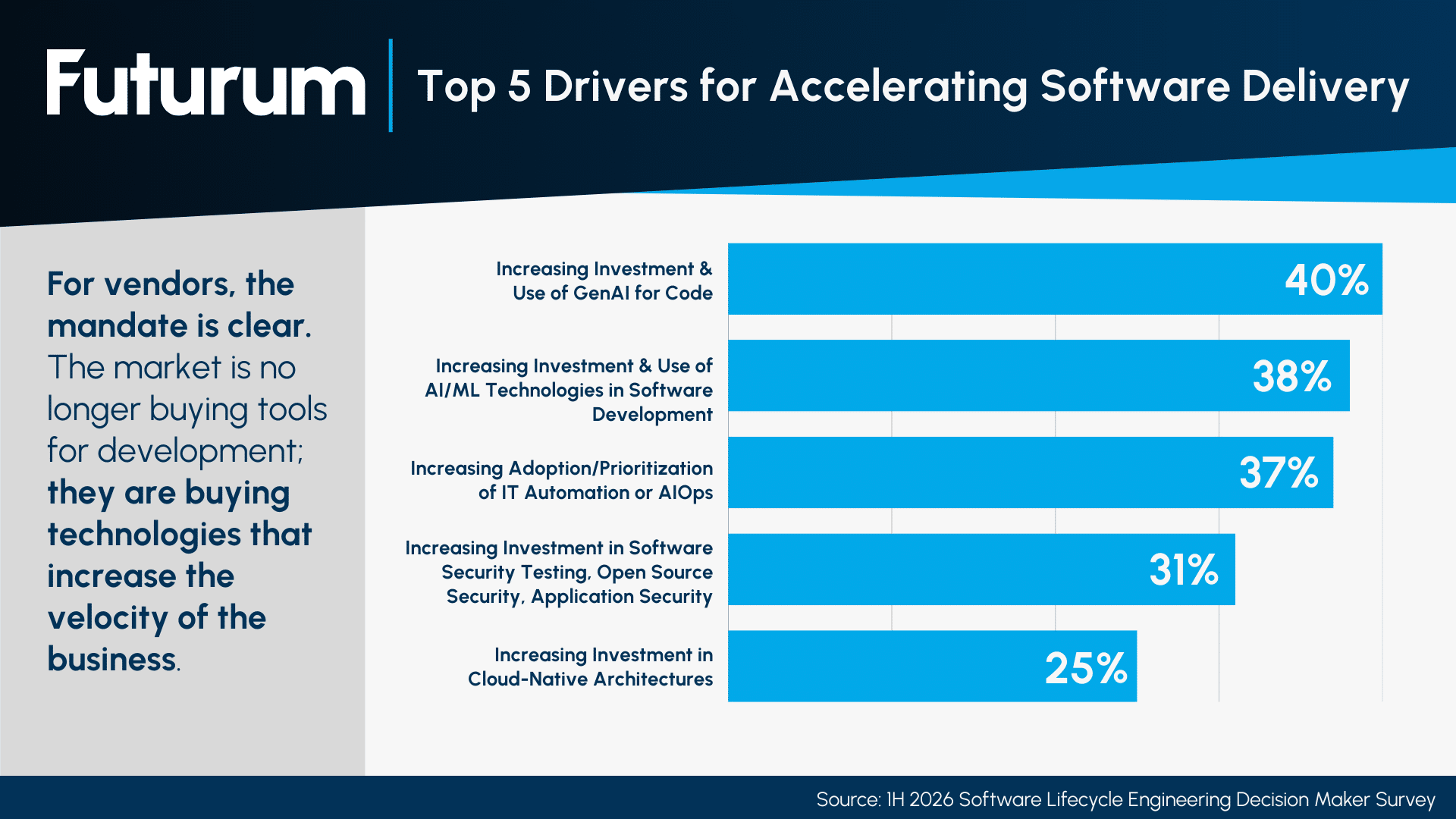
Futurum Research 1H 2026 Software Lifecycle Engineering decision-maker data underscores this shift. AI leads three of the top five drivers for accelerating software delivery, including code generation (40%), AI and machine learning in development (38%), and IT automation and AIOps (37%). As AI investments spread across development, testing, and operations, invisible system behavior introduces risk that velocity gains cannot offset.
The report outlines five keys to building transparency through observability, including exposing operational consequences, sharing observable architectures and signals, and aligning product positioning with visible system behavior. Together, these practices help vendors reduce adoption friction and help practitioners build confidence in deploying AI systems to production.
Conclusion
As AI systems evolve from assisted tools to autonomous actors, transparency through observability becomes the trust layer for software delivery. Vendors that make system behavior visible, explainable, and accountable will accelerate adoption and earn practitioner confidence. Those that rely on opaque capability claims will struggle as buyers increasingly demand proof through observable production behavior.
The full report is available via subscription to Futurum Intelligence’s Software Lifecycle Engineering IQ service—click here for inquiry and access.
Read the full Futurum Research report on Transparency Through Observability is Essential to AI Success.
About the Futurum Software Lifecycle Engineering Practice
The Futurum Software Lifecycle Engineering Practice provides actionable, objective insights for market leaders and their teams so they can respond to emerging opportunities and innovate. Public access to our coverage can be seen here. Follow news and updates from the Futurum Practice on LinkedIn and X. Visit the Futurum Newsroom for more information and insights.
Author Information

Mitch Ashley is VP and Practice Lead for the CIO & Technology Buyers and Software Lifecycle Engineering practices at The Futurum Group. A multi-time CIO and CTO with 30+ years leading technical organizations, Mitch built and operated production systems spanning cybersecurity for the U.S. Department of Defense, PKI services for the broadband and 5G industries, SaaS platforms, large-scale telecom and banking systems, and a national broadband network. His work with AI began early, developing expert systems that diagnosed and repaired complex mainframe environments. That operator foundation grounds his analysis in operational consequence, covering the technology buyer's world of software engineering, cybersecurity, DevOps, cloud, and AI.

